Showing posts with label John Coltrane. Show all posts

Friday, May 13, 2011

Some words with sound and some sound without words - The Chester Records picks of the week


Daniel Higgs


Twig Harper

Thoughts on the collab between Twig Harper & Daniel Higgs and the everyday greatness of John Coltrane here


Monday, August 9, 2010

The BYG/Actuel Series Part Four: Frank Wright- ONE FOR JOHN (Actuel 36)


For a guy that sort of hovers in a purgatory between obscure and “bubbling under”, the late tenor sax man Rev. Frank Wright has a fairly large number of recordings in his discography, both as a leader and sideman. His inclusion in the annals of the ESP Disk and the Actuel rosters sort of insures he’ll never suffer the lack of recognition that afflicts such names as Smiley Winters or Marc Levin, but a boost in the guy’s general notoriety would be a welcome turn of events. In the grand scheme of Wright’s recorded work, ONE FOR JOHN lands almost two years after a criminally unreleased Sunny Murray session for Columbia (SPIRITUAL INFINITY, with Clifford Thornton, Arthur Jones, Dave Burrell and possibly others) and shortly before UHURU NA UMOJA, his contribution to the French label America’s spate of avant jazz releases. JOHN is noteworthy as presenting the recording debut of a slightly shifting unit of ferocious free invention that flourished under Wright’s leadership, a crew that included alto giant Noah Howard, sublime pianist Bobby Few, incendiary drummer Muhammad Ali and bassist extraordinaire Alan Silva (post-bop drum vet Art Taylor also connected with Wright during this period, a fact that when bookended with Philly Joe Jones’ contemporaneous run-in with Archie Shepp [and the long, fascinating careers of Max Roach and Kenny “Klook” Clarke] lends credence to the theory that the most vital and longstanding element of bebop wasn’t reeds but rhythm). This one and done bomb drop for Actuel features Howard, Few and Ali along with Wright, so it’s more about heavy lung abstraction than rhythmic pummel.


French print ad for Selmer saxophones featuring Wright
(who probably didn't get paid)

Not that Wright’s overall artistic thrust varied all that much. He was clearly, at least as a leader, always expanding upon the core advancements of Coltrane and Ayler, and this has led some to dismiss him as a second tier player. Bullshit to that. The sensibility that denigrates Wright is essentially no different than that which disparages or belittles Sonny Stitt as eternally in the shadow of Charlie Parker. Much ado is often made, and deservedly so, over the innovators, but far less hoopla is given to what I’ll describe as the “extenders”, those players who grasp innovation often before critics and the general public and work with it to mold those new ideas into an established and accepted progression. Wright’s commentary upon Coltrane’s genius was more distanced than that of his wife Alice or Pharaoh Sanders, both key contributors to ‘Trane’s later exploratory period, and ONE FOR JOHN quickly reveals a sonic atmosphere that’s more concerned with euphoria of pure force. Where Wright’s first two ESP records can be viewed as direct responses to Ayler, SPIRITUAL UNITY inspiring THE FRANK WRIGHT TRIO and the larger bands of Ayler’s Impulse! period begetting YOUR PRAYER, they share with ONE FOR JOHN’s exploratory ‘Trane-ism’s a bold density and urgency that helps to place their leader’s sound in historical context: Wright, along with his cohort Howard, Charles Tyler, Arthur Doyle, late bloomer Charles Gayle and Test’s Daniel Carter and Sabir Mateen are all offspring of J.C./Ayler at their most energetically searching, a collective bubbling cauldron of distinct personalities, “extenders” all, dedicated to applying varying levels of toughness and abstraction to this shared approach. The commercial possibilities of this sound was something significantly less than great, so it’s no surprise that the vast majority of those names never got close to a major label recording studio. The main fallout from this circumstance is the faulty perception that the work of Ayler and late Coltrane is very specific and mainly relevant to the rocky social landscape of the 1960s instead of being recognized as the beginning of a wide-open style that still throbs forcefully in the here and now like a vein in the bicep of a greased-up weightlifter.The last few decades have seen a nice increase in acceptance for the overall thrust of free/avant/ecstatic jazz, with recent developments including a deep reevaluation of that most reviled of all jazz decades, the 1970s. And in my opinion the ‘70s were Frank Wright’s best period, for it found him engaged in the beautifully rewarding extended dialogue with the above mentioned core band, a relationship that proved so fertile it necessitated the forming of the artist run label Center of the World to document the development of their activities.
ONE FOR JOHN, recorded on 12/5/69, finds that core group already in an advanced state of mind. Side A’s title piece opens with a particularly inspired passage of well controlled simmering beauty that quickly and naturally erupts into full on furiousness of breath. Wright’s stamina, along with his unwavering dedication to this sonic ideal, remains impressive, as does his ability to get into a sympathetic zone with alto-ist Howard. It’s risky when two players this powerful lend their lungs to the same session, for exuberant intentions can often unfortunately lead to non-communicative overstepping and the drowning-out of the creative spark. Instead, here, the mind meld is fertile and extends to their dialogue with the piano and drums.


Noah Howard

Muhammad Ali is the brother of the late Rashied Ali, who is probably best known as Coltrane’s last drummer. Where Rashied’s long legacy gets a small but sustained boost due to that formative early relationship, his bro is unfortunately far less known. Which is a bit of a raw deal, for in addition to basically developing into Wright’s go-to sticksman he not only contributed in a very key fashion to Alan Shorter’s enigmatic Verve recording session that resulted in the ORGASM LP but also beat the skins on Noah Howard’s essential blast THE BLACK ARK and played on a handful of hot early ‘70s Archie Shepp blowouts. He’s correctly categorized as an “energy” player, though closer in style to his brother than to Sunny Murray or Milford Graves. If there is a tangible difference in delivery, I’d say that Rashied is a heavier hitter and Muhammad’s more occupied with a wider path of urgent finesse. At least on this recording.


Muhammad Ali

Wright’s long association with Bobby Few is notable in a period where many free players were following Ornette’s example and eschewing keyboards. Not to flog one idea at the expense of the whole, but this further emphasizes the depth of influence of Coltrane on Wright’s music. McCoy Tyner, followed by Alice, filled the piano seat on ‘Trane’s most outside work, and some listeners consider the inclusion of this instrument to be a grounding factor on those recordings, keeping most of them from truly exploding into orbit. I wonder if those ears would say the same (if ears could talk what tales they’d tell) about Few’s playing here, which is at times quite explicit in its connection to Tyner’s rising and cascading block chords. Hailing from Cleveland where he grew up (and played) with Ayler, Few is a versatile improviser similar in style to Dave Burrell and Don Pullen, all three sharing a sensibility rooted in tradition yet always actively searching. A distinct personal signature is prevalent in everything I’ve heard from Few however, and his hooks to jazz history just might be the deepest; his long association with the late Steve Lacy lends credence to this idea. The Tyner-esque style on display here is indicative of the tribute nature of the recording (this is the one BYG/Actuel release that really feels descended from the Bob Thiele/Impulse! tendency toward albums as statements of “props”) and while surely referential is still a fine example of this pianist’s complex and warmly rewarding style.


Bobby Few

Possibly the most impressive aspect of “One For John” is the sonic distance it covers. That short opening passage feels almost like an homage to the intro to MEDITATIONS, there’s a collective purge that’s not all that far from the white-hot ouch of THE OLATUNJI CONCERT, group vocal chants erupt like a more druggily wigged-out OM outtake and with around a minute left the group winds down into a gorgeous bit of edgy tranquility that harkens all the way back to “Alabama”. Geez. You’d be quite right in thinking that’s a hard act to follow, but side two pulls a mean feat with “China”, another side long piece that combines a traditional Asian motif with slowly building levels of improvisational oomph, Ali in particular getting seriously busy all over his kit. Both Wright and Howard attain high degrees of expression, albeit in a more subdued manner. It becomes apparent that this track is essentially about curiosity and the value of cultural exchange. Few’s recurring flurries of the Chinese theme, still a bit Tyner-like, do a fine job of elevating the overall discourse to a level that’s legitimate (sincere) as a fusion of musical styles and time-tested for pure non-scholarly listening. It’s really not far from the plateaus of cultural investigation and integration achieved by the great Don Cherry (much more on him later). And there’s more chanting, even more bent and loose than on side A. Yes, it’s the sort of sound that’ll make purists scowl, and if Richard Nixon had heard it back then, he might’ve reconsidered that trip to the PRC.


History can be a harsh mistress. While the tide of acceptance for post-Coltrane free jazz has thankfully started to turn more toward the positive, there’s still a long way to go, at least in this writer’s opinion, before players like Frank Wright (and the members of his band) get the credit they deserve. ONE FOR JOHN is exemplary documentation of a group of prime underdogs. Hear it and howl.

Sunday, April 11, 2010

Some Sunday night listening


TENOR CONCLAVE is essentially the story of four classic horn-men, all of them now representing something distinct in jazz history. Mobley is a fine example of just how deep the mainstream was in the years 1955-65, a guy whose discography is as substantial as any essentially straight ahead player from the era on any instrument, including trumpeter Donald Byrd. Like Byrd, Mobley’s best stuff was released by Blue Note, but he spread himself out all over the place, most notably Prestige, of which this session is just one part. He acquits himself in typically fine fashion. Al Cohn came out of Woody Herman’s band with fellow players Stan Getz, Serge Chaloff, and this recording’s Zoot Sims, but seems to have fallen into the shadow of all of his cohorts in that band with the exception of Chaloff. This might not seem like a big deal, but Cohn co-lead a major quintet with Sims in the second half on the 1950s that really brought home the bacon as far as post-bop from post-Hermanites was concerned. Sims just happened to be more prominent on recordings over a long period of time, the result being that his name and rep has grown over the decades, with Cohn developing into something approximating a player’s player. No matter. When he’s cooking, Cohn is as good (great) as Getz at his non-samba best. Or Sims, since he’s one of the blowers involved in this recording. Zoot has become a justifiably canonical player, forceful yet restrained, smooth but tough, swinging and smart. At the point of this record his sound was really the embodiment of a cross country road trip in a gas-guzzling convertible; large and powerful and engaging and stealthily cerebral. That leaves ‘Trane, and we know just how large an effect he had on the course of 20th Century music. But hell, here it’s early yet. We’re not even at BLUE TRAIN. Coltrane was at this moment a fiery young player that had understandably attracted the attention of Miles Davis. And on this date, he was just one amongst four in a group then named The Prestige All-Stars. Befitting that title, the rhythm section is appropriately solid: Red Garland on keys, Paul Chambers on bass and Art Taylor on drums. They lay down a foundation deep and warm for the four horn line, and the result is a quartet of tracks that possess a brilliance that is amplified by an inescapably offhand quality, a no-big-deal everyday greatness. All in a day’s work, you know?


Spending time listening to Coltrane can lead you into all sorts of unexpected areas, particularly in his early and late periods. One of the sweetest avenues a young John C traversed was recording with tubist Ray Draper’s Quintet. Now the tuba has surely never been the first (or fifth) horn people think of when modern jazz is the subject, but Draper’s group was anything but a novelty. It was a sincere and rather successful (in a lower case sense lacking in exclamation points) attempt to widen the sonic spectrum of post-bop. This is straight ahead jazz with an edge and an avant-garde approach not in the post-Coleman/Taylor sense, but rather in how directly it was engaged in opening up the instrumental sphere of a then commercially thriving medium. This record shares similar intent with Steve Lacy’s debut recording for Prestige SOPRANO SAX, since both featured instruments that were quite foreign to the modern jazz milieu of the period. Altos, tenors and trumpets ruled the roost, and while Lacy successfully cracked that supremacy to have a long career detailed in earnest elsewhere on this blog, Draper, to be frank, didn’t. And that’s a damn shame. For on NEW JAZZ 8228 the 17 year old tuba upstart sounds assured and passionate. While his axe of choice lacks the expressive range of Coltrane’s, Draper never falters by attempting to push matters. He colors, he comments, he accents, he leads. And when he solos, it is with the smarts and taste of a guy wise beyond his years. Like any in the pocket post-bop session of the era, this record rests on the total strength of the group’s ability, and the rhythm section stands tall even if their names aren’t those that normally fall off tongues engaged in ‘50s jazz-gab. Pianist Gil Coggins was an associate of Miles and Sonny Rollins, bassist Spanky DeBrest worked with Monk and drummer Larry Richie was an alumnus of Jackie McLean. All three are splendid on this record, and Coltrane is limber and focused in his role as the more emotive horn. Along the way, he trades moments with Draper and Coggins with sly tenacity, and then lays out on the album’s brief closing track, a piece well intended as a parting showcase for the record’s leader. Anybody who wants to get a true handle on just how wide ranging and rewardingly deep was the post-bop scene of the period should take a handful of listens to this baby. And then stick it in a stack of successive plays with TENOR CONCLAVE, the aforementioned Lacy disc, perhaps Rollins’ TENOR MADNESS (with the wonderful opening double team with Coltrane) and maybe Davis’ ROUND ABOUT MIDNIGHT. What I think you’ll hear is that NEW JAZZ 8228 is anything but an eccentric aside, an oddball one-off. It has a strong vital pulse of pure jazz invention, and it deserves to be something significantly larger than a footnote.

Tuesday, January 20, 2009

The week in Listening 1/5 - 1/12

1/5/09- Son House- Father of the Delta Blues: The Complete 1965 Sessions 2CD
Guru Guru- UFO LP 1970
High Places- self titled CD 2008
Sunny Murray- Big Chief LP 1969

1/6/09- Little Feat- Sailin’ Shoes LP 1972
Linda Perhacs- Parallelograms- LP 1970
Andrew Hill- Andrew!!! LP 1964

1/7/09- The Pogues- Rum Sodomy and the Lash LP 1985
Fred Frith- To Sail, To Sail CD 2008
Miles Davis- The Complete Live at the Plugged Nickel 1965 CD Disc One

1/8/09- Animal Collective- Merriweather Post Pavilion CD 2008
Shark Quest- Battle of the Loons CD 1998
Andrew Hill- Andrew!!! LP 1964

1/9/09- Bill Dixon- 17 Musicians in Search of a Sound: Darfur CD 2008

1/10/09- Art Blakey and the Jazz Messengers- Three Blind Mice Volume Two CD 1961
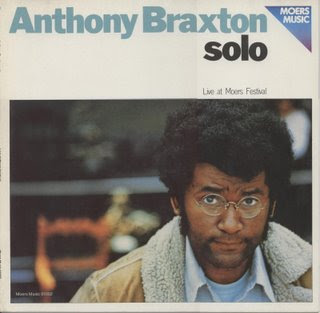
Anthony Braxton- Solo Live at Moers Festival 1974 LP

1/11/09- The Fall- I am Curious Oranj CD 1988
Anthony Braxton- Solo Live at Moers Festival 1974 LP
John Coltrane- One Down One Up: Live at the Half Note 2CD 1965
Cecil Taylor- Stereo Drive LP 1958
Cecil Taylor- Jazz Advance LP 1956
Andrew Hill- Andrew!!! LP 1964


Son House

MONDAY 1/5- Son House, like Mississippi John Hurt and Skip James, was a legendary early bluesman who stuck around long enough to get a nice helping of rediscovery acclaim. And the Columbia Roots ‘N’ Blues two disc collection is sterling documentation of an autumnal artist working through his songbook with the air of summation and satisfaction. Blues hardliners have complained the House’s playing here lacks the fiery sharpness of his indispensable early sides, and it’s true. But. BUT. There is often a but, and here it concerns the music’s clarity and warmth, which really brings out the beauty in the playing and helps to amplify the history and ceremony behind the recordings. And it’s not like they had to prop House up in front of the microphone. His voice is still strong and his playing limber and emotional enough to communicate clearly that he could still conjure up the essence of what made his music such a big deal to folklorists, collectors, and younger musicians. Canned Heat’s Al Wilson plays some backup here, and if that scares you it shouldn’t. He sounds fine, more than just a respectful accompanist while never trying to assert himself beyond the role of support. This is House’s gig, and he does a grand job of showing his stuff. The mix of tough and cutting slide blues and spirituals provides a sustained study in the inner conflict that often surrounded the lives of many blues greats, and when this is combined with House’s undeniable stature in the history of the music, this set acquires a magnitude that’s the equal to the late efforts of Hurt, James, Fred McDowell, Furry Lewis, or Mance Lipscomb. The last observation I’ll make is again concerned with recording technology, specifically how these sessions allowed House to stretch out and capture something closer to the way these songs probably existed in the more natural live setting instead of the truncated nature of the early 78rpm recordings. This is also true of the stuff Alan Lomax documented in the early 40s, but again, the aura of a professional, non-crap studio session really adds some deep flair to the seven minutes of the brilliant “Death Letter”. This whole thing is simply a big fat bumblebee’s golden kneecaps. Anybody who wishes to have their ass kicked by last century’s sounds of survival will most certainly be pleased with its contents.
Guru Guru were part of Germany’s Krautrock scene, and while they don’t have the name recognition of Neu!, Faust, Kraftwerk, or Cluster, they are perpetually bubbling under those groups and exist as an ever ready fix to those who’ve become addicted to the deep sonics of that regional era. The expanse and heaviness on display on their debut recording is quite attractive, and as a piece it fits snugly into the puzzle that was Europe’s ‘70s-era left-field rock excursion. Guru Guru also rub up against jazz in a way that makes them Continental bros-in-arms with bands like Soft Machine and King Crimson while basically sounding almost nothing like them. This is really great stuff that I’m just getting a handle on, so expect more musing at a later date.
My first thought about the full length by High Places was something close to “not as good as the earlier release available through Emusic”. My second listen made me rethink that, somewhat. This record is cleaner, more graspable and comes attached with the undeniable factor of familiarity and the expectations that can’t help but foster. Experiencing it a second time gave me the idea that while my hopes were initially somewhat dashed, they were confounded in a way which will likely lead to other eventual pleasures. I’ll let you know how it turns out.
Anybody who spends time digging in the fertile soil of free jazz history will encounter the name Sunny Murray. Due to longevity and the undeniable importance of many sessions where he left his contribution, he is essentially the key avant-garde drummer of the 1960s. Murray was a member of the Albert Ayler Trio, assorted Cecil Taylor groups, played with Archie Shepp and Dave Burrell, and released some major recordings under his own name. Where many free drummers of the era still held a loose grip on some type of recognizable jazz form, Murray was almost completely abstract in his engagement with his other musicians, and as a result helped to broaden the possibilities for the new music. Big Chief is a fine example of the large group intensity that was being undertaken as the decade closed, and it’s too bad it doesn’t have a larger reputation, for the recording sits quite nicely with the bolder, more uncompromisingly out sessions that were recorded for BYG or ESP at the same time. Murray’s leadership shouldn’t imply that this is a drum focused session, though his playing is outstanding throughout. It’s really a cooperative endeavor with the added attraction of hearing a bunch of under recorded players in fine form: Kenneth Terroade on tenor, South African Ronnie Beer on alto, obscure West Coaster Becky Friend on flute and Francois Tusques on piano are just three examples. Alan Silva had a touch more exposure, playing with both Ayler and Taylor as well as throwing down a wicked ESP release under his own name, but it’s still wonderful to have another session from this much underrated string improviser. Obscure photographer and writer Hart LeRoy Bibbs contributes a fine touch of tough poetics to the group, and a good basic reference point for Big Chief’s sound would be Albert Ayler, particularly on the massive closing piece “This Nearly Was Mine” by Richard Rogers, here transformed into a thick horn lament that recalls more than slightly Ayler’s Impulse! material. I still think Sonny’s Time Now is the best Murray release from the era, but this one is a major statement, loose and tough with an air in insistence about it. Any partisan of free jazz will want to know it.


Sunny Murray

TUESDAY 1/6- Sailin’ Shoes is a grand tour through the deluxe mind of the late Lowell George, a guy who could use a boost or three to his posthumous standing. His career was (at least in its first half) quite varied and interesting, featuring work with both Zappa’s Mothers and killing backup on John Cale’s brilliant Paris 1919 LP, and of course he led Little Feat, who kicked out an initial stream of albums that managed to integrate a bunch of different ingredients (blues, country, mild psych, funky New Orleans) into their sound in a very deft way. George’s integration of varying elements was smart but lacked the sometimes obnoxiously brainy aura of Zappa’s stylistic hodgepodge, plus he was refreshingly brief in an era polluted with blowhards. The debut is probably my favorite, but this record includes the powerful combo punch of the sweet reworking of George’s classic truck driving anthem “Willin’” (the equal to any song in the hippie-country canon, in my estimation) and the scorching bluesy grouchiness of “A Apolitical Blues”, which is possibly the most underrated blues ditty by a white-boy interloper from it’s era. But the whole damn record is a slice of prime junk. George’s slide playing is unique and seductive, his vocals never overstep into wailing minstrelsy (being smart enough to avoid aping his influences), and the total goes down smooth to the perfect degree. It’s true that the band overstayed their welcome, continuing long after George’s early death, and that professing admiration for the Little Feat in public means risking having to suffer the company of Jimmy Buffet fans, but when Sailin’ Shoes plays all that dissolves into nothing. It’s a fine statement from a once fine band, and that will always be welcome.
-

Linda Perhacs is one of the legions of one record wonders to be rediscovered and championed by contemporary artists as a euphoric chapter in the book of lost grails, in the case the freak folk edition, leather bound and reeking of patchouli. Her one record was underground in a way that is different from say Skip Spence’s Oar or Joe Byrd and the Field Hippies’ American Metaphysical Circus. These two were long established cult items, much bandied about before they were eventually given CD reissues and became entrenched as cornerstones of their wide open era. The Perhacs record endured a long period where it seemed to undeservedly sit in the vast sea of recorded ephemera, only being discovered, culted, and reissued with the arrival of the New Weird America/psyche folk movement. Devendra Banhart enthusiasm surely played a big part in this, but most of the credit for the records redemption should sit with Perhacs herself. The gradually creeping oddness in her folky, airy, proudly feminine sound is seductive over the course of the record, and by the time the inspired psyche derailment of the title track arrives, it is clear that the Parallelograms’ neglect was wholly undeserved. The introspective (bordering on melancholy, at times) feel of much of this will be welcome to those who are bugged by maypole frolicking, though methinks that pixies and sprites known to partake in that activity will find this appealing as well. She can also chug acoustically in fine fashion and provide a more popish side that is far more personally preferable to the Carly Simon-ish feel many gals of this era exuded (I’m more into Nyro and Mitchell, these days). This doesn’t dethrone Erica Pomerance’s blessed-out one-shot You Used to Think from its perch as the defining blast of gushing ‘60s femme-folk, but it doesn’t miss by much. The bonus cuts on the CD reissue are quite welcome and show Perhacs to be a smart, versatile artist that deserved so much more than to be queened as a cult figure. I want to hear the new stuff.

WEDNESDAY 1/7- I haven’t always loved The Pogues. I remember mildly digging the Poguetry in Motion EP when I bought it back in the late ‘80s but I stupidly traded it in for I think a Phantom Tollbooth record (that I don’t even own anymore). My other run-ins with the group never really resonated with me until about five years ago. I picked up the above album used for very cheap, thinking what the hell, here’s another one for the stacks. And I’m glad I did. While I am partially of Irish descent, I’m not at all weepy over it, so ancestral nostalgia has nothing to do with my change of heart. I just seem to have grown into its charms. Where they once seemed old hat and overly theatrical, they now seem (on this record anyway) shrewd and well constructed conceptually. And pretty. And theatrical in the best way possible. Elvis Costello’s production might be a tad middle-of-the-road for my tastes, but he does nothing to sabotage the proceedings, so maybe I should just be quiet. This band’s music has been the soundtrack to so many loutish drunken nights from aging malcontents obsessing over their place in the world and the genetic stamp of their being that the industry’s of stout and whiskey should pay them a large stipend. There’s no doubt these cats sound best when you’re half blasted and simultaneously soaking up emotions like a sponge and secreting them like a spastic lawn sprinkler, but they can also be endearing on a sober cold-weather night alone. I feel so mature.
-

I’ve been connected with the music of Fred Firth for over half my life. He’s just a monster of the experimental guitar and his passionate openness to so many different types of music and his participation in a bunch of varied “scenes” made it almost impossible for my inquisitive young mind to not cross his path. I was tired of the little box that punk rock had become and was dipping into some of the more esoteric releases on SST records, Frith’s 2LP The Technology of Tears being one of the first. I was curious about The Residents, and he was a major presence on their Ralph records imprint, both as a guest and stand alone artist. I found his name on my copy of The Violent Femmes’ The Blind Leading the Naked. The more I dug into the records on Mark Kramer’s Shimmy Disc label, the more familiar he became. Indulging in Eno’s brilliant streak of ‘70s albums found him on Before and After Science and Music for Films. I scored a tattered copy of the first Henry Cow album because a fellow King Crimson fan recommended them, and discovered he was charter member. And impulsively buying the first Naked City record on cassette sealed the deal: his mark on my then meager record collection was secure, and this was completely due to his eager interaction with a bunch of musicians whose paths normally didn’t cross. Thing is, the guy is still going strong. Frith has always stood with Eugene Chadbourne and Henry Kaiser in a righteous triangle of avant guitarists that never lost touch with their non-experimental roots, and To Sail, To Sail has moments that recall everything from Fahey, Cooder, Kaiser, Bailey, and a whole lot of Fred Frith. His music has inviting warmth even at its most abstract moments, and the record generally heads into less definable territory as it progresses. It’s just him and a steel string acoustic, and the textures, tones and movement he can dash off is nothing short of fantastic. If you are a novice to his work, this would work as a start I think, but it’s also hard to not advise jumping in with Guitar Solos Volume One and the first Henry Cow record (both available on EMusic for the cost conscious). It’s coming up on forty years since he began examining and expanding the possibilities of stringed instruments, and after appearing on 400 plus recordings, he’s as vital as ever.

THURSDAY 1/8- Shark Quest should frankly be much better known. The reality of the band’s non-post rock eschewal of a vocalist and their often Americana-influenced direction certainly play a part in their lack of widespread rabid fandom, but they’re great enough to overcome these unfair obstacles and the fact that this has yet to happen is a sad state of affairs. Battle of the Loons is their debut and it displays a major helping of dexterous musicianship while keeping the lid on the pressure cooker of needless showiness. The examination of roots is evident without turning the proceedings into a phony knee-slap fest, with many moments actually holding more than just a whiff of the conservatory. This appeals to me very much, but the lack of a convenient handle might befuddle many. The deeply bowed tones on the opener “Blake Carrington” sound more New York than North Carolina, and the whole disc lacks any easy gestures to popularity. Two more records have been released without much change in their circumstances, and I can only hope they haven’t called it a day. It would be great to see them at this year’s Merge anniversary shindig, but without a new album to promote that’s not likely to happen. Maybe Shark Quest is destined for posthumous acclaim. If so, I’m going to lord it over all you mofos.

FRIDAY 1/9- This Bill Dixon release is my pick for the best of 2008. It’s been with me for months but I’m still a little scared of it from a writing standpoint. Last year’s resurgence in things Dixon was one of its most pleasant surprises. This record, the collab with Rob Mazurek’s Exploding Star Orchestra, and the sudden slew of older releases available for inexpensive legal download really put him on the radar screen as something other than just an intriguing figure in free jazz lore. Tons of people knew him as the man behind the legendry 1964 October Revolution in Jazz , and many heard him in tandem with Archie Shepp and as a member of Cecil Taylor’s smoking group circa Conquistador!, but his Intents and Purposes album for RCA from ’67 is still criminally out of print, and he dropped out of the pro music scene for academia in Vermont for such a long period that when he started recording again for Soul Note in the ‘80s he dented the consciousness of many avant-jazz fans but didn’t concuss enough perceptions to take his rightful place as one of the elders of free jazz. In Dixon’s case free is a descriptor in need of clarification, since he is foremost a composer, and Darfur can indeed feel at times like modern avant-classical. It can gather a sheer intensity that’s left me awestruck and unable to follow it up with anything but silence. The group is largely made up of fresh names and a few older, more established players like trombonist Steve Swell, bassoon player and Jimmy Lyons/Cecil Taylor cohort Karen Borca, and percussionist/vibe player Warren Smith. Shit-hot Braxtonian Taylor Ho Bynum is here as well, and the whole group possesses a collective musicality that results in devastating excursions into Dixon’s sound world; nary a note is tentative. I’m pleased as punch that this record exists, that the man responsible made the cover of The Wire, that divergent opinions are flying to and fro in cyberspace concerning him, and that his pendulum of fortune is finally starting to swing the other way. The next time some smarty tries to opine that jazz is dead I’m going to ask them why this disc made the hair stand up on my arms. Moribund music doesn’t do that. Intents and Purposes needs to become available (what asshole corporation owns the RCA back catalogue, anyway?), and hopefully Dixon has a follow up to this one in store. I’d like to see him pluck a few folks from this group and throw down some spirited improv. Or a solo disc. Or a duo with Cecil. Keep ‘em coming, Bill!
Bill Dixon

SATURDAY 1/10- Art Blakey’s impact on jazz is pretty much impossible to measure. He’s one of the absolute cornerstones of post-bop, and his groups featured so many amazing players, particularly in the second half of the ‘50s, that listing them is rather daunting. So I’ll just mention the names on this one. Wayne Shorter on tenor, Freddie Hubbard (RIP) on trumpet, Cutis Fuller on trombone (if the name doesn’t ring a bell, he slays on Coltrane’s Blue Train), Blue Note mainstay Cedar Walton on keys, and Blakey regular Jymie Merrit on bass. Any version of The Jazz Messengers that I’ve heard is loaded with infectious and adept rhythmic passages, but I’ve yet to cross the path of one that slides into overzealousness. I’ve thus far stuck to the more established classics, not dipping into the later releases that spanned into the ‘80s, so I can’t really venture a complete synopsis of his talents. One thing that I’ve noticed about the more canonical records is how generous Blakey was with his younger band members. Everyone has ample opportunity to shine as a soloist and to display their songbook. Two tracks are courtesy of Walton (“Mosaic” and “The Promised Land”), and we get one a piece from Shorter and Fuller (“Ping Pong” and “Arabia”, respectively). That leaves one standard, “It’s Only a Paper Moon”. The whole record simmers with the rare intuitiveness that makes the best post-bop more than just a study in chops. Blakey certainly asserts himself; the drums connect in a way that’s unique in the context of this era, but it never feels like showmanship. He’s a supreme catalyst. And everybody on this thing is catalyzed. So am I. I basically spun this one because I wanted to hear so prime Hubbard, his recent passing sticking in my mind. He delivered, but I ended up receiving a lot more for my interest. Post-bop doesn’t get much better.
And avant-garde troubadours don’t get much better than Anthony Braxton. This solo disc taped live in Germany’s Moers Festival finds him running roughshod over an alto sax with so much savvy that I’m surprised the instrument didn’t liquefy in his hands. The danger in solo improvising is running out of ideas (plus there is nobody else to provide inspiration except possibly an audience, but more about them in minute). I’ve yet to hear Braxton lose focus or intensity in the solo setting. Much like Cecil Taylor, the guy never appears to be going through the motions, and the nakedness of playing alone insures that he couldn’t even if he wanted to. The sound is at moments raw, contemplative, joyous, complex, and simple. It’s always demanding and rewarding. The crowd in attendance seemed to think so as well. They thunder out applause like a bunch of plebs pleading Pete Frampton for a fourth encore in ’78. The Germans sure know a good thing when they hear it.


SUNDAY 1/12- Mark E. Smith’s The Fall formed when I was five years old. Smith just keeps on trucking seemingly for the sheer hell of it, and the longevity has surely cost them some legendary status. If he’d quit around ’85 I feel safe in estimating that The Fall would be held in much higher esteem then they already are. I’m not accusing the populace of objectifying image and obscurity. The band has so many records out they need their own special cabinet to hold them all, and if an unschooled gal or guy gets gestured toward their stuff without specifically being guided to start early and stay late, then false impressions could easily result. Ditto to bumping into a vitriolic screed lobbed against a recent release in an internet magazine, or seeing a snapshot of his uncomely snaggle-toothed speed-damaged countenance: all of the above has likely steered more than a few folks away from the grandeur that is The Fall. Suffice to say, Pavement wouldn’t exist in anything resembling their collective reality if Smith didn’t blaze his maddeningly seductive trail. Slanted and Enchanted owes so much to their brilliance that spinning it next to the masterpiece Grotesque has no doubt dropped thousands of jaws. It did mine. Oranj is from the Beggar’s Banquet-era, which some people love and others are more blasé over. This period was my intro to the group (besides “Bingo Master’s Breakout” and a Peel Session EP), so it will always have a special place. It’s a score for ballet that’s at least somewhat concerned with William of Orange, but it doesn’t feel particularly unusual in the context of The Fall’s discography, the opener “New Big Prinz” is quite attractive, partially because Smith’s voice was so much stronger in the mix during this era, and this particular release regressed from the poppier study of the previous album The Franz Experiment (still a great album with a sweet cover of The Kink’s “Victoria”). So this is the best of both worlds in a sense. “Dog is Life/Jerusalem” starts like a sound clip from the greatest poetry reading ever held and morphs into a rather rad piece of Smith’s skewed crooning (with lyrics courtesy of William Blake), “Wrong Place, Right Time” is a righteous stomper, and the title cut is just drenched in Smith’s stammering blabbering greatness. And there’s more. If you’re a newcomer I say locate Live at the Witch Trials and get bowled the fuck over. But don’t forget about this one. It has a special appeal that hasn’t waned with time.

If you’re a Coltrane nut like I am, then you very likely already own One Down, One Up. The legit issue of this tape may not be as unexpected as the Thelonious Monk/Coltrane disc that was released the same year, having already been bootlegged, but the fact that it’s now available as an above board release adorned with outstanding Impulse! packaging is wonderful to behold. My top two live recordings from Coltrane are the scalding two discs of Live in Seattle and the behemoth monster four disc explosion of Live in Japan, and due to the circumstances surrounding this release it won’t topple either of those from their elevated status. Live at the Half Note is radio broadcast recordings that are indispensable and often incendiary in nature but suffer from attributes which diminish the whole without detracting from the overall worth of the release. The title cut, which many will know from the brilliant New Thing at Newport, is only partially recorded, picking up in Garrison’s solo, and this can’t help but lessen the impact, a bit like re-watching Two Lane Blacktop or rereading The Dharma Bums from the middle. Naturally not as good as the whole picture, but this isn’t really a fault, for what’s gained is an extended opportunity to catch a captured glimpse of Coltrane’s group in full blossom. Captured is an important descriptor, since this again was a radio broadcast, not a professionally recorded live record. I don’t think anybody involved with the music documented on this night thought for a second that forty odd years later it would be a prestige release from one of the greatest groups of all time. It’s safe to assume that this was just another night for these guys, another radio air check to be absorbed by the live audience and those with ears attuned to radio speakers, to be enjoyed or rejected or puzzled over and possibly discussed but filed away in memory banks shortly thereafter. Maybe a few dozen trips to the record store would result. Maybe some moldy fig would call up the station and complain. Perhaps two people would make love or a person sitting alone in darkness would be brought to tears. This is what makes One Down, One Up so valuable: the audio-paparazzi factor, where these four giants were working through the sound that gave them their stature in a manner simultaneously everyday and euphorically transcendent. It’s recordings like this that really separate this band from so many other estimable combos. The contents herein were just natural stuff to them, like breathing: listen and hear one of the high-water marks for humankind.
Coltrane plays on Taylor’s Stereo Drive, a weird, neglected and often maligned record. It’s well established that the young Taylor, while not then the blistering keyboard genius that flowered in the ‘60s to be perpetually in bloom ever since, was a bit above the comprehension of producers and studio execs of the era. Profit motive is the obvious factor in teaming up Taylor and ‘Trane, but it still made sense artistically. The big problem with this recording relates to trumpet player Kenny Dorham. It quickly becomes clear that he and Taylor weren’t really on the same page. All the momentum that builds up through the connection between Coltrane’s opening sax salvo and Taylor’s knotty phrasing is considerably flattened when Dorham appears and improvises like he’s at another session. Maybe he thought he was. It’s not horrible sounding, but is a bit depressing, with the occasional twitch of fascination about it. Taylor’s playing shifts considerably at these moments, leveling out because he lacks a partner to work with/against: instead he’s sharing studio space with a guy blowing straight-ahead like the Blue Note regular he was. No slight to Dorham (who I love in many other contexts) but this is just an undisputed mismatch. To see just how contained Taylor is here one need only listen to Jazz Advance, recorded two years earlier with sympathetic peers Steve Lacy, Dennis Charles and Buell Neidlinger. This was the start of it all for Taylor, and the recording still holds an electric feel that gives truth to its title. It’s interesting that Lacy and Neidlinger jumped straight into the avant-garde from trad-jazz, sounding inspired and comfortable in the idiosyncratic atmosphere of Cecil’s keyboard construction. Many groundbreaking recordings eventually lose their front-line qualities as time passes to either sound classic or quaint. Jazz Advance still holds considerable edginess, largely because Taylor’s piano is so singular, with the added fact that his cohorts on this session were truly involved in making it something timeless.

Monday, December 29, 2008

The Week in Listening 12/15 - 12/21

12/15/08- The Red Crayola- Parable of Arable Land LP 1967
The Red Crayola- Coconut Hotel LP 1967
The Red Krayola- God Bless The Red Krayola and All Who Sail With It LP 1968
The Paper Chase- Young Bodies Heal Quickly, You Know CD 2000
Milford Graves and Don Pullen- Nommo LP 1967

12/16/08- Milford Graves and Don Pullen- Nommo LP 1967
Silver Jews- Lookout Mountain, Lookout Sea- CD 2008
Eddy Current Suppression Ring- Primary Colours CD 2008
This Heat- self titled LP 1978
The Sundowners- Goat Songs EP 1994
Miles Davis- The Complete Live at the Plugged Nickel Disc One 1965

12/17/08- Lee Morgan- Charisma LP 1966
Archie Shepp- The Magic of Ju-Ju LP 1967
John Coltrane- Live Trane: The European Tours CD Disc Two 1961
Sonic Youth- Sister LP 1987
The Chills- Kaleidoscope World LP 1986

12/18/08- Various Artists- Daptone Seven Inch Singles Collection Volume One CD 2006
Shuggie Otis- Inspiration Information CD 1974
Herbie Hancock- Sextant LP 1973
Cat Power- The Greatest CD 2006
Judee Sill- self titled LP 1971

12/19/08- Marvin Gaye- Let’s Get It On Deluxe Edition 2CD
Tony Williams’ Lifetime- Turn It Over LP 1970
Jimmy Giuffre- Free Fall LP 1962
The Jim Hall Trio- Jazz Guitar LP 1957
Marylin Crispell- Labyrinths CD 1987
Animal Collective- Spirit They’re Gone, Spirit They’ve Vanished 2000 CD
The Great Unwashed- Collection CD 1992
Various Artists- A Million Dollar$ Worth of Doo-Wop Volume 3 CD

12/20/08- David Grubbs- An Optimist Notes the Dusk CD 2008
Tortoise- Mosquito/Onions Wrapped In Rubber b/w Gooseneck 7” 1993
Alan Licht- Plays Well CD 2001
Fugazi- The Argument CD 2001
Palace Music- Lost Blues and Other Songs CD 1997
Calexico- Convict Pool CDEP 2004
Yo La Tengo- Little Honda CDEP 1997
Mogwai- EP+6 CD 2000
Mirah- C’mon Miracle CD 2004
The Microphones- The Glow Pt. 2 CD 2001
James Blackshaw- Celeste CD 2004
Suni McGrath- Seven Stars b/w Fantasia 7” 2008
Beirut- Gulag Orkestar CD 2006
Sun City Girls- You’re Never Alone with a Cigarette: Singles Volume One CD
High Places- self titled CD 2008
Shawn David McMillen- Sampler CD 2008
Mighty Flashlight- self titled CD 2002
The National- Sad Songs For Dirty Lovers CD 2003
East River Pipe- Poor Fricky CD 1995
Mazzy Star- She Hangs Brightly CD 1990
Sufjan Stevens- Illinois CD 2005

12/21/08- Archie Shepp- Blasé LP 1969
Art Ensemble of Chicago- Go Home LP 1970
Joseph Jarman- As if it Were the Seasons LP 1968
Dave Holland- Conference of the Birds LP 1972
Anthony Braxton- Trio and Duet LP 1974

MONDAY 12/15- Mayo Thompson’s Red (C)Krayola is one of the longest running and most enigmatic underground concerns. The band’s earliest material has been a recurring source of inspiration from within the underground over the years, and the reputation of those releases as some of the best outsider expression to arise from the second half of the ‘60s is secure. The thing to remember if you haven’t heard them is that in Texas they do things in the extreme. That’s where Red Crayola were formed, releasing records on International Artists, home of the Thirteenth Floor Elevators and others. They recorded three records during this initial phase, but only two were released at the time. All of them are fantastic and individually unique documents of an era and of Thompson’s beginnings as an artist of major importance.
The first one is most easily integrated into the general psychedelic tendencies of the period. But that doesn’t mean its sound is anything other that singular. It crosses wild freak-outs of collective free-form splatter with a curious and hard to define conceptual aura and in the process comes off like a field recording of a large pack of hippies who drop out of art school and go completely off their nut. The majority of the record’s tracks are bluntly titled just that: Free Form Freak Out. It’s far less about good vibes and more concerned with an explosive exorcism of all that was so oppressive about the decade, hence: "War Sucks", one of the tracks on the album with a distinctive title, which combines with "Hurricane Fighter Plane" and "Transparent Radiation" (covered by New Zealand’s Pin Group and Spacemen 3, respectively) to form a triangle of moments that highlight the extreme territory that was being examined and also shows how influential the record has been since its release. Even though it’s an unabashedly psychedelic recording (the back of my budget reissue states File Under Psychedelia), its extremity has never been integrated into the lore of hippiedom. Instead, its reputation as a high watermark of the oddball ‘60s fringe stands tall, having influenced weirdo punks (Texan's Really Red), indie-rock bands (see above), and young experimentalists (David Grubbs and Jim O’Rourke, for two).
The second Red Crayola recording didn’t see release until Drag City brought it out almost thirty years later. Coconut Hotel is so unlike its predecessor that it shouldn’t be surprising that the label refused to release it. Minimal instrumental segments that blend into a soundscape that’s like a thousand miles away from any kind of rock experimentation to see release at the time, it totally eschews even the slightest relationship to the debut or to rock structure in general. Many of the segments are only seconds long, and if you turn to glance at your CD player’s display and find it on track forty-two (like I did) while absorbing the sound as one long occasionally baffling sonic experience (like I did), then perhaps you’ll understand just how off the path and in the deep weeds Thompson and his cohorts were at this point. It’s a head-scratching thing, but it has a weirdly twisted intellectual pull.
God Bless did see release, however. Instead of a return to the sound of the first record, the modus operandi is to apply the unadulterated minimalism of Coconut to a batch of structured songs with lyrics (and some moments of pure experimentation) and in the process land smack dab in the middle of ground zero for a certain strain of art-rock. There is sparseness to the sound and friendliness with the often high concerns of academia on display here that’s different from the expansive qualities of much rock experimentation (and Parable, for that matter); the brevity of the tracks and the direct somewhat poppy structure they sometimes adhere to share an intellectual discipline and a lack of reliance on established norms (genre tropes) that smacks of the atmosphere of the university instead of the rock scene. I’m guessing that this record would please listeners that have a predilection for the music of Robert Wyatt, ‘80s David Thomas (or Pere Ubu in general, actually), David Byrne’s assorted non-Tropicalia inflected solo work, or Jim O’Rourke’s albums of song based material. This is my favorite of these three releases, and it’s maybe the place for the uninitiated to start, since it’s the one that bares the most (loose) resemblance to Thompson’s later work.


The Paper Chase first entered my consciousness as one of many bands on the Kill Rock Stars label. I made a mental note to look into them, but then a good friend hipped me to their first, pre-KRS effort, and I’m quite pleased with that state of affairs. The sound follows a post-rock path into a bruising experimentalism that still retains a songlike center and is dripping with a strung-out emotional intensity that just begs to be played loud. Integrated into the sound is a production based enhancement of dynamics that really increases the weight of the music as it unfolds, deepening the strident down tempo quality and enhancing the tug of its sweetly abrasive angst. The seeds of the record’s success lie in its focused delivery: nothing is sloppy or offhand. This is a slowly boiling study in torment, and I look forward to hearing more.
The Graves/Pullen record is a rare jewel from the guts of free jazz in the ‘60s. Released on LP and never issued on CD, it’s been talked about in hushed tones for about as long as I’ve been clued in to outsider sounds. And since the internet is such a great equalizer, people without the stature of Thurston Moore or John Zorn can actually get to hear this thing. It’s a drum/piano duo that matches the loose and at times explosive rhythmic mastery of Graves with Pullen’s unique approach to avant-piano, full of silence and small abstract gestures only to erupt into sharp note-clusters that defy the explicit forward momentum that’s such a large part of most jazz pianists’ approach (simultaneously sounding distinct from the sound of Cecil Taylor, who plays in a similar fractured style, but which is often specifically ABOUT momentum). Graves is also distinct from his peers in free-drumming, having a sweeping joyous clatter to his style, which is very much in the mode of percussionist, with all kinds of non-typical material is in his arsenal and equally unusual ways of utilizing them (my introduction to his playing was a video clip of a trio with bassist William Parker and horn manic Peter Brotzmann, where Graves was playing a cymbal with his forearms). These guys come together and produce a fine, hard to define spillage of bang and thunk that never sounds tossed-off. Rather, it drips with the interweaving of intense non-linear communication and leaves off plenty of sparks. Having to experience this through download means I can’t read Nat Hentoff’s back cover liner notes while listening, but them’s the breaks.


TUESDAY 12/16- This Heat is one of the only bands to land squarely in the middle ground between prog-rock and post-punk. In the process they’ve been name-checked so many times that for a while, when the records were quite scarce for a suburbanite, the two syllables of their moniker took on a proportion that was almost oppressive. You couldn’t read a goddamned fanzine (or CMJ, for that matter) without some big-city hipster going on and on about This Heat This Heat THIS HEAT. By 1994 I’d found vinyl copies of all kinds of roughly similar (and out of print) material (Wire’s Pink Flag, Pop Group’s Y, the Wanna Buy a Bridge? comp), but this band eluded me for the longest time. Well, those days a long over and I must say that the debut release by This Heat is simply an amazing record. These guys simply don’t sound like anybody else, and because of this the music is just ridiculously contemporary. Scratch that. If this album came out last week it would be hailed as ahead of it’s time. Because of the proggy background of the band (though I can’t think of another prog-rock group that are even in the ballpark of This Heat’s sound) they bring a musically adept approach to the beginnings of the post-punk phenomenon (too wide open to be called a genre, or at least that’s the way I feel today) that contrasts with the more basic (but often refined and quite effective) musicianship which gave so much post-punk it’s appeal. Lots of post-punk groups were influenced by Can, but This Heat is a legitimate extension of that band. And Eno, for that matter. Anybody into those last two as well as Faust, Neu!, or the UK post-punk thing in general that hasn’t heard This Heat needs to get on the ball quick. It’s not just for big-city hipsters anymore.
The Sundowners was a quick spurt of low-fi in the trappings of collaboration between Will Oldham and Bill Callahan (a.k.a. Smog or (Smog) or Chan Marshall’s and Joanna Newsome’s ex) in their younger, less refined days. I’d never heard it until now, and it slid by me so fast I thought I was listening to a homemade cassette that was mail-ordered from an address found in a hand written ad in the back pages of Dagger zine. Which means it slid by me really good. It’s noticeably less damaged than the early Smog stuff I’ve dug, and it finds Oldham much closer to the locus of the home-taper experience than I ever thought I’d find him. What an unexpected turn of events.
Miles at the Plugged Nickel is for some the apex of the guy’s output. After avoiding his work for most of the fist half of my twenties, partly due to Davis’ antagonism to other more avant-garde musicians and also misinformation about the electric period, I borrowed a copy of the original two LP of the Plugged Nickel recordings, and was given a lesson in knee-jerk reactions. It’s often said that this specific moment in Davis’ vast discography is the closest he came to free playing, and regarding the pre-electric stuff that’s probably right. I’m just getting introduced to the extended box set incarnation of this week long engagement, so I’ll have much more to say when more time has been spent. That may take a while, so patience, please.

WEDNESDAY 12/17- Lee Morgan is a cat that I pretty much ignored for a long time. His rep as a Blue Note mainstreamer didn’t call out to me while I was immersed in noisier, less accessible music, whether jazz or no. But he did play (quite well) on one of my favorite Blue Notes, Coltrane’s Blue Train, so I never dismissed him or anything. And in the last 5-6 years, I’ve come to enjoy many of the more inside releases from the Blue Note label, so Morgan’s been getting some playing time around the manor. Charisma finds him with a killer group. Jackie McLean and Hank Mobley on reeds, Cedar Walton on keys, Paul Chambers on bass, and the always dependable Billy Higgins on drums. This was my first play with this one, and it largely served as the soundtrack to dishwashing and floor mopping, so I can’t get too deep into what makes this one special. I do feel confident in describing it as a very inspired date, and it lessened the monotony of my chores. There are still some big gaps in my Morgan education that need filling, but I get the feeling this one will rate highly when I have a more complete picture of his recorded legacy. It’s about as in-the-pocket as contempo jazz gets in this era, but the skill level and imagination on display seems to elevate it above the norm. If this style of jazz speaks to you, then I’m guessing you’d find Charisma to be a good one.


Loose, raw, bluesy, and angry: these are all words that apply to the sax playing of Archie Shepp. He was one of the first players involved in the ‘60s jazz avant-garde that I listened to, after Coltrane and Coleman. Impulse! was fairly attentive to putting out his stuff on CD back then so it was possible to get a handle on his sound up close and personal and in the process come to a better understanding about the free jazz scene of the era he helped to define. The Magic of Ju-Ju was never released stateside to my knowledge, so this record is fairly new to me. It fits solidly into what Shepp was throwing down during this period, however. He had a unique approach; thick with the intertwined history of the music and those who made it and drew inspiration from it, barbed with questions demands and ruminations on the state of racial inequality, and infused with a jagged and exploratory vigor that made him quite a polemical figure in the heady days when he was ramping up to his peak. Unlike Coltrane, there was no middle ground with Shepp. You either were with him or against him, and that seemed to be the way he liked it. This record is a deep plunge into the roots and rhythms of Africa and how they were/are connected to the American phenomena of jazz, and also a lesson in how examining this influence could extend a new direction for the music. The title track is over 18 minutes of prime Shepp, wailing, musing, laying back, pushing forward and interacting with his fellow players. It’s quite a blowout, but it’s not quite at the level of the celebratory groove insanity that was pretty much perfected on the BYG/Actuel records he released not long after this. This is not to infer that it’s something less than great. I haven’t heard a record by Shepp from this era that isn’t still an incendiary document, and any understanding of Fire Music flows directly through his stuff.
The Coltrane material from the live box above, at least what I’ve heard so far is the classic quartet with Eric Dolphy added, and this was really the sound that started it all for me RE: jazz. I bought a cheapy import disc from my local mall called Abstract Blue (I still have it), took it to my apartment and had the top of my head blown clean off. The second disc of this box begins with the exact same brain-flaying burn-through of "Mr. PC" that opened Abstract Blue and it finds Coltrane skronking like a madman, Dolphy running through some fine upper register motion, and Elvin Jones going absolutely apeshit crazy towards the end. It’s like everybody decided (except McCoy Tyner maybe, but he was the default grounding presence in Coltrane’s band) to recast the tune (from the classic Giant Steps) by throttling it and removing any traces of polish or decorum from the piece. It still gasses me how much sheer inventive chutzpah this band had, so much that it created all kinds of controversy over the intrinsic worth of the music. The recordings captured on this box are one substantial part of what’s possibly the most influential and important body of work to come from jazz in the second half of the 20th century. Truly essential.
Sister is a cornerstone record for me, and my discovery of it directly led to my interest in non-rock specific sounds. These guys, along with Minutemen and some of their indie peers weren’t shy about praising various forms of music that fell outside the boundaries covered in the typical fanzine or small-press mag of the time, and I really ate it up. Cynics often dismissed this as mere hipster name dropping, but personally I always thought this bellyaching reeked of a snide laziness or an excuse for narrow-mindedness. It’s not like it was particularly hard to find much of the stuff being referenced. But anyway, this has almost nothing to do with why Sister is such a great record. It is essentially the middle step in the development of the line-up with Shelly on drums into one of the great rock bands of all time. Evol to Sister to Daydream Nation is simply an amazing progression, and the growth on display here is hard to find fault with. It features some of their most perfectly realized songs ("Schizophrenia", "Tuff Gnarl", and "Pacific Coast Highway") while making strides in refining the overall expansionist sound that influenced a few tons of bands over the following decade or so. And it really holds up. There’s so much beauty spread over Daydream Nation that the smoking symmetry of this one is sometimes devalued. If I could only own two of their albums, this one and Daydream would be the easy picks, and certainly nostalgia over their impact on my impressionable mind plays a part in that. But nostalgia is a hard damned thing to avoid. You just need to be sure what you’re being nostalgic about is worth it. This is, and then some.
Regarding the big four of ‘80s Flying Nun/New Zealandic sounds, The Chills were often loved. I can’t deny that the others, The Clean, The Verlaines and Tall Dwarfs, didn’t rank higher in my personal pantheon, though. And this really hasn’t changed. But I can’t deny that The Chills sound better at this point than they did when I was just a young upstart. I’ve really come to terms with the uncut love of the pop muse that figures as the band’s raison d’etre. There was always enough buzzy guitar action in the works at this stage (they later ended up on Slash, where I pretty much lost track of them) that I could swallow them whole without any unpleasant aftertaste, but I was still a few years away from getting turned on to both The Beach Boys and much of the at times lilting pop-psyche that is the core of much of this stuff. The Verlaines did similar things, but had an approach that was more direct while being a little less classicist. All of this is to say that The Chills haven’t lost an ounce of what made them such a thrilling and exotic presence. I’ve just grown into them.

THURSDAY 12/18- The Daptone sound is impossible without the revolutionary funk-science of the most cooking James Brown units, but what’s so essential to why they matter is how it straddles a line between homage/return to basic principles and a living breathing relevance to what’s happening right now. This duality reminds me of both the brute old-school intensity that’s revolved around Billy Childish for almost three decades (a rediscovery of Link Wray/early UK Beat-rock) and the spread-out sweetness of many of the new-ish instrumental folk pickers like Jack Rose (basically descended from Fahey/Kottke/Basho/Lang) In all three cases the parties involved serve as a history lesson while refusing to let the music exist with anything less than a sodden vitality. This collection of singles holds all the ridiculous energy that any single disc assemblage of Brown inspired soul/funk/R & B does, but is injected with the blunt reality that it’s happening RIGHT NOW. This isn’t retro, it’s inspirationally classicist.
Shuggie Otis is/was a guitar wielding weird-meat who never achieved widespread success largely because he was so hard to pin down. He’s known to folks who’re keyed into the folds of deep-hippiedom (playing with both Al Kooper and Zappa) and to soul music scientists. The above album isn’t really a lost record, but it should have been much bigger than it was. His song "Strawberry Letter 23" was a smash hit in cover form for The Brothers Johnson, and anybody who has an interest in ‘70s soul/R & B (particularly in the album format) needs to hear this. The bonus tracks from an earlier record called Freedom Flight are less genre definable, and add a nice coda to the more straight ahead material. Too bad Luaka Bop didn’t give Freedom Flight a stand alone release.
Since time has allowed for a reevaluation of jazz music’s Fusion Era, Sextant can be appreciated for the fine recording it is. But you can also play it between records by Can and Kraftwerk and really feel the unity. In this sense, it serves as a part of the scope of references that refined what Tortoise has done in the post-rock field. Apparently this record wasn’t a big seller, and Hancock subsequently moved into a more commercial direction. This seems to be the fate shared by almost every non-Miles/McLaughlin fusion record that I really enjoy. For every Sextant there are numerous crap albums from Al Di Meola and Spyro Gyra. I remember listening to Hancock’s subsequent record, Headhunters, twice. Once was in a music class in eighth grade, and the other was courtesy of a acquaintance who was much more taken with fusion than I was at the time (or now, for that matter). That was almost fifteen years ago, and my reaction was that of indifference. I’m pretty curious to go back to it now to see if my opinion has changed. My feelings for Sextant are quite high, however. The level of experimentation and the engaging sounds that result is very attractive, and if records like this were more common during the fusion period it’s obvious that the era wouldn’t have such a dodgy rep. It fits well with electric Miles and early Weather Report, and if you are taken with them and haven’t heard this then you know what to do.

Chan Marshall’s progression from a left field uground presence of note in the ‘90’s to her current position smack dab in the middle of the thick of this decade’s indie affairs has been an enjoyable thing to watch develop. Many find her flightiness to be an annoyance or at least a weakness, but that’s not my thinking. As her recordings become more inclusive and welcoming to those with less rarefied interests she’s managed to keep her finger on the pulse of a deep vein of fertile sounds, partially due to her decision to surround herself with such strong musicians (she reminds me a bit of Jeff Tweedy in this regard). The other aspect relates to her own ability as a songwriter, singer, and interpreter of cover material. The Greatest is a very nice, deep listen. It really reveals how strong Marshall’s connection is with older root forms. Maybe I’m way off base, but I can’t help thinking of Dusty Springfield being produced by James Luther Dickenson (which never happened, but should’ve) in relation to this thing. The use of Memphis stalwarts like Teenie Hodges really adds to the late-night ‘70s soul sessions feel that inspires me to make this hypothetical allusion, and this baby has a sweet veneer. And she seems built to last in numerous ways that many current indie flavors (I’m not calling out any names) don’t. I love bumping into her work, and look forward to this happening for some time.
Judee Sill was the first person to release a record on David Geffen’s Asylum records. I was curious upon first hearing about her, but only took the plunge with this listen. I’m glad I did. I wasn’t knocked out of my chair onto the floor, but that’s not what this record is trying to do. It reminded me quite a bit of gradually developing pleasures to be found in the work of Laura Nyro, and one listen made it clear that I’ll be visiting her work many times. Things didn’t go well for Sill’s life and career, and it’s difficult to not take this into account when hearing this record, but the impression that I was given told me that any extra-musical factors were quite minimal in relation to this album’s success. If Nyro and Joni Mitchell are part of your diet, than I think including Judee Sill would complete a nice trifecta.

FRIDAY 12/19- Many prefer Stevie, but I’m an unabashed Marvin man. His ‘60s work is just flipping fantastic, and he stands for me as the one Motown guy who made the deepest and most immediate transition into the next decade. Let’s Get it On, in this expanded and I’m guessing exhaustive double disc incarnation, shows how bold his transformation was. This record is two great things at once: a tightly packed and expertly rendered deep soul slab that can work for solitary listening while also being perfect as the soundtrack for Extended Huggin’ Kissin’ and Lovin’. For me he sits with Al Green at the top of the heap for this sort of thing. I like how this set was assembled, presenting the original record in its entirety on the first disc with a few extras afterwards, and dropping all kinds of extra material on the second. This provides the goods for soul geeks (like me) without disrupting the massive flow of what makes the recording such a big deal. It’s just a fantastic document of a great artist at the peak of his powers.
My little dip into the fusion realm inspired me to think on Tony Williams, and how I’d not spent enough time with his Lifetime material. The band on Turn it On is a monster: John McLaughlin on guitar, Larry Young on organ, Jack Bruce on bass, and of course Williams on drums. It has been so long since I’ve really listened to any Lifetime stuff that it’s hard for me to give it a satisfactory assessment. It makes me want to get reacquainted with the debut Emergency!, and then spend some more time with this one. Turn it On is an unusual record that doesn’t really call to mind any other fusion outfit. Williams’ unusual vocals will be a sticking point for some, but I dug them okay. The addition of Bruce seems to make this a strong candidate for those who are keen on the phenomena of rock band’s dabbling in jazz, instead of the other way around. I’m thinking Soft Machine. McLaughlin just slays on this thing. My interest in William’s has been rekindled by the offhand listen to this record, and he also plays on the Plugged Nickel box, so I see a lot of the man’s playing in my near future.
Jimmy Giuffre and Jim Hall are two extremely interesting players and these two albums, while new to me, are important for a variety of reasons. The Hall record is his debut as a leader, and it has suffered some serious abuse at the hands of a horrid producer who both edited and added overdubs to subsequent reissues of the material, which is bad enough, but the unedited masters no longer exist. This seriously sucks for a variety of reasons. Hall is easily one of the greatest jazz guitarists to appear after bop, and it would be nice to hear the album in its original form. Bassist Red Mitchell and under recorded pianist Carl Perkins suffer most from the editing, which is a crime since Perkins’ is such an interesting musician. The out-of-print CD reissue that I downloaded thankfully doesn’t include the overdubbed drums of Larry Bunker, and it’s hard to chalk up the decision to add them to anything other than hubris, for the music clearly needs nothing, being a warm and deep inspection of familiar tunes with Hall already possessing an assurance in his sound and a maturity in his communicative skills that’s quite striking. Mitchell sounds great as always, and Perkins is unique and completely in the spirit of things, equal to the task at hand. The record’s so good through the flaws of tampering that I can only hope to stumble onto a copy of this original LP in some antique mall that doesn’t know its worth, where I’d snatch it up so fast my physical movements would make the whooshing sounds you hear in cartoons. Yup.


The Giuffre record is a masterpiece of outward bound clarinet playing from a guy who should be much better known. Giuffre’s abstract approach to his instrument on this record is often expressed in solo terms, working through a riveting range of demanding sound ideas in a way that’s quite distinct from any other avant-garde approach that I’ve heard from the period, but he does have the fine contributions of Steve Swallow on bass and Paul Bley on piano, and when they are integrated into the framework the sound becomes a bit more familiar if no less distinct, if that’s not too vague. Free Fall is easily one of the most striking jazz listens I’ve had recently, both in terms of ambition and in simple pleasure. I don’t think it’s currently in print, which is a drag. If your interest is peaked, the music shouldn’t be that hard to find (I found it, after all), so start looking.
The Great Unwashed was a brief flare-shot into the sky above ‘80s New Zealand. Existing initially as a duo of ex-Clean brothers David and Hamish Kilgour then adding another early member of that band in Peter Gutteridge for the final stage of their lifespan, the sound is very much a continuation of The Clean’s sound, though it has even more of that band’s casual, for the hell of it brilliance. I bought this on tape in the early ‘90s (along with a Gordons cassette) and promptly lost track of them (the format was notorious for that sort of thing). It’s cool to get reintroduced to it.

SATURDAY 12/20- This was largely a day for indie rock, though the latest from David Grubbs, like much of his work, is quite experimental in nature. This is not to imply that songs aren’t to be found. It’s just very slippery in its lack of taggable qualities. This also shouldn’t imply that this new record is a cold distant listen. I found it quite satisfying and look forward to further installments.
Tortoise are a band that work best for me in the live setting (which is opposite of Spoon for instance, who appeal to me most on record), but the recordings that I have are all pretty great to varying degrees. The Mosquito 7”, unheard by me until recently, ranks quite highly in the scheme of their studio work. The playing is fantastic (as it always is with this crew) and the sound at this early stage of its conception lacks the refined quality that developed later. I like that refined aspect just fine (sometimes I love it, even) but can’t deny that the lack of it hit a certain special spot. Paradoxically, I’ve spent more time with Standards, TNT, and the recent A Lazarus Taxon collection than the first record by these guys, but this agreeable little missive makes me think that’s been a mistake of oversight on my part.
Alan Licht’s Plays Well is a stone blast, and a great example of low-key experimentalism. It makes me smile, which is something that a lot of roughly analogous work doesn’t do. It drips with some extended Velvety string repetition, and Licht’s guitar playing across the running time of this disc is of very high quality. His wild manipulation of a disco record reminds me of a similar recording from Terry Riley, but the piece is also distinct in its expressive verve. This record is one of the first things I’d play for someone who had the false impression that the realm of the experimental is an exclusively foreboding place.
My personal favorite Fugazi record remains In On the Kill Taker, but all of their recordings give me a charge to differing degrees. I’m generally of the opinion that the band got better with age, with Guy Picciotto’s thorough integration into the weave of the sound. His strong (at times arty) presence seemed to ignite Ian’s songwriting, singing and guitar playing away from his default sweet-spot and into less familiar areas. In the process, they became a band that was less about the delivery and refinement of a certain sound and message and more about taking that sound into unexpected and appealing places. Of course, Lally and Canty are also a part of this turn of events: this band always felt like a collective expression of equality that’s comparable to (but also unique from) groups like Minutemen, Sonic Youth, Mission of Burma, Shellac, or even something like the Godspeed/A Silver Mt. Zion experience. The Argument is very likely the last record we’ll ever see from these four as a unit (barring vault clearing releases), and that’s okay in a bittersweet way, because they’re all involved in quality work in the here and now. This is a strong coda to one hell of a band, so strong that the unavoidable aura of finality that comes with it is lessened significantly by the reality that they went out while still being a vital, inspiring group. That’s a sweet thing to consider.
The whiff of the fumes from this collection of early Will Oldham material always takes me back to a certain time and place. I wasn’t the happiest of people then, but hey, I’m not the happiest of people now. Some things don’t change apparently. But Will Oldham changes like a chameleon. And like that animal, you always know it’s him. The point in my life that this disc takes me to was always improved by the depth and irreverence of his loose and loving application of older musical models, and I can still remember playing "The Ohio Riverboat Song" (on 45) like a dozen consecutive times and being unable to shake its weird pull. It still impresses.
Calexico is a great band. This EP might be my favorite thing from them that I’ve heard, mostly because they do bang-up version of two songs from a couple of my favorite bands, Love ("Alone Again Or") and Minutemen ("Corona"), but also for the gripping emotive qualities of the title track and for the increased effectiveness of it’s brevity. I know some folks who give EPs the short shrift, and that’s as valid a way of approaching things as any, but here’s one that can’t be shrifted shortly. Calexico’s strength, at least here is in how their ability as players allows them to inject the songs with a power that never oversteps into flashiness (in this way they remind me of Lambchop and even Yo La Tengo). It’s about the communicative effect of songs and emotion. I’ve played this one a lot since picking it up and it continues to feel twice as big as it actually is.
Speaking of Yo La Tengo, the Little Honda EP blares so righteously on its title track cover of the reliable chestnut from The Beach Boys that it can’t be ignored either. Ira’s guitar is in typically outstanding form, and his solo on "Little Honda" in particular is a great example of the grandiose simplicity of stun-mode. But this trio is possibly the best vessel of cover-song science currently going. The reading of William DeVaughn’s "Be Thankful for What You Got" is evidence of that. The mode the band is in on this release is like the essence of the greatest oldies-station ever programmed wrapped up in one of Lou Reed’s old sweaty t-shirts. Take a deep breath.
I like Mogwai. Frankly, I don’t pay them as much attention as I should. Instrumental guitar centered post-rock is the name of the game at the point of the above release, and listening to it is a solid diversion. They really don’t fall too heavily into a default sound at this point (don’t know about later, I’ve been bad at keeping up with them), mixing in varied influences and sounding generally inspired. These guys used to catch a lot of guff from hard-asses as being sort of junior league experimentalists, but I think that’s a contrarian way of thinking. They’re not the most earth shattering band to hit the CD racks, but I don’t think that’s their intention. This stuff works on its own terms, and it sounds good to me, and if that’s the case, I think its good enough for a lot of folks. Maybe you’re one of them. I wonder what Joe Dante thinks.
Mirah and The Microphones are two great examples of why pegging the K sound is a mistake. Do people still peg the K sound? If not, it’s true that many once did, and even back then it was a problematic generalization. Mirah sounds closest to what some people think of when they compartmentalize the releases from this label, but it is injected with a sweet veneer of strings and a late night feel (Pink Moon-diggers should like this one, though it doesn’t really sound like Drake, just kind of feels like him to me) that’s unlike anything else I’ve heard from the K imprint. It’s maybe true that Mirah’s voice isn’t all that far from the quality vocalisms of K standby Lois, but that shouldn’t be a big deal.
The Microphones are a seriously different proposition, while still having sympathetic ties to what Calvin Johnson is continuing to refine with his label. I’m really just beginning to listen to this rolling project of Phil Elvrum’s in earnest. Previously, I’d listened enough to know I liked it, but hadn’t tread much further. The Glow Pt. 2 is considered by many to be his best work, and it gives off an aura (a glow, if you will) that makes it clear why it’s so revered by fans of the Neutral Milk Hotel/early Decemberists’ axis of sound. And I’m a fan of that and then some, so it looks like I need to get cracking. This also has a good late night allure, but also feels like it would sound great in the first hour of sharp early summer sunlight after a judiciously experienced all-nighter. I need to try that sometime.
James Blackshaw is a newbie to me. I can’t imagine that anybody who finds the thrust of prime Fahey dipped in a mildly psychedelic mixture an attractive experience would not groove to this one. I’m going to be downloading more on the strength of this record, and I’ll add that the quality control displayed thus far by the Tompkins Square label is nothing short of exceptional. The ease and lack of expense with which you can hear their stuff (EMusic plug) is also admirable. Blackshaw is a main mover in the new acoustic movement that’s partially defined by Tompkins Square’s Imaginational Anthem compilation series, and it’s like an explosive rebirth of the serious heft from the best years of Fahey’s Takoma label. I’m psyched.
Suni McGrath is also on Tompkins Square, is also squarely in the wheelhouse of new as old as new acoustic spillage, and is also recent discovery for me. Unlike James Blackshaw, he stretches back to the ‘60s as a recording artist, recording for the Adelphi label, and I’m quite intrigued. Like the Frank Fairfield release I’ve written on recently, this is a 7” release with available downloads, and I’m happy as a clam that this stuff is getting documented on an actual tangible format. The two songs here spurt by pretty quickly but leave a nice impression and the tangle and weave of these recent acoustic developments is likely going to take years to fully appreciate.
I might be a little late to the game, but I really like the debut release by Zack Condon’s Beirut. Largely inspired by Balkan folk music, the sound is thick with old world instrumentation (horns, accordions, various acoustic strings) and a morose atmosphere that escapes any flirtation with pretense by including such touches as drum machines and an engagement with contemporary song craft and production. I’m still getting a handle on it, but it has an appealing slow burn that I’ll have more to say about later.

The surviving members of Sun City Girls (the brothers Rick and Alan Bishop) would surely spit venom if you called them an indie-band, but I think it’s fair that a large chunk of their record sales came from buyers who could roughly be described as consumers of that niche. They’ve been around so long that they predate the indie nomenclature, initially hanging on the wonderfully weirdo fringes of the late punk circus. In those days, they were boosted by Placebo Records (home of skate-punk staples Jody Foster’s Army), and they marched forward from the demise of that label (and the punk scene in general) to land squarely in the thick of the following decades deep underground. Sun City Girls was always a bit hard to pin down, never settling for one specific angle and often displaying an acidic, sardonic humor that perhaps cost them the fandom of more uptight avant-garde types. The fuck you spirit of punk was always a part of their delivery, and the way they psychedelicized and often battered everything from assorted styles of ethnic music to ‘70s soul hits to Fugs covers was always a treat. The above is a collection of work released on singles in the period when they were perfecting a damaged and comely take on Middle Eastern music that’s best absorbed by the Torch of the Mystics LP. The stuff here is nearly as great, however. Sun City Girls are one of the great “rock” trios of all time, while also being one of the most confounding. To put it simply, they never get old.
Speaking of the deep underground, Shawn David McMillen has some strong pedigree in relation to this vague scene, playing with members of Charalambides and in bands such as Warmer Milks and The Abrasion Ensemble. This nifty little four song sampler that Tompkins Square has available shows him to be working within a sun-baked psychedelic acoustic sensibility. The stuff would be downright fantastic as the soundtrack for a loose filmic rumination on ragged and dusty landscape, but I’m not sure if they still make that sort of thing. Shit, cameras are cheap these days (or they will be soon). Maybe we could make our own. We’ll need some plaid shirts (preferably with buttons), a rusted-out stretch car, a boom box, a cowboy hat, a shot gun, a manual typewriter, a case of Whip-Its in the trunk, an Afro-wig, Wayfarer sunglasses, a few packs of Blackjack chewing gum (accept no substitutes), a gallon of cheap tequila, some kazoos, a rattlesnake, and at least six cartons of unfiltered cigarettes. Man, this thing writes itself!
Mike Fellows is essentially the main guy behind Mighty Flashlight, and where ya’ been Mike? If you don’t know, Fellows is quite the musical trooper. He was in the cathartic Dischord Revolution Summer-aries Rites of Spring (as well as Government Issue and Happy Go Licky), the way underrated Teen Beat unit Air Miami with Mark Robinson and Bridget Cross, and has been a valuable sideman for both Will Oldham and Silver Jews. It appears he engineered this years’ quite strong release by faux fat-boy field-rockers Endless Boogie, so he’s not far from the campfire. Mighty Flashlight frankly should have put out more than one album. I don’t want to bum Mike out (Like I know him personally or something. Sheesh) with a reference that’s maybe to obvious or overplayed, but the initial feel to this baby is similar to the bent folkiness of early Beck. A lot of this comes from Fellows’ voice, which is in same sleepy-stoner realm as Mr. Hansen. So much for aging DC punks keeping alive the flame of Straight Edge (joking, people). If Beck never turned you on, I’d still try this baby out. And not to insult Jade Tree (the label that released this), but I think if this record had been released in Drag City or even Matador, it would have a larger fan base. I know without seeing them live, I’d probably never have bought this. Not that Jade Tree isn’t home to some fine bands. But I digress.
I scored this record by The National like four years ago for around three bucks or so, and now their bigger than pizza. They live up to the adulation in my estimation, so this was a steal. In some ways it reminds me of a more rocking American Music Club. At times. A lot of it doesn’t remind me of anything more specific than new manna for the Legions of Leonard, as in Cohen, as in black cardigan sweaters with chapbooks of poetry in the pocket, as in you look like the kind of girl I’d like to date (It’s 4:08 in the morning, and I’m getting a little loose, okay?). Actually, Tindersticks have been mentioned in relation to this band, and that sounds sorta sound. It’s been a long time since Tindersticks has invaded my ear space, but I always liked them (in an era, like right now, where there were a whole lot of bands to like). I missed seeing these guys play in a big dusty field a couple summers back, but I don’t know how they would have gone over. They seem like rock club music to me. A dank, tightly packed rock club full of cardigan sweaters and the people who love them. Where’s my camera?
Where a lot of the capitalized references in the previous paragraph (as well as the main subject, natch) have a take on downtrodden sonics that appropriately adaptable to romanticism (and romancing too, certainly), FM Cornog’s East River Pipe leaps beyond that and into a lyrical murk that festers like a blister of human frailty and ugliness. The hook however is that his songs have an unfettered pop structure that is quite catchy and at times almost sunny sounding. The initial idea seems to be that he’s trying to make the causticity of the words somewhat palatable, and the record does go down at first like a thick sweet slug of cough syrup. What develops over time is the unavoidable friction between the two elements. I don’t know another art form where this kind of dichotomy is really achievable. Slapstick comedy, perhaps? Cornog hints at the depths of despair that Hubert Selby Jr. immersed himself and the reader in through his masterpiece Last Exit to Brooklyn, but the sentiments are surrounded by a sound that’s a bit like the equivalent of a non-techno poppy Magnetic Fields (while often employing the same style of brittle instrumentation). I’ve been gradually falling under the sway of this stuff for a few years now, and it’s proving to have some real staying power.
Since we’re on the subject of staying power, the debut from Mazzy Star has it in spades. She Hangs Brightly takes me back even further than the Palace Music CD. Most people I knew were unaware of the relationship this group shared with Paisley California, namely Opal and Dream Syndicate through guitarist David Roback. Hope Sandoval was the focus point for many, and it’s pretty much impossible to deny her strong presence, but I always dug Roback’s sweet continuation of the Paisley Underground’s examination of the psychedelic west coast. I was doing a passable job at hiding the fact that I was a miserable wretch at the point this record hit the stores, but that doesn’t get me down today. Like Will Oldham, Mazzy Star was a salve to the sores of life. Today it plays like the soundtrack for struggle and survival. We all have our personal greatest hits of endurance, don’t we?
Sufjan Stevens typifies the specific swaggering chutzpah of biting of more than you can chew. If he actually finishes this 50 states thing I’ll eat a sock. Hell, if he completes thirty-five I’ll eat a mitten. I’m confident. But if he only completes five more of the quality of Illinois, he’ll go down as one of the all time greats. I’m just as confident about that estimation. Illinois was simply the best non-jazz record of it’s year. That’s going to make some people huff and puff, but go blow someone else’s house down, will ya? The ridiculous level of invention and imagination that saturates this thing from start to finish just doesn’t decrease over time. I’ve listened to this probably close to fifty times, and on this particular instance, with the lights off and the volume up, it was as revelatory as the tenth. What’s going to be crucial to this baby’s staying power is how particular it sounds. Yeah, Illinois can be somewhat corralled into the place where Jeff Mangum and Colin Meloy strut their conceptual stuff, but he doesn’t really sound like either of them. And the way he folds an influence like Phil Glass into his sound is just spectacular. I’m tempted to say this is a perfect record. It’s only a smidgen less pleasing to me than In An Aeroplane Over the Sea on a personal level, and the thing’s only a few years old. If you’ve spent time with this and feel that my previous sentences bleed with hyperbole, please rest assured that I’m sincere. In fifteen years we can compare notes. Again, I’m confident that I’m not swinging wildly with the pronouncements.

SUNDAY 12/21- Shepp’s Blasé is from his BYG/Actuel period. He was smoking hot at this point, pretty much unrestrained by the decorum of the Impulse! Label, but because his tenure with that company overlaps and post-dates the BYG recordings, this part of his artistic geography often gets underestimated. Where records like Fire Music and the way underrated Live in San Francisco feel like a passionate and disruptive (and righteous and demanding) presence from inside the walls of oppression, the BYG stuff, all recorded outside the US if I’m not mistaken, takes on a bold, at times accusatory, and at other moments unmitigated freedom (not necessarily structural, to be clear) that might be the best way to appreciate the guy. He was a complex ball of ideas that didn’t really run out of gas until the end of the ‘70s, and if you want to hear what Free Europe sounded like in 1969, this is a great place to start. Vocalist Jeanne Lee steals the show, by the way.
The Art Ensemble of Chicago is another essential group of free jazzers who did the expatriate thing along with Shepp and a host of others, and Go Home is an extremely rare nugget from that period that was apparently released on the Galloway label and I don’t think has ever been given a legit CD reissue. I nabbed it from the internet, and it’s a good one. It lacks the gusto of the more lauded releases from their Euro-stay (A Message to Our Folks and A Jackson in Your House in particular), but that’s not really what they were striving for. The AEoC were a versatile unit capable of going outward with force and musing inward with a collective agility, but always displaying an abstraction and commitment to progress that made them unpalatable to finger-snappers and cocktail-sippers. The collective aspect also meant that they were not in the tradition of jazz as defined by musician leaders and soloist expression. Much of free jazz in the first decade of its existence was really a reexamination of the dominant post-bop model, but AEoC really tapped into the unique heart of Coleman’s possibilities and in the process grasp a thread of jazz history that is tied to the early New Orleans experience of Armstrong, Oliver, Ory etc. Go Home is important (featuring some nice work from Fontella Bass), but if you’re new, hit the more bandied about titles first.
Joseph Jarman was a member of the Art Ensemble, and this Delmark release provides a window into the early explorations of avant-Chicago. Windy City staple Muhal Richard Abrams is here, as is a young Fred Anderson, John Stubblefield (later of Miles’ Get Up With It), and Thurman Barker. It’s also the only appearance to my knowledge of vocalist Sherri Scott. There are more moments of ruckus on this record than Go Home, so if you need that sort of thing it’s here. I might prefer it to Go Home at this point as well. It may not be fair to really compare, but it does seem true to me that the general aesthetic principles that came to be associated with the AEoC were getting refined on the earlier recordings by future members of the group. All of this early material is essential to understanding just how expansive and adaptable the loosening strictures of jazz conception were in the period of its initial neglect. This stuff was almost entirely ignored, and that’s a big part of the reason they ended up in France. This isn’t an unusual reaction to greatness, and it’s nice to know in this case that it has a rather appealing ending.
Anthony Braxton is on Conference of the Birds. So is drummer Barry Altschul, the great horn player Sam Rivers, and bassist Dave Holland (it’s his date). Holland appears on Trio and Duet, along with Musica Elettronica Viva member Richard Teitelbaum on synth and percussion and Leo Smith on trumpets. That’s really all I can say at this point. Except that they both sound excellent on one listen. And that Braxton and Holland both smoke.