Showing posts with label SST. Show all posts

Thursday, June 2, 2011

The early Meat Puppets (1981-83): the IN A CAR 7", compilation tracks, the first LP, and a digression into the BETHEL cassette compilation


Meat Puppets circa 1982

Of all the bands featured on SST Records’ THE BLASTING CONCEPT compilation LP, only Meat Puppets and Hüsker Dü had released records outside the label. Most of this pre-SST activity was subsequently integrated into the label’s catalog, so for many later listeners, these early rumblings are often thought of as just part and parcel of the whole grand whoosh of the SST experience. And it was that, but it also deserves to be given its own bit of the spotlight. I’ll hopefully deal again with the Dü at a future point, but first let’s look at the early Meat Puppets. Hailing from Phoenix and then Tempe Arizona, the Puppets were a bit outside of the close-knit L.A.-zone that erupted on the first bunch of SST releases. The band’s early sound was a cross between sun-baked hardcore and damaged art bashing that endeared them to such Cali outliers as the Happy Squid label and the prolific weirdness of the Los Angeles Free Music Society. Made up of Curt Kirkwood on vocals and guitar, Cris Kirkwood on bass and Derrick Bostrom on drums, they announced their presence to the world with the 5-song IN A CAR 7” EP in 1981, released on the World Imitation imprint.


It’s a quick blast of a debut, with no song lasting much over one minute in length, and it focuses mainly on a slobbering, deranged plunge into the heart of the then upstart hardcore nation. Where a lot of stuff from the hardcore scene now suffers from sounding formulaic or generic, giving off a strong vibe of “you really had to be there”, that’s not the case with this one for a few reasons. First, Curt’s vocals spend most of their time alternating between an unrestrained shriek and the agitated gibbering of a man that’s lost every last one of his marbles, and the hyperactive looseness of the music matches his overwrought performance. In addition, “Big House” is a scrappy, addled take on popish punk, and the instrumental “Out In the Gardener” already points to the psyche-rock that would become the Pup’s international calling card (as does some of the guitar in the largely hardcore “Dolphin Field”). I won’t deny that if IN A CAR had been the band’s only release it wouldn’t register as much more than another welcome curiosity from the punk-era, but I do think the record deserves a significantly higher rep than it generally gets. This single is often lumped in with the first LP and denigrated as the Meat Puppet’s formative period and I think that’s a big mistake, basically because spending substantial time with the material has given me much pleasure. And these moments well spent have really assisted me in nailing down the strength of their early work. I get the impression that many reviewers spun IN A CAR a handful of times when it was reissued by SST in 1985 and concluded that it was unredeemably sloppy. That’s the wrong approach. The whole record is five minutes long: play it thirty times in rapid succession (that’s one half of an hour) and the ears will start to pick up on the shrewd blend of yes overt sloppiness but also the underlying energetic togetherness that makes this more than just another example of a group’s unruly  but undistinguished origins. It’s not a piss-take or the fitful seizures of a band outgrowing punk. The standalone worthiness of IN A CAR is one of the myriad small examples of what makes the punk impulse still such a big deal. With this said it wasn’t a straight jump from the 7” to the SST album. 1981 saw them appear on Vol. 2 of the L.A.F.M.S.’s LIGHTBULB magazine EMERGENCY CASSETTE, where they rubbed shoulders with such notable names as Bruce Licher, Asmus Titchens, BPeople, Pep Lester, Dennis Duck and Phranc.


The track is called “Meat Puppets” (not to be confused with the same-titled different cut on the first LP), and it’s halfway between a punk band falling apart and some impressively cacophonous art-splatter. This was apparently the first thing the band ever recorded. Detractors will retort that it sounds that way, but I think it has a definite cockeyed upstart appeal. The same year also found them contributing to the seminal Cali-art-punk comp KEATS RIDES A HARLEY via Happy Squid.  That disc deserves its own post (as does EMERGENCY), detailing major names like The Gun Club, 100 Flowers, The Leaving Trains and Human Hands, but suffice to say here that “H-Elenore” finds Meat Puppets in the very fine and deranged form that permeated the first LP. The guitar stutters and scorches, the drums are heavy and fleet, the bass rumbles and thunders and Curt’s spraying lung debris all over the place.


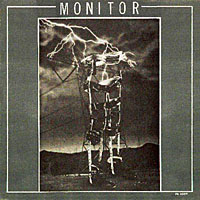
The real wild card is the band’s contribution to the self-titled LP by the L.A. band Monitor. I lucked into an original copy of that album roughly twenty years ago and it’s given me some fine times since. Released on World Imitation, the record finds Monitor wiggling like greased-up eels between something vaguely Residential (very keyboard driven) and a pricklier/wonkier early-‘80s West Coast art-rock impulse. Not far from the gentler side of the L.A.F.M.S, the record’s something like a lost classic of the early-‘80s California underground in all its highfalutin glory.


Throw in the Meat Puppets factor (plus the fact that some backing vocals are provided by future film director Allison Anders [she of BORDER RADIO and GRACE OF MY HEART] and her daughter Tiffany) and I’m stumped as to why the disc isn’t better known. “Hair” finds the Pups wailing along with Monitor member Steve Thomsen’s keyboards and the result is a nice bit of shuddering racket that sticks out on the record like a throbbing appendage. And that was precisely the point.


Now the stage is set for their coming out on SST. It’s immediately striking that MEAT PUPPETS is noticeably heavier than the above detailed material, a fact that can be credited to ace producer Spot. Curt’s vocals are more whacked-out than ever and his guitar sound feels like it could inflict physical harm, Cris’s bass has advanced far beyond punk orthodoxy, filling in spaces and driving forward instead of just deepening the overall sound and Derrick’s  drums are spastically brutal. There is still the whiff of deformed hardcore, but the best way to sum up this record is to call it one of the wildest left-field desert-fried weirdo punk records that the underground ever belched out. There’s a palpable smart-alecky tone to some of the proceedings, particularly the treatment given Doc Watson’s “Walking Boss” and the near destruction of The Sons of the Pioneers’ “Tumblin’ Tumbleweeds”, but this never crosses over into mere gimmickry. They are suitably much more concerned with being noisesome and rocking in a wonderfully sideways fashion. At their less disruptive moments they can conjure a vision of a scaled down violin-less early Camper Van Beethoven that’s default mode was punk grit and anger instead of instrumental adeptness and irony. “Tumbleweeds” and “Meat Puppets” were among the first punk songs I heard around ’87 or so via THE BLASTING CONCEPT, and the unadulterated strangeness of the pair (and the whole of CONCEPT in fact) informed me right quick that all the stories I’d heard about punk being a limp fad was the counterfeit wisdom of old men and squares. MEAT PUPPETS is probably in the end too proudly warped and abrasive to ever really overcome its status as a minor record by a soon to be great band and if this is its fate then sadly that’s the breaks. I feel safe making the prognostication that it’ll be handed down by generations of noise-starved malcontents until the planet finally spins off its axis. Staying power it most assuredly has.


Back in ’99 Rykodisc did an admirable job of rescuing and reissuing the Meat Puppets early catalog from SST’s despairing later environs, and the disc that couples the debut with IN A CAR and a heap of additional tracks is a stone dilly. The HARLEY, LIGHT BULB and Monitor cuts are all here, as is their contribution to ‘82’s AMUCK comp from Arizona’s Placebo Records (home of weird-meat skate punks Jody Foster’s Army, don’t cha know). The rest is all previously unissued, and it’s suitably all over the place. A relatively reserved cover of Fred Neil’s “Everybody’s Talkin’”? Check. A mauling of Iggy & the Stooges “I Got a Right”? Yup. A twisted, harried and rocking run-through of Neil Young’s “I Am a Child”? It’s here. A warped and prescient take of The Grateful Dead’s “Franklin’s Tower”? Oh yes indeed. There’s also three alternate album takes, including a wildly different version of “Milo Sorghum & Maize” and a pair of unreleased originals from the period, both really showing the band itching to get into their next fruitful phase. But more on that at a later time. Rykodisc deserves great praise for collecting all of this important early material and storing it onto one CD, where the totality displays just how successful the Meat Puppets were at using their collective warped imaginations to brutalize the confines of genre. Since I have an easily bended rule about buying physical releases more than twice, I’ve thus far settled for downloads of the Ryko issue. Not to be all upstanding, but I got ‘em through EMusic, so if you use that service and want to hear this stuff go there. Of course there are no liner notes to pore over and the intriguing enhanced video that comes with the compact disc is obviously absent, but a person can’t have everything. Everything? Well a curious footnote of the early Meat Puppets relates pretty damn well to the concept of completism. In 1983 the band sent a snippet of a noise jam titled “Soup” by request to some now anonymous Euro industrial manic for inclusion on a compilation cassette titled BETHEL.


This was very homemade labor, not on a label, with only 500 made, the kind of thing that disappears without a trace, stuffed into closet and forgotten about or tossed into the trash by uncaring parents or hoarded in deafening silence by anti-social collector dudes to become the stuff of legend, spoken of in hushed tones in private conversations: I talked to this guy who knows this girl that used to date a fella from upstate whose brother might have a copy of the tape. No, since he’s on disability and lives in his parents’ basement it’s doubtful he’d sell it but it is likely that for 20 bucks or something he’d tape it for us.  Ah, the information sponge that is the ol’ internet has come to the rescue again. With a little web searching the download is easily findable and Bostrom even put up a link on the Meat Pups’ site to the excellent blog The Thing On The Doorstep that currently hosts the MP3s. What a classy, solid thing to do. As for the BETHEL tape….it’s a fascinating head-scratcher. “Soup” shares two sides of a C60 with a hard to fathom array of names; an appealingly abstract solo cut from Bauhaus Goth-merchant David J; the brutal, squalling power electronics of Pure featuring future Skullflower noise maestro Matthew Bower; the experimental genre unto themselves that is Nurse With Wound delivering some home-spun tape collage; industrial long-servers Coil providing an swell instrumental that’s a readymade for some student film sountrackery; Irish Goths and Tesco Vee faves The Virgin Prunes appear with a bit of piano driven mope; Jim “Foetus” Thirwell doles out two idiosyncratic cuts, one that sounds like crystalline pianistic New York minimalism and another that’s a collusion between a toy keyboard, a randy xylophone, some mournful horns, a siren and assorted vocal sounds; L.A. art-rockers The Romans bring a bit of keyboardy sonic drift; two tracks surface from problematic but undeniable ideological provocateur Boyd Rice in his formative industrial/noise mode; L.A.F.M.S. vets The Doo-Dooettes give some typically well-fleshed out art-screwiness; and there’s a concluding uppity live cut from post-punk rhythm-riders 23 Skidoo. If this lineup has you salivating like a famished guest at a swank banquet then rest assured that in those feelings you’re a lot like me. How do the Meat Puppets fit in to this wild scheme of affairs? They acquit themselves pretty damn nicely and much better than Bostrom’s indifferent assessment. “Soup” might be a toss off, but it’s more than okay for all that, a loose bit of free-rock noodling that won’t give Dead C a run for the money but is worth the time nonetheless. It’s certainly not a life changer but it is testament to the breadth of these guys’ impressive scope. Since it’s available for free any interested party can grab it and decide for themselves without the often intrusive expectations of rarity. And in the bargain absorbing the whole cassette will shed lovely light on one mysterious figure’s intense devotion to the thriving underground and the striking powers of selection that were the result of the effort. That the Meats Puppets are involved is just a truly bonus wrinkle. And in closing, don’t be seduced by the general line on the Pups’ early days, for their ragged beginnings are an important and rewarding nook in the labyrinthine crannies of North American punk’s volatile history.


Saturday, November 27, 2010

Judging a record by its sleeve: Black Flag's MY WAR LP as an hommage to Richard Meltzer, an examination of Raymond Pettibon and a celebration of the scene, maaaaannnnnn....


In the early 70s, Richard Meltzer began his slow journey away from rock criticism by submitting reviews that only dealt with the record's packaging, filling column space not with the dreary prose that his editors had come to expect and actually demand, but instead fixating in his canny and dyspeptic way on the minutiae of what had become almost integral in the atmosphere of the "business" of rock music, i.e. something that's unquestionably important yet almost never gets talked about. Because if "it" wasn't important, the "it" being the album cover, than they'd certainly all look the same. Important to whom, you might be asking? That's a big question, but for the purposes of this argument, the ogre of "financial interests", most definitely. Now, it's easily evidenced that album covers don't look the same. But "feel" the same? Oh yeah, at least a significant portion, and I'm not talking about the sensation of holding them in your hands, natch. When album covers begin to feel the same, what's that say about the music inside? Now, the roomy tract you're currently reading isn't going to follow Meltzer's paradigm very closely, but I wanted to mention him now because we'll return to him later. For the time being though, let's talk about Raymond Pettibon, the artist responsible for the cover of MY WAR.


Raymond Pettibon

In my eyes, one of the most interesting angles in the whole underground music milieu is the Who, What, and Why of the scene participant's various non-musical interests. Pettibon’s contribution is frankly one of the most appropriate alliances (in terms of style and subject matter) between music and visual art formed in the "punk" movement, yet this connection can prove rather elusive to easy synopsis. He is essentially an artist of discomfort, and his art is suffused with negativity and a profound preoccupation with bleakness and despair that made its adoption by the counterculture of the Reagan-era almost inevitable (and it surely helped that Pettibon was Black Flag guitarist and SST owner Greg Ginn's brother). However, the large bulk of his art from this period features so much depth and bitter intelligence that I can't help but think it was lost on the majority of those who felt it was "theirs". Or to put it another way, I can't shake the suspicion that so many were stoked over the shock value while sidestepping the critique that often concerned their contemporaneous social environs. But maybe I'm judging to harshly. One of the unique aspects of the punk/indie scene's extra-musical influences is how diverse they were. This fact often takes people with even a fair knowledge of this era's music by surprise. The lack of overt documentation on the specifics of what was happening in film, writing, and visual art within this subculture can lead some individuals to conclude that John Hughes films and Bret Easton Ellis novels were primary exponents of the period's underground rumblings.


To be blunt: Au contraire. Legitimate non musical contemporaries were definitely making contributions to the cultural landscape. The written word was represented by such disparate entities as Kathy Acker, the cyberpunk sci-fi of William Gibson, Bruce Sterling, and Lewis Shriner, the late works of William S. Burroughs, musician littérateurs like Nick Cave, Lydia Lunch, Billy Childish, Chris D. and an inked-up baldy whose birth name was Henry Garfield; film was infested by Cinema of Transgression figures like Nick Zedd, Beth B. and Richard Kern, along with other names like Dave Markey and John Moritsugu; and visual art saw the paintings (and performance works) of Joe Coleman, the woodcuts of Billy Childish, the scrawl of Savage Pencil, the cross-media gestalt of Gary Panter, and of course a venerable gaggle of commix artists venting spleen and acting snide or aloof, probably the most successful example being a guy you may have heard of named Matt Groening. Raymond Pettibon falls into this sticky constellation, his personal aesthetic radiating like hijacked James Thurber one panels that have all the humor sucked out of them only to be injected with trepidation, existential dread and flashes of misery. Of course, punks and other non-conformists of this era (read: bohemians) also grabbed from history, and it's rather startling just how intense this plundering was. Contrast this to the hippies, where the distrust of older generations meant that only very specific artifacts were allowed entry into their playground (some Beats, some Huxley, and some Hesse, for example) and you can see just how non-rigid the '80s subculture really was. Lit kicks were satiated from sources as various as those Beats, hardboiled detective fiction, pulp sci-fi like Phil K. Dick and Samuel R. Delaney, post-mod word-fuckers like Pynchon, weird smut like Pauline Reage and De Sade in appropriately tough translation, pimp pulp from Iceberg Slim, Hubert Selby's sustained scream from the New York streets, Bukowski's fly in the ointment aesthetic, French absinthe poets and their sexually transgressing country folk like Jean Genet and certainly Georges Bataille. The pilfering of visual art was just as widespread: Dada and Surrealism, the less celebrated works of Warhol and his Pop-Art brethren, Chris Burden's bonkers performance pieces (amongst other things, he was shot in the arm from five feet away and nailed to the back of a Volkswagen; now THAT'S an example of the utilization of shock value that I fully endorse), and the equally berserk activities of the Vienna Actionists. But looking at film provides the most enlightenment into '80s bohemia's rabid selection. The explosion of home video viewing and the proliferation of midnight movie showings really boosted the situation. A hypothetic book on the subject could be broken down into the following chapters and would in no way be exhaustive: the blunt strangeness of Tod Browning's FREAKS, the early surrealist revolts of Luis Bunuel, Nick Ray's REBEL WITHOUT A CAUSE, oddball Hollywood and independent sleepers like Samuel Fuller's THE NAKED KISS and Leonard Kastle's THE HONEYMOON KILLERS, the films of Jean-Luc Godard (particularly the more difficult work like WEEKEND and SYMPATHY FOR THE DEVIL) and Rainer Werner Fassbinder, the Psychotronic phenomenon from Ed Wood to H. G. Lewis to Andy Milligan, the gut-punch horror films of George Romero, Tobe Hooper and Wes Craven, idiosyncratic midnight movies like Lynch's ERASERHEAD and Jodorowsky's EL TOPO, controversial works by established commercial directors such as Kubrick's A CLOCKWORK ORANGE and Scorsese's TAXI DRIVER, the films of John Waters and Russ Meyer, early Cronenberg, Andy Warhol's directorial efforts and those he produced with Paul Morrissey, and the avant-garde work of Warhol's contemporaries, particularly Jack Smith’s FLAMING CREATURES and Stan Brakhage's sublime autopsy film THE ACT OF SEEING WITH ONE'S OWN EYES. In addition to the simple availability of all this stuff were the long gaps in the emergence of contemporary work that could speak to this alienated and self-marginalizing audience. Sure, in addition to those mentioned a bit earlier there was Derek Jarman and ROCK AND ROLL HIGH SCHOOL. Yes, there was a spate of non-fiction films that documented the scene. Alex Cox’s REPO MAN obviously deserves mention along with other unusual “Hollywood” films like Dennis Hopper's loopy OUT OF THE BLUE and Tim Hunter's THE RIVER'S EDGE. We can throw in “message-porn” like CAFÉ FLESH and the druggy/arty sci-fi of LIQUID SKY. But before long it starts to be slim pickings, in part because the distribution networks were more grassroots in this era. What's this have to do with Ray Pettibon and his cover for "My War"? Well, nothing. And yet everything. NOTHING because the last three paragraphs were essentially just a riff (I love jazz), an indulgence (so does Pettibon), a way of fleshing out some of the cultural terrain of a period where everything wasn't available at the click of a mouse, and people were forced to bring dimension to their way of life through constant digging and the passing around of artifacts while the culture at large looked in the other direction. It was so much more than mail ordering records. And EVERYTHING because context is essential; Did you know Pettibon also made films?


VHS cover to Pettibon's CITIZEN TANIA

He's been in bands, too (he's in one now, in fact). And his art for many years was collected into little low-budget pamphlets that could be ordered direct from SST. These small books could be used in a variety of ways; carried in backpacks and stared at in cars while waiting for something (nothing) to happen or strategically placed in the living space to ultimately trigger a reaction. Upscale trendies aren't the only people with coffee tables, you know. If there is a certainty in this universe, it is that PUNKS LOVE COFFEE, and I'm just as positive that one of Pettibon's chapbooks would look flat-out amazing next to a piping mug of shitty instant brew. But really, my digressions do at least provide emphasis that this specific movement generally disdained art that had any real relationship to fine-art aesthetics or any high (or middle) brow acceptability. Take photography for example: The main thrust of it within this scene was divided between stern documentation (Glen E. Freidman, SST's Naomi Pedersen, Jenny Lens, Cynthia Connelly, and later shutterbugs like Michael Levine and Charles Peterson for example) and the eventually stultifying application of collage art (more Dada influence) as statement (we could maybe call this the Maximum Rock 'N' Roll aesthetic). Art photography seems rare in the annals of the era, the only names really springing to mind being Robert Mapplethorpe, Joel-Peter Witkin, maybe Larry Clark (later of KIDS directorial fame) and possibly Robert Frank if we're being extremely inclusive. This isn't to infer that documentary photography lacked an artistic dimension (no way) or that the occasional collage didn't achieve its effect. I'm just trying to ram home the point of just how anti-establishment this movement was (and still kinda is, because I tend to look at the period between the counterculture's re-ignition around 1977 and the present day as one long and warped continuum) in relation to its defining principles. If the public at large is generally thinking glamour shot sheen or Ansel Adams (glamour shot mountains) in relation to photography, then it's no surprise that the post-'77 scene so thoroughly embraced a basically vérité approach. To extend this idea: When an ink on paper piece by Pettibon commands $66,000 at auction, it's impossible to think this won't somehow change how his art is perceived. In this case, his work had certainly developed but suffered no commoditization (i.e. sell out); it is simply the case that museum culture reigned him in as one of their numerous outsiders. But dig what happens when this occurs: the joy that's inspired by the strange reactions and dismissive tut-tuting over a freaky album cover is replaced with the feeling that smartly dressed people with too much fucking money have co-opted another goddamned thing.


Sour grapes over losing exclusive bragging rights to the fandom of some record/film/book/etc is generally not very attractive, and I tend to take a more pragmatic approach and cheer when some little niche artist/writer/band that I love finds a wider audience. But sometimes it's hard to not feel the sting. Like when an old SST mail order catalog falls out from an LP sleeve onto the carpet, for instance. I pick it up to ogle the listing for once affordable Pettibon chapbooks, and that leads me to look across the room at the thick and glossy paperback of his awe-inspiring later work that set me back $80. Damn right I feel the sting. But that's okay, because when that baby sits on my coffee table it looks just beautiful.


One of the positive things that Pettibon's integration into the art-world has inspired is a more accurate view into what it is exactly that he does. If I had a buck for every time I clarified to someone between 1988 and 1995 (an arbitrary cut off point, sure) that Pettibon wasn't a cartoonist or comic (or commix) artist, I'd buy you lunch. No, not you, YOU. It'd be cheap eats, but still. Pettibon was sometimes mistakenly lumped in with such u-ground comic scribes as Charles Burns, Dan Clowes, Wayno, Kaz, Los Bros Hernandez, and Peter Bagge, but what this wild-assed group did was basically adapt their working methods into a piece that could help an album sleeve or CD cover stand out from the majority while basking in the good vibes (and personal checks from record labels) that mutual appreciation inspires. The use of Pettibon's work is essentially different. The impression is that he worked on his own and his pieces were later adapted (and rather notoriously debased with scissors) to gig flyers and album covers. On one hand he's identifiable as an artist in isolation, yet he designed the Black Flag bars, which lends him the aura of collaboration. The work of the comic artists always felt more capitalistic than that: Clowes was quite blasé about it in interviews and Burns and Bagge submitted work for some really rotten mainstream albums. In the '90s there was an explosion of artist collaborators like Frank Kozik and Coop who seem more in league with Pettibon, but here the difference is less one of function and more one of effect. Both Kozik and Coop were all about the reinterpretation and subversion of iconography, the former turning established and seemingly benign images like cartoon characters into drugged out sex kittens or creepy street urchins, and the later ramping-up old standbys like salivating sex-crazed wolves, making the object of their lust-drenched blood-shot eyes the buxom and scantily clad women descended from hot rod culture that radiated like a twisted manifestation of R. Crumb's gargantuan libido.


A nutshell example of Coop's style

This duo was one of the prime examples of the ‘90s’ sub-cultural fascination with being politically incorrect, or more accurately they filled a need by some to adopt a deliberate stance that prized a type of apolitical hedonism. In addition, Kozik and Coop were essentially about surfaces and are basically formalist. They both actually sort of defy the punk ethos that anybody can play. One look at their work shows that a high level of discipline and trad-art skill was employed, even when the deluge of silk-screened show posters, magazine covers and limited edition record sleeves began to take on an almost Warhol-like assembly line feel. There was actually a bit of grumbling about Pettibon during this era, even from Kozik himself, the main thrust being that his stark, often minimalist work possessed a lazy, sloppy aura that a more precision-tuned artist like Kozik found unappealing. I took this in stride then and now, but still feel that it's similar to the attitude that The Ramones weren't any good due to their music's lack of solos. But the ultimate proof in the pudding regarding the difference between Pettibon and Kozik/Coop/etc is one of impact. Again, the more formalist approach of the later group never really gets beyond the level of eye candy, which is cool enough, but there was just so much of it on CDs and posters and the covers/pages of YOUR FLESH that it seemed the scene eventually OD-ed on the stuff.


It was everywhere for a while, then it suddenly wasn't. In contrast, Pettibon was never really that prolific, and an even better point would be that his work is so wrapped up in his personality and ideology that he never had a single imitator. And Pettibon's art has a depth that really lingers. The effect of a piece viewed once can last years, and other examples can put a damper on my day (in the best way possible) even if they are already quite familiar. Pettibon may not be the cause célèbre he once was, and his audience may now include wealthy art investors who don't give two squirts about the aesthetic worth of the So Cal punk rock scene that helped thrust him into prominence, but his presence is certainly still vital.


So there we have it. And in an attempt to not sound like a panting sycophant, I'll refrain from giving too much credit to the SST crew for their adoption of Pettibon's work as a visual signifier. The blood relationship between Pettibon (pseudonym from the French, petit bon, and meaning "good little one": thanks Wikipedia) and Ginn makes downplaying rather easy, plus the rather offhand way that some of the SST crew approached Pettibon's art doesn't smack of a reverential mindset to the man's stuff. I'll stop short of describing the appropriation as trying to just shock and instead opine into what I think was really being attempted: the desire to stand out in a field that was beginning to look and feel the same. You can apply this idea to the band's hairstyles and clothing choices as well. Countercultural conformity was starting to run rampant, and Black Flag really defined themselves as not belonging to any camp, and if there is any artwork from that era that promulgates alienation and the ideals of being a loner, it's Pettibon's. But in contrast to how the Minutemen used his work, Black Flag's collaboration, while certainly subversive, still seems significantly less profound. To relate this back to Meltzer, the whole punk rock impulse, and the west coast division of it in particular, actually got him inspired again by the potential of basic, dirty rock 'n' roll as a vessel of defiance and distorted beauty.


Meltzer reading publicly a few months back via Kevin Sampsell's blog

The contrarian streak never left him, but he hosted a radio show for a while ("Hepcats from Hell"), penned a whole bunch of rock related junk for small press publications throughout the '80s, talked some sweetly foul mouthed shit about Bill Graham's Mom on stage as the emcee for the Sex Pistols' final gig at San Francisco's Winterland Ballroom, fronted the blink-and-you-missed-it punk band Vom with the future Angry Samoans, and inspired D. Boon to proclaim from the stage: "This song goes out to Richard Meltzer, he was our hero!". Righteous and individualist tactics like submitting cover art-centric record reviews to publications whose modus operandi was nothing more than insuring their print pages secured record company advertising was just one thing that made him so heroic. And that heroism manifested itself in the way SST operated (at least early on), which in turn impacted my teenaged consciousness as I ominously eyeballed the covers of MY WAR, SLIP IT IN and LOOSE NUT in a sterile mall record store, where they frankly stood out like radioactive artifacts in an ocean of insubstantiality. I can only hope that some impressionable upstart might stumble upon this modest bout of theorizing and get gobsmacked by the mighty inksmanship of Raymond Pettibon, and in turn elect to spend his life asking questions instead of dully and dutifully accepting the answers. We can only pass the torch one person at a time, right?


Monday, July 12, 2010

Wordy, unruly and dissonant: Saccharine Trust- PAGAN ICONS LP (SST 006)


Saccharine Trust’s first album is probably destined to be ever-slept on. It’s certainly identifiable as punk rock circa 1981, though there are either too many or not enough odd, quirky, arty elements integrated into the brief running time of PAGAN ICONS (I consider it an LP, some call it an EP, I think we’re both right) to work up the posthumous froth of a fan base. For many, they will be considered too weird to fit the now codified definition of what punk rock is supposed to sound like. But for others, the Trust will be too committed to the rock tradition, even at this early point, to really qualify under their terms as groundbreaking or vital. They weren’t an “anti”-group like Flipper in form or The Nig-Heist in content, and while assuredly lyrically thought provoking also lacked the aggressive antagonism inherent to many of their peers (label mates Black Flag for one example). Folks could and have called Jack Brewer’s words pretentious and his voice obnoxious, but rest assured I’d never be that uncouth. Brewer’s real function at this early stage is to serve as an effective vocal counterweight to guitarist Joe Baiza’s already distinctive style. Syllables and chords intertwine into a heaving, throttling atonalistic mass that when aided by the functional but worthy rhythm section of Earl Liberty (bass) and Bob Holtzman (drums) forms a vicious and dark whole. Brewer’s throat is so loose and slippery that it essentially eschews the sorta big group sing-alongs that have aided a lot of now canonical punk action, plus the lyrics avoid the kind of chanting brevity or blatant sloganeering that was quite frequent by this point. “I Am Right” is a tightly wound and well executed exception (while subversively serving as a smart taunt toward self-righteousness, punk and otherwise), featuring a group-growled chorus melded to some tightly coiled chug and clang (it was later covered very well by Sonic Youth), and “We Don’t Need Freedom” does edge up against the caustic protest punk that was starting to gain traction in the dawn of the hardcore era, though the thorny ponderousness of the subject matter is much larger and interesting than the so often simplistic political platitudes expressed by a stinky busload of punk “radicals”. This true non-conformist quality is quite an important aspect of their sound and identifies Saccharine Trust not as outsiders searching for the safety of a marginalized peer group (which is what much of the punk movement [any movement for that matter] actually was, and there is not a bit of shame in that) but instead as committed iconoclasts stoked by the thrilling tension and release (i.e. the power) of musical expression. Of course the Trust did find their hail fellows in the SST/New Alliance scene, where they became an integral piece of that network’s puzzling jigsaw. This fine record zips by in a flash of amped up density, with the five minutes of its closing cut “A Human Certainty” making it quite clear that Baiza and Brewer were heading outward from any kind of orthodoxy. Joe wails through a snarling mess of string mulch while simultaneously presiding over a stressed groove, and Jack steps up and matches him with the bruised and bombastic testifying of a wounded soul. This is the track that appeared on THE BLASTING CONCEPT compilation LP and served as my introduction to Saccharine Trust. ICONS fell into my lap almost immediately after that, and at first “A Human Certainty” stuck out like an aching digit from the other seven tracks on the record. 1-7 were hyper-spazzy out-punk, ragged and surly and comely, but 8 felt to me like a sweaty and unstable deconstruction of something I was much more familiar with at my then young age, that being blues based hard rock. This was in no way a boneheaded punk-era piss take, however. It was instead a signifier of deeper rock knowledge that lined these guys up with not only their SST label mates Minutemen and St. Vitus, but also Cali-contemporaries like Dream Syndicate, X and Flesheaters. This sense of history helped Saccharine Trust avoid even a fleeting flirt with faceless generics, and they continued to evolve, underappreciated but unbowed. These days, PAGAN ICONS truly feels like a well formed whole. Its energy and intelligence are undiminished, and if you’re at all interested in the SST saga, this isn’t a footnote, it’s an essential component.

Wednesday, May 26, 2010

Fighting a war we can't win: Black Flag's DAMAGED (SST 007)


If I had a buck for every time Black Flag's DAMAGED was used as the soundtrack for some sort of hedonistic gathering or unhealthy activity, I'd never need to work again. And if I could gain a dollar for each time this same record was played by a single individual, angry and confused and plagued by solitude, staring at the walls or down at a blank sheet of paper that's purpose is to document thoughts expressed through words that somehow can't get through the haze or distortion of emotional desperation, I'd double my money. Easily. I'm sure there are people who own this record that have never punched a brick wall out of sheer frustration or looked at themselves in a mirror in disgust or stood amongst a group of individuals and felt light years away in temperament. Those people may even "like" this record. But they don't really know its power, what it's expressing so succinctly about the failure to fit into a world that shuns and shames those who can't or won't internalize or deny the sheer causticity of which daily life is capable. A whole lot of ballyhoo has been made about the legal bullshit that this record inspired, but the aspect of the whole situation that sticks out to me is what started it all, specifically MCA's refusal to release it, using the jargon "anti-parent". It's a nice tidy term that holds the messier reality that DAMAGED is like the aural essence of the quintessential "problem child". It's a seething rant to every mom and dad who'd half-assed reared offspring that didn't ask to be brought onto this planet, and also a balm to those same kids, informing each one that they were part of a multitude of fucked-up and scrawny and fat and acne-riddled teens who were teetering on the brink of implosion. It's easy to picture some well tanned asshole record executive hearing this music and being assaulted by exactly what it was/is, and immediately fearing that it could spread like a virus from pressing plant to record store to bedroom through speakers and headphones and into ear canals and oh, shit: the gig is up. Molly no longer hates the fact that she's overweight or feels inferior to the cheerleading squad. Nah, she's bought a leather jacket, cut her hair short, and doesn't hide that she's attracted to girls. Of course I'm romanticizing somewhat, but after taking in the bitter yet lovely pill that is this album, all that romantic jive slowly transforms into well earned tribute. The fact that the band plays with such feral atonal fury while always keeping a loose grip on the song's focus is still startling. The phrase "an untamed sense of control" was coined by Bob Dylan to describe the early country/pre-bluegrass Kentucky mountain music of Roscoe Holcomb. I'd like to momentarily hi-jack the compliment and apply it to this LP, because it fits like a pair of long johns. Only after a few decades of bands’ copping its moves does DAMAGED really reveal itself as the goddamned structural behemoth that it is. The rhythm hits with a deliciously pummeling elasticity, and Greg Ginn's guitar grinds, burns, and squalls all over the proceedings, reaching for twisted sounds that ring out with a "wrongness" that's just gripping. If you haven't heard the record, my description may lead you to think that its greatness is tied to a certain inspired monochromatic sensibility, ala certain first generation hardcore bands. If so, let me correct that impression. It's certainly not all over the map stylistically, but as the grooves lead to the label it displays a commendable variety, particularly on the second side: "Padded Cell" is just one example of the spastic perfection that this specific version of the band could cook up.


Black Flag live at Wilson Center, Washington DC with Chicago's Effigies and some of harDCore's finest
(almost too much of a good thing)

The record ends with a ranting Rollins presiding over a tweaked sub-bluesy lurch that points Black Flag to one of their subsequent directions. For many, the majority of songs contained herein were almost golden oldies, and it wasn't hard to see the appeal to the band of truly throwing them down one more time before moving on. Rollins-era Flag was a rapidly evolving beast, at times not even including the vocalist that for a large group of listeners is the first thing they think of when this group's name comes up. Unlike The Minutemen or even underappreciated yet championed SST groups like Saccharine Trust or Slovenly, opinions about Black Flag differ wildly. Each vocalist has their partisans, some love the pre-Rollins period and disdain the DC transplant's contribution ("Rollins ruined Black Flag"), others dig this record but think that the focus was lost with the later stuff, for a few the two live albums of the Rollins-era are where it's at, with the studio stuff falling short. The instrumental work is hated and loved by many for roughly the same reasons. This is only a few of the opinions held about Flag's discography (if I had a buck for every debate/argument this group inspired at parties or bars…..ah, you know the rest). In some ways this is unavoidable and part of the band's lasting appeal: I know I listen to MY WAR more than LOOSE NUT, and when I want a charge of primal punk rock the early stuff satisfies the need, not THE PROCESS OF WEEDING OUT. But DAMAGED stands apart (not entirely though; I've met a few stodgy Flag fans who say they don't like it) as the one document of the band that comes close to summing up what they were all "about". It has definite links to the early sound, the gunky two guitar mania (which Spot apparently hated), and includes enough off-kilter tics and weird flashes to show that they were so much more than just some ordinary punk band who happened to have a really great day in the studio. This is the sound of ‘80s style urban desperation boiled down to a science and fired like a shot from a bazooka to send the façade of normalcy falling down like the house of cards it most certainly is. It's a stone classic and one of the finest and most extreme examples of the sonic depth charge of which rock music is capable. I can only hope you're young and fucked enough to know just how special it is.


Saturday, May 8, 2010

Spotlight on Scientist Rock: Minutemen's THE PUNCH LINE (SST 004)


By this late date, I’ve become so familiar with the music of the Minutemen that it's almost part of my DNA. I can still recall quite vividly the first time I played THE PUNCH LINE, dropping needle to vinyl in my basement bedroom and preparing to flail my flabby frame to whatever my modest speakers spat out. This was a common ritual in those anything-but-halcyon high school days; however this occasion culminated with a different result. By the end of side one, I wasn’t all sweaty and puffy but was rather standing completely still, inspecting the album jacket in my hands like it was a piece of Mayan pottery that I'd inexplicably found under my bed during an all too infrequent cleaning session. Instead of flipping the record over, I replayed the first side again, and then a third time. It was a memorable afternoon, to say the least. At that point, I'd heard maybe a dozen or so punk records and a handful of homemade comps from friends where the music of assorted bands basically blended all together like the ingredients in a well-prepared fruit salad. Yum. When something stuck out, I elected to investigate further. First, I scored a copy of the justifiably legendary THE BLASTING CONCEPT compilation LP (SST 13), the contents of which felt like the sonic equivalent of being wailed on by a bunch of thuggish rouges, only to then be helped up, dusted off, and sent home with a playful ass slap. This led me directly to THE PUNCH LINE. One quality that still excites me about the record is how goddamned up-to-the-moment it sounds, specifically because the band's music was so extremely personal and, dare I say it, original. The "Ohh" word is best avoided as a rule when writing/talking about music (because there will almost always be someone ready to pounce and decry claims of originality with scenarios of influence, sometimes overstated and occasionally IMO imagined, though I’m getting submerged in a whole other bucket of guppies), but in this instance I feel it's acceptable to let it slip, mostly due to how it connects with the example of bassist Mike Watt's professed love of Modernist writers like Joyce and Faulkner.


The whole broad scope of Modernism (and 20th Century art in general) was flat-out ass-kicked by old man Ezra's challenge to "Make it new", and the still utterly unique music of these Pedro proles confirms to my ears that they really understood how to pull off that difficult task. In a nutshell, the only way to really, effectively make it new is to soak up and learn from the whole vast avalanche of worthwhile antecedents, and then after appropriate consideration distilling it into a potent brew that can make the receiver feel drunk (but not too drunk) with the liberating possibilities afforded by the freshness of this particular path. History so often repeats itself because too many hambones haven’t done their homework.
If all this sounds somewhat hyperbolic and worshipful, please allow me clarify. Regarding worship; if the story of this band is unfamiliar to you, I'll state that they were not a not a group that were knelt down to, at least not in the bright light of day. They were modest, positive, encouraging guys who in no way attempted to elevate themselves over their fan base, and were in fact vocally uncomfortable with the idea of musician as deity. If any band can be said to have brought the true essence of the punk rock ideal hurling into the indie-rock era and beyond, it was Boon Watt and Hurley. A book about the whole indie-rock explosion was thoughtfully titled from one of Minutemen's blunt lyrics: "Our band could be your life", a direct, level-headed mantra that sits in sharp contrast with some of the "Mascis is God" (new new Claptonism) or "Sonic Youth are geniuses" (new new Beatleism) remarks that I heard in smoky dorm-rooms and during car rides, so I hope you absorb the point that my verbiage is less designed for pedestal placing and is intended instead like the enthusiastic kudos you'd give to family or close friends when you discover that they've managed some particularly righteous feat. As for hyperbolic, I'll surrender guilty as charged, since the success and appeal of Minutemen is intrinsically linked to a workmanlike, kinda ordinary, no-big deal anti-swagger. Get in the studio, get onto tape, get outta there and get heard, and get back to being dudes. Indeed a large friction does exist between the reality of this band and my attempts to give them their due within the context of art and history and the struggle of moving onward (forward!) in the intertwining lives we're handed (i.e. SHIT THAT MATTERS), but if you just (re)consider that basement bedroom remembrance and how it's still hanging on tight after over twenty years of existence (fuggin’ nostalgia, it’ll get you every time), I hope that friction isn't difficult to swallow.


In one sense, I’m a bit disappointed that THE PUNCH LINE is no longer available as a standalone work, being currently in print as part of POST MERSH VOL. 1, the first of three collections that do an important job of showcasing the majority of the band’s pre DOUBLE NICKELS ON THE DIME output (though the greatest Minutemen comp will probably always be the gargantuan MY FIRST BELLS cassette (SST 32), an exhaustive road-trip readymade that smartly pulled together nearly everything these guy’s recorded pre-NICKELS and that I somehow stupidly and sadly allowed to slip through my fingers. I blame it on the format: convenient enough to fit in yr shirt pocket, but far easier to lose. It’s probably under the passenger side seat of a grey Chevy Chevette in some skanky junkyard at this very moment. Blah). Minutemen’s original releases are very distinct. While their sound was in constant flux they were also strict and thoughtful documentarians of their music and no-nonsense operators in the studio, the result being LPs and EPs that when lined up and played in something resembling chronological sequence present a thread of artistic progress that’s the equal of any rock band ever. And if you think THAT is hyperbole I simply ask you to shine a light on their betters. That said I don’t want to carp too loudly over how digitization can distort the beauty of a band’s evolution. Who’s to say that my approach to their sound is any more worthy than a sixteen year old skate rat pumping the band on IPod shuffle, anyway? Still, my passion for historical clarity burns.


THE PUNCH LINE is very much a punk rock record, eighteen songs in roughly fifteen minutes spinning at 45 RPM, and the overall hefty brevity is comparable to other get-it-over-and-done-with punk slabs from the same time period such as Circle Jerks’ GROUP SEX and Angry Samoans’ BACK FROM SAMOA (all three from Cali, I’ll add). The weight and shape of the sonics are quite different, of course, since Minutemen were squeezing out compact shards of what’s essentially a brutal and hyper punk/funk that continues to stand apart due to its solid minimalist tendencies, its sheer urgency, and its ultimate lack of egoist flash. They didn’t sound like anybody else, then or now, but this feat was achieved, as detailed above, through the absorption and consideration of precedent and the inspiration of their contemporaries. For instance, the music’s hooky minimalism took cues from the UK art-punk of Wire and marched in solidarity into the 1980s alongside fellow Californians Urinals (who’s “Ack Ack Ack” was covered by the ‘men). Certainly urgency and the avoidance of show-off moves aren’t uncommon traits in punk rock, but on this LP these qualities combine with the stridently political lyrical focus to attain a rare power. Where the words of so many punk bands are their least admirable quality (particularly as the ‘80s marched on), they were integral to what Minutemen were doing. They could say more with one song title than some bands could with an entire lyrical arsenal. THE PUNCH LINE shows them plumbing into the Beat-style word-smithing that later came to dominate their sound (moving away from the tyranny of the rhyme, but not forgetting that they were writing lyrics for instance), but at this early point they were still quite happy to embrace an edgy and well-considered didacticism, and you can feel as the record roars that the trio were fiercely proud to be political (a quality they never lost, in fact). And the ingrained influence of countless hours of pre-punk hard-rock listening (Blue Oyster Cult being the example the band most often championed) provides the record with both an amazing instrumental dexterity (attained through constant practice) and an unfailing balance between tight and loose, which for my ears is crucial due to the funk angle of the music (I’ll confess that when funk gets too tight it almost always loses me). Yet the dominance of punk in the total stew insures that they never succumb to hard rock’s excesses.


The idiosyncratic (though never obscure) nature of the Minutemen sound has gained them a strong following in the long term, but back in the ‘80s it caused many to hold the band at arm’s length: I often heard it spoken that they weren’t appropriately “punk” or “heavy” enough. I thought that sorta talk was crazy (natch), and I’m glad that hearing it has become less frequent than sightings of DRI muscle shirts. Faux Pas! The second hand vinyl of THE PUNCH LINE can’t be too hard to find or expensive when found, so if I’ve stirred yr interest, please don’t hesitate. It’s a very specific part of the Minutemen picture, and I contend that grappling with it alone will bring a sweet reward.

Saturday, March 27, 2010

SST Records + Canadian punk = The Subhumans' NO WISHES, NO PRAYERS (SST 18)


Right from the beginning, Canada's punk scene was a diverse and interesting one. The Subhumans are a vital part of that history. Their story starts in 1978 with the top notch DEATH TO THE SICKOIDS 7 inch, and the band, along with their British Columbian peers D.O.A., were one of the best examples of impassioned, unhyphenated punk rock energy to burst into the first half of the '80s. For the most part, punk is a genre best presented on the brief and sturdy vessel that is the 7 inch single. Long playing records very often expose the lack of ideas or focus which so many bands working with the slippery simplicity of punk have lingering underneath their admirable ability to conjure up a handful of great songs. Of course, there are enough extant exceptions to ultimately make this thought a general idea and not a rigid rule. Many great punk bands never managed to come anywhere close to the tightrope walk of recklessness and discipline that's needed to pull off the achievement that's a successful full length record, but the ones that did are deserving of high regard. The Subhumans, with their SST record NO WISHES, NO PRAYERS, land squarely in this upper echelon. What's most impressive about this record is how the music, essentially an extension of the melodic Brit-punk sound of the late '70s (going so far as to include a nifty cover of the Menace classic "Screwed Up"), is reverent to its source without sounding tired or irrelevant. By 1983, British Columbia was home to both the hyper speed weirdisms of The Neos and the "jazzy" progressions of Nomeansno, so the very straightforward approach that The Subhumans offered up was at risk of sounding antiqueish. That may seem like an overzealous statement, but five years, in musical terms, is a long time (To illustrate, consider this: A band, in 1969, that sounds like The Beatles in '64. Catch my drift?). That this record still sounds energetic and necessary a full flipping decade into the millennium after it was recorded leads me to the conclusion that it must have sounded positively cathartic in the year of its release. How sweet it would've been to have experienced it firsthand in a raggedy room full of bodies going bonkers with sweat and adrenalin and an obligatory police helicopter circling above the mayhem. The Subhumans were an exceptional blend of speed, snot, seriousness, fun, chops, and distortion, and even though they lack the idiosyncrasies of The Stains or The Dicks, that's no reason to slight them. I tip my cap.