Showing posts with label Yasujirō Ozu. Show all posts

Monday, August 1, 2011

The Auteur Files #14: Adventures in the Criterion Collection Part Six; Or, Men Are Pigs - Kenji Mizoguchi's OSAKA ELEGY (Eclipse Series 13a)


I first watched Kenji Mizoguchi’s OSAKA ELEGY over twenty years ago, renting the VHS shortly after graduating high school. It left a big impression, and I intended on going back for subsequent viewings, but alas, until now, it was not to be. Life is funny like that. For me, a largest part of the benefit of collecting various art objects is simply having them close at hand, so that when inspiration strikes at 3:47 am on a Tuesday morning (I just gotta watch/hear/read that again…), it’s only a short trip to the shelves for near-immediate satisfaction. But one tough reality about collecting is how, unless the focus is severely restricted, it’s well nigh impossible to collect it all. And if you did somehow manage, where would it all go? Into a huge catalogued air-conditioned warehouse? The pipedream of collecting everything would require vast amounts of money and so much effort that it would likely mean having little or no time to actually enjoy the rewards of such a titanic endeavor. I mention all this since there were easily at least a dozen instances where I wished to see OSAKA ELEGY over the years and simply couldn’t. Those are what’re called the breaks. A fringe benefit of this denial of access is that the longer the senses go without absorbing an esteemed work of art, the more it can inch back toward that state of undiscovered bliss. A return engagement can therefore be like getting blown away by a film all over again. That’s just what happened with me and Mizoguchi’s 1936 masterpiece. OSAKA ELEGY is simply one of the most forward thinking films to come out of cinema’s classical period. I feel safe in making this claim in part due to my extensive reading of and trust in the expertise of other far more knowledgeable film writers. My biggest reason however derives from my own direct experience with the film; it is a work of sincere feminist (and therefore humanist) conviction, but it never sacrifices the necessary depth of characterization or the importance of a strongly built story in its desire to make a bold statement. To the contrary, Mizoguchi’s point is greatly enhanced by how well he develops his tale and the characters that inhabit it. Foremost is Ayako, brilliantly played by Isuzu Yamada; a young switchboard operator victimized by the conventions of Japanese society and treated harshly by the members of her family for falling outside the accepted norms of the time, she’s in no way a shallow angelic figure, instead possessing faults and weaknesses like any member of the human race.


And this is ultimately what makes her fate so emotionally resonant to this very day; Ayako registers as legitimately, recognizably human, like us, Mizoguchi understanding that the societal wrongs he was methodically railing against in no way required a one dimensional beacon of faultless virtue, a caricature not a character, to secure the sense of patriarchal violation. Ultimately, the film attains its lasting importance and status of mastery due to the basic humanity that is given to not only Ayako, but all of the figures in the story. Mizoguchi is often compared to Ozu, and for good reason, but watching EARLY SPRING and OSAKA ELEGY in such close proximity really amplifies a large difference, at least in relation to these two specific films. In SPRING, Ozu establishes a mature, calm acceptance. He’s not trying to change the world, he’s just hoping to widen and deepen our understanding of it. In contrast, ELEGY is an angry film, or even better, it is “post-angry”, being calmly, solidly resentful of injustice, a feeling that’s enhanced when light is shed upon Mizoguchi’s autobiography (investigate it at yr leisure). SPRING notably has no villains in its story, and for that matter neither does ELEGY. But the males in Mizoguchi’s film surely do serve as the agents of antagonism for Ayako, who by film’s end takes on the status of anti-heroine.


If Ozu presents a level playing field for humanity that might subtly favor the feminine, Mizoguchi is far more overt in his sympathies. And again, the males in ELEGY are provided with the same essential humanity (if not the depth of portraiture), so that specific actions register as something much different than the methodical tropes of fictional villainy. Specifically, after Ayako’s arrest and disgrace for soliciting, the decision of her father and brother to favor the norms of cultural tradition against the bond of family feels egregious, particularly in light of Ayako’s movements away from the norms of society owing directly to the weakness of the father (in short, gambling debts that lead him to getting caught with his hand in the till) and the needs of the brother (a college student short the tuition money necessary to finish his last semester). Briefly, she slips into a role of mistress/kept woman to her boss in order to settle these debts, and then serves in the same capacity to an associate of her boss until she abruptly attempts to end this liaison in hopes of marrying a young co-worker. When her spurned lover has her arrested, Ayako’s world crumbles. Ultimately her family’s shunning of Ayako shows them as trapped by the circumstances of Japanese culture, and it’s important to also note that the younger sister shares in the male figures’ maddening and distasteful opprobrium. They are all presented with a choice, an extremely difficult one, forced between either sharing her fate or casting her out in the attempt to save some semblance of face. When it becomes clear they have elected for the later, the pain of the situation is intensified by the ambiguity over the disintegration of this familial bond in a culture where adherence to an odious hierarchy and mode of behavior is basically everything.


Do they even love Ayako, now that she has disgraced herself and by extension them? Did they ever love her, or were the activities of family simply a delusional ritual that provided normalcy, safety and the illusion of support until the bounds of acceptable behavior were breached? I couldn’t help thinking of Nathaniel Hawthorne’s THE SCARLET LETTER when considering Ayako’s treatment, though obviously there are some big differences between the text and the film. Hawthorne was in part concerned with religion and how an adherence to a puritanical standard of conduct clashes with unavoidable human desires and the fallout from this friction. Mizoguchi is again plainly disgusted by the ingrained structural oppressiveness of gender inequality, and it’s telling how LETTER is carefully, wisely set at the very beginnings of the American republic while the film is defiantly placed in the present: OSAKA ELEGY’s credits open with a swell of jazz, aka classical filmic shorthand for modernity, but the possibility of contemporary progressiveness is quickly trampled. Mizoguchi presents modern surfaces and then inflicts them with a regressive emotional atmosphere, pulling the rug out from underneath the notion that the present day has the market cornered on enlightenment.


These tricky surfaces take on a variety of forms, from the structural landscape of urbanization to the bickering between a husband and wife, where it initially seems the woman holds the upper hand, only to see her later undercut as the disparity of freedom that’s ingrained in codified tradition is revealed. There is a significant difference in ELEGY between appearance and reality. Had the movie been a period piece, it likely would have inspired less controversy upon its release (it was called “decadent” by the Japanese authorities and apparently withdrawn from circulation, its era being global wartime after all). Distance often plays a role of comfort in works of art: it’s easy to point and wag the finger at the past, and ELEGY’s worth is greatly increased by how it denied the viewer this escape hatch at the time of its release. Additionally, simply knowing that Mizoguchi placed his story in the present greatly reduces the temptation for finger wagging when looking back at the film in the here-and-now.


If in SPRING Ozu looks upon all of his characters with affection, Mizoguchi reserves his love for Ayako. But again, she transcends her status as victim to prevail as thoroughly recognizable and resonant in the modern world, all while remaining truly representative of her era. This is what’s called timelessness, and it’s a quality that can never be a conscious endeavor on part of the filmmaker, since striving for it results in failure. On the subject of form, OSAKA ELEGY distinguishes itself with ease, even through the visible evidence of age and wear on the source print, which in fact we should thank our lucky stars exists at all given the disdain and indifference that greeted the film’s release. Mizoguchi favors long takes with deliberate cutting, though his visual style in this film, while by no means invisible, is very much in the classical tradition of not drawing undue attention away from the narrative. The viewer instead feels the artistry through subtle directorial touches. If the director’s images in this film are in obvious service of the story, lovers of mise-en-scène can rest easy that the quality of those images is of superior stuff (even if the film print isn’t; I’ll add that the darkness of the celluloid actually feels somewhat appropriate if not welcome); they infuse the tale with a slowly building power that startles at the film’s denouement.


And in contrast to Ozu’s reputation as a “slow” storyteller, Mizoguchi in ELEGY displays a rather crisp handling of the narrative. He surely allows scenes to breathe and gather power through well-ordered visual presentation, but the story does move at a pace that’s recognizable to anyone cognizant with the mainstream of classical cinema. But in the end the aspect of Mizoguchi’s masterwork that connects with me most strongly is his forward thinking clarity. The last scene of ELEGY, finds Ayako alone on a city bridge, guilty of soliciting, spurned by her family, her chance at a happy marriage with the man she loved gone forever. The initial mood is quietly troublesome, with the ambiguity over Ayako’s future mingling ominously with the certainty that there will be no happy ending. There is some sense of relief when it becomes clear that she is at the bridge for reflection upon her life instead of a cessation from its misfortunes, and after a brief bit of dialogue with a recurring character her defiant stride threatens to overtake the camera and then ends the film on a striking note, Ayako suddenly larger than life in a world huge and cruel.


Japanese poster

A similarity to the conclusion of THE 400 BLOWS has been pointed out, but I don’t know if I would have made the comparison on my own. In Truffaut’s classic, the end seems to encompass so many different actions and emotions, wonder, fear and mystery among them. It does share with ELEGY a lead character that refuses to be tamed by authority and who has essentially lost the love/support of family because of this willful lack of conformity/acquiescence. But the freeze frame in BLOWS promotes feelings of lingering vagueness over Antoine Doinel’s future while the directness of Ayako’s powerful movement into the lens displays a steadying of emotions and an energizing of spirit that feels quite different. She is by no means a broken individual, and it seems very likely that she will continue to assert herself as a fly in the ointment of societal inequity for some time to come. Perhaps it’s my knowledge of subsequent human events that colors my impression of Ayako at the end of OSAKA ELEGY, but I like to think it’s the look in Isuzu Yamada’s eyes and the way that Mizoguchi films her in these last sublime frames: I don’t see uncertainty or regret; I see a burst of resolve. I also see so much of what I treasure about film; beauty, complexity, empathy, passion, and yes love. Mizoguchi wears his heart on his sleeve and for that I’ll be forever thankful.


Mizoguchi in Europe circa 1953


Thursday, June 16, 2011

The Auteur Files #13: Adventures in the Criterion Collection Part Five; Or, Life Is Ephemeral -- Yasujirō Ozu's EARLY SPRING (Eclipse Series 3a)


“I tried to avoid anything dramatic, and instead piled up scenes where nothing at all happens, so as to let audience feel the sadness of their existence.” Ozu on EARLY SPRING


I’m quite candid over Yasujirō Ozu’s TOKYO STORY being my all-time favorite film. It’s certainly possible that some masterpiece will one day enter my consciousness and topple it from this position, but the quiet, sublime humanism of this enduring classic from 1953 affects me on such a profound level that I’m quite doubtful. For years in my little nook of the globe Ozu was brutally hard to see, so when the opportunity presented itself to watch STORY, a film that was consistently bandied about in serious critics-polls as one of the greatest ever made, I didn’t hesitate. That its beauty far exceeded my expectations is credit to its placement in the cinematic canon. One of the sweetest turns of events over the last few years is the increasing availability of Ozu’s films both early and late, with Criterion’s Eclipse series knocking out two boxed volumes of the man’s work for cinephiliac consumption. LATE OZU, a five disc set dedicated to a large chunk of his masterly final period, is simply an essential document that’s sheer value is incalculable. EARLY SPRING, the film that directly followed TOKYO STORY in Ozu’s oeuvre is included in the set, and while a gap of three years occurred between the works it’s quickly apparent that the director suffered no diminishment in his creative powers.


The first thing that should be said, indeed the first thing that is often said regarding Ozu (in order to prepare the curious and scare away those with insufficient attention spans or inappropriate expectations), is that his cinema is slow. This slowness doesn’t register in the manner of art-film/indie/experimental tropes, methods that often strive to aestheticize alienation and existential stasis to varying degrees of success. No, Ozu’s slowness is much closer to the grammar of classic film style, the sturdy deliberate quality and the quiet stateliness joining in deep harmony with his themes, ideas deeply concerned with the emotional effects of human relationships instead of the often flashier intrigues of plot. Contrary to the quote above, many things do happen in the films of Ozu; people wake, rise, work, converse, eat, laugh, play, argue, sleep. And while these activities unfold and provide the characters with quiet dignity, the story’s weight unfolds. EARLY SPRING is easy to describe in terms of its core narrative. Shoji and Masako are married. They’ve lost a son, and both are somewhat dissatisfied with their marriage and with life in general. Shoji is a “salaryman”, a non-skilled office worker who commutes to Tokyo by train. He establishes friendships in his daily routine and eventually succumbs to an affair with a fellow commuter. Masako shoulders the weight of domesticity and begins to suspect Shoji’s infidelity as he grows more distant. Eventually the fact of his adultery drives a wedge between them, with Masako leaving their home and Shoji accepting a transfer to a small town and departing alone. The film ends with Masako making the trip to rejoin her husband and the two resolving to make a fresh start, a denouement that lacks any sense of false hope or “happy ending” triteness, instead working in perfect agreement with Ozu’s intentions.


Yes, stuff is happening in EARLY SPRING, but it’s often the same stuff; he expertly uses structural repetition, depicting the same or similar activities as commentary on the mundane cycle of daily life. The soundtrack music during the opening credits is reminiscent of old Hollywood style, but once the film’s action begins the scoring is minimal, mostly used in scene transitions. In contrast, Ozu favors incidental music, the singing of characters or none at all. As the narrative gradually unfolds the film is peacefully respectful to how these characters carry on through the commonplace activities of their lives, and much information is communicated to the viewer without needless dialogue. The way the camera captures the routine of workers preparing for departure on the Tokyo train shows a life that is burdened by the necessity of daily ritual, for one instance, or the atmosphere of non-dynamic repetition that is office work for another. When his workers converse and attempt to inject spontaneity into their lives with a Sunday hike, the activity is shown to be hampered by familiarity; there is mild comedy here, but Ozu’s overall intention is to give portraiture to the malaise of life. When Shoji and the woman of his eventual affair, named Goldfish due to her large eyes, hitch a ride unexpectedly, their action departs so much from the expected sameness of the hike that it inspires a large commotion in the rest of the group.


The main focus of the story is how one couple deals with a marital indiscretion, but the overwhelming theme of the film concerns a large cast of characters coping with the inevitable disappointments of human existence. And they are truly well fleshed out characters, not symbols or stereotypes; the amount of time and care that Ozu gives in their depiction is absolutely essential. Early in the film, there is an easy conversation between Shoji, his older visiting friend Onodera and the proprietor of a local milk bar. All three express dissatisfaction with the paths of their lives’ vocations and the general atmosphere feels like a collective indulgence in a round of “the grass is always greener”. Late in the film, after his marriage has splintered and a close young friend has died, Shoji partakes in another conversation, the subject similar to the first but this time much more grim in tone.


There is profound sadness over this sick man dying at age 32, overdosing on sleeping pills while living with his mother. When the line “We live on, but we’re not happy” is delivered and it is suggested that the dying man may indeed have been lucky, it is the depth of the characters, the truth of their experiences and the precision with which Ozu moves them through his world that allows them to register not as callow or self-centered but to instead strike a universal chord that one character succinctly states as “life is ephemeral”.


The way Ozu composes shots of humans in rooms is a joy, as is EARLY SPRING’s long shots of city buildings that feel like B&W paintings; but the form is always securely tied to the content, the connection as deep as it is in the work of any old Hollywood master. It’s no surprise that Ozu was an admirer of Ernest Lubitsch, and in fact TOKYO STORY was at least somewhat inspired by Leo McCarey’s masterwork MAKE WAY FOR TOMORROW. And the director is fantastic at showing us sides of the human condition that transcend borders or cultures. A mother is concerned for her daughter, curious without being meddlesome. There is woman talk over spinsters, widows and the idea of remarrying. A line of dialogue succinctly expresses being taken for granted (“Wife is just a cooking machine”) while a husband, angry over an unprepared dinner, goes out to hang with the boys. We see the seemingly universal ritual of group-singing and revelry and drunken shit-talking. And gossip permeates the air like a foul wind. Just one aspect that makes Ozu’s cinema so amazing is even with all this common human ground his cinema is still profoundly Japanese, existing as a true doorway into another culture and time. Another interesting element is that the film holds not only no villains, but also no overt indicators for audience sympathies. Yes, I suppose it’s easier to identify with Masako than Goldfish, particularly since the latter is volatile and somewhat immature, but this tendency is part of our preconditioning, not anything coded into the film. No music accents Goldfish’s statement that “I hate you’re wife now” or tugs at our heart strings to take sides when Masako and Shoji drift apart.


And the scene of a drunken home invasion by Shoji and two old army buddies is brilliantly depicted, with the viewer left to struggle with moments of comedy (the small gesture of the hand of an inebriated man caressing the ass of a mannequin is simply perfect) amidst the despair and resolve of Masako, dealing with not only her crumbling marriage but the eve of the anniversary of her son’s death. And earlier, the grace with which that army reunion switches from alcohol-fueled camaraderie into something far more somber is a trait that shows Ozu’s sheer skill with acting, space, composition and the rare ability to use silence as an expressive tool. Along the way, Ozu is powerfully evenhanded in regard to gender. Men are shown as being possibly the worst gossips, and no way is domestic life belittled. On the contrary, the women, particularly Masako and her Mother, are possibly the strongest characters in the film. This fairness to gender spreads over to the concept of age. While older characters like the Mother and Onodera are possessed of wisdom and acceptance, this is in no way pitted against the inexperience of the young. Goldfish’s problematic immaturity is given as much dignity as anyone in the story. Even a meddling neighbor holds human dimension. When this woman describes to Masako how she discovered her husband’s infidelity with his mistress in a rented apartment, going so far as to divulge the food he was preparing at the time (tofu and bonito), it at first feels aberrant in the midst of Ozu’s grand human scheme. But when she leaves to join her husband, the irony that they are going to partake of the same meal, and prepared by him no less is a beautiful leveler, suggesting that her actions and surroundings speak far louder than her words. But three scenes in the film really bring home Ozu’s commitment to humanist filmmaking.


First, at the moment Goldfish and Shoji are consummating their affair, the camera turns away to study the movements of an electrical fan. Instead of prudish, this decision feels non-judgmental, an acknowledgement of human weakness, and also a gesture of respect to his characters dignity in the face of our possible judgment. Second, in a conversation between Shoji and a co-worker, there is a powerful contrast between the loss of Shoji and Masako’s son and this co-worker’s fears over the unplanned pregnancy of his wife. Shoji shares his experience with total understanding and respect for the co-worker’s worries over money and the change this child will bring, the two ultimately bonding over the unexpected inevitabilities of their lives. Last and most important, Shoji and Masako’s reconciliation registers as sincere, again not as a shallow happy ending but instead as the admittance and acceptance of a mistake and furthermore as a way for the two to battle the existential pain of life together, a regeneration of energy through union after the solitude of their estrangement proved worse for the them both. There is no false sense of optimism. The unavoidable nature of existence is still very much in front of them, and now they must face it for three years in a small, unappealing town full of huge, billowing smokestacks. Ozu’s film shows life as it is; an endless struggle, with fitful moments of joy in the midst of pain, disappointment and uncertainty.


These two lovely but unexceptional representatives of humanity’s beauties and faults choose two of the most affirming of all actions, sincere regret and forgiveness, in hopes of moving forward, and in so doing give this wonderful film a truly appropriate sense of closure. It’s been said that Ozu’s cinema is out of step with the times, but the more of his work I see the more I think that’s bullshit. I’m gonna make it plain. Ozu isn’t out of step with anything; he died in 1963. The reality is our times are seriously out of step with the eternal qualities of his work. Attentively watching EARLY SPRING, meeting it on its terms instead of demanding it conform to contemporary expectations, it’s impossible to not be absorbed on some level by the rendering of the human condition, but sadly that’s in direct opposition to the overload of sensation, stimulation and distraction that is such a large part of contemporary life. Can’t see the forest for the overabundance of fake plastic trees. But I don’t want to come off like some sort of cultural grump-ass, so enough. Some will love him, most will never encounter his name, but Yasujirō Ozu is NOW.


Yasujirō Ozu

Wednesday, August 19, 2009

some filmic favorites (with images)

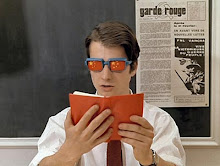
I'm stumped as to why Cahiers du cinema never called about that staff writer's position.


1- Tokyo Story (Ozu) a small story about generations and family with an emotional impact that's just devastating. It possesses a maturity and assurance of vision that elevate it above any other film I've seen. The quiet beauty of the visuals infuses the narrative without ever being manipulative. Nothing is rushed; the characters are developed gradually, through activity and shading, and their dialogue is elevated by the camera's observational approach. This minimal technique increases the emotional content and, by the picture's end, the level of empathy that I feel is greater than that inspired by any other movie. A perfect film.


2- Au Hasard Balthazar (Bresson) an intensely beautiful film by a very complex and unusual director. Bresson's work presents the story (about a donkey and humankind's numerous shortcomings toward the animal and themselves) in a rather striking way: instead of histrionic method-y acting and/or gratuitous visual signifiers, we get performances that gain emotional intensity through their lack of strained dynamics and a mise en scene that is completely devoid of artifice. Much has been written about Balthazar's allegorical significance (Christ, essentially), but this is presented as just one possibility; believers and agnostic alike are invited to feel the profound poignancy of Bresson's film. Couple the transcendent qualities of the visuals with the gracefulness of the storytelling and the non-accusatory tone, and what you get is an amazing work.
-

3- Vertigo (Hitchcock) the greatest film by the greatest of English language filmmakers. I can't think of a movie that better details the destructiveness of human desire and the difficulties of communication and understanding. The cumulative effects of Hitchcock's art are simply overwhelming. The use of color, the photography, the casting, how the actors are placed in the scenes, the use of sound and music are all seamlessly integrated with total mastery. Genius.


4- The Mother and the Whore (Eustache) long, sprawling, often bitter, and sometimes borderline reactionary, it's ultimately a kick in the groin to whatever was left of the Nouvelle Vague. Jean-Pierre Leaud's character is the embodiment of the early '70s pendulum swing away from the good-vibe optimism of the previous decade. He's not a character I look up to; rather, I'm in total awe of his anger, nihilist energy and the torrid momentum that carries him and the rest of his whole sick crew (sorry Thomas P.) to a mind-bending anti-conclusion. To me, the movie's greatest achievement is how it successfully depicts the disillusionment of its characters and their era, without ever being condescending or cynical. The supreme '70s film.


5- Weekend (Godard) a cathartic and caustic protest film from my favorite director. It features the greatest tracking shot in the history of cinema, and an unrelenting depiction of a nightmarish world that just totally unravels by the dénouement. One of Godard's most striking successes is how he deals with class issues in a manner that's all but unheard of in commercial films. Couple this with his deep distaste for society's self-destructive tendencies and the shallowness of humankind, and what you get is the filmic equivalent of a Molotov cocktail. But to be clear, a film that's just an excuse to make some political or social points is never much of anything: Godard's biggest strength is that he believes in the art of cinema, not only as a vessel of commentary and as an instigator of prospective change, but also purely from an aesthetical standpoint.
-

6- Paris, Texas (Wenders) sometimes it takes people from distant countries to make the most profound films about American culture. But like the movies of many great auteur talents from cinema's classic period, Wenders work doesn't bludgeon the viewer with the significance of its message. And actually, whatever message that's here isn't really all that tangible, except for rather obvious things such as the difficulty of communication and the unintentional emotional damage that people cause each other. Ultimately, Wender's restraint is his best tool. Whereas the vast majority of American filmmakers deal with matters of the heart in numerous inappropriate ways, going for bombastic moments or thick sentimentality (or a cool, hip detachment) that rings false, this director instead allows the characters to carry on with dignity that's quite rare.


7- Limelight (Chaplin) his silent films are excellent, of course, but Chaplin's sound pictures are the most meaningful to me, with this being at the top. It's a truly wonderful film, a work that shows that Chaplin was so much more than just a comedian: he was someone that possessed rich understanding of humankind's struggles, and the ability to tell stories about those struggles with subtlety and grace. He was a true man of the world, a quiet, dignified warrior, a champion of the downtrodden, and a consummate artist.


8- Detour (Ulmer) the greatest low-budget noir of them all, from a director that could create significant, meaningful films from the most unlikely resources. No money, blink-of-an-eye shooting schedules, undistinguished or downright banal scripts, whatever actors were on hand: Ulmer just plowed forward and used all of it, coming up with some against the odds artworks that show just how formidable ingenuity and imagination can be. Detour is a study in weird darkness, failure, rotten luck, and a dense hopelessness that is very much of its era. In spite of the above circumstances, or perhaps because of them, the film retains a strange, otherworldly power. One sure way to evaluate the abilities of an artist is to see if they can come up with something worthwhile from almost nothing. In Ulmer's case, this is probably a bit hyperbolic, but the point still stands. Given the type of circumstances that Ulmer routinely navigated, most filmmakers would flounder or produce something of mediocre quality. Detour is absolutely brimming with the spirit of raw creativity.


9- The Discreet Charm of the Bourgeoisie (Bunuel) simply put, the man was a genius, an oftentimes surreal, always interesting master of visual language that, like Hitchcock, made films through six decades without ever losing his relevance. One of the best things about Bunuel's satires, of which this is one, is how they lack the mean-spiritedness that curdles so many satirical films, especially contemporary ones. Instead, the characters are placed in a narrative of increasing outlandishness, with the effect of expert lampoonery and calm commentary that is sometimes gentle, other times biting. Bunuel's cinematic achievements are so unique and assured that there isn't another filmmaker that's comparable (possibly Jean Vigo, but he made so few films that it's not really an appropriate contrast): he stands alone as an iconoclastic visionary whose films continue to gain significance with the passing of time.


10- Touch of Evil (Welles) Kane is a brilliant film of course, but I find myself in thrall to numerous other works by Welles, this one in particular. Its unique ruminations on the concept of sleazy noir have lost none of their power, the opening long take is possibly the greatest I've ever seen (plus the photography overall is flawless), and the quirky casting is wildly effective and quite contemporary (though many recent films tend to overdue this). Welles in particular plays his role with a sweaty, obese power that's just riveting. The restoration is the essential way to see this film, with the opening returned to Welles' original intentions and the masterful balance of visual and aural artistry on display throughout.


11- Rear Window (Hitchcock) what most filmmakers would see as limitations Hitch uses as strengths. A room and the view of a courtyard from a window. Add a small group of expert actors and a story that's full of tension, ambiguity, and questionable ethics, and what you get is a film that proves the old adage of addition by subtraction. Frame after frame, Hitchcock infuses the proceedings with subtlety and sophistication, integrating all his elements within the film with meaning: there are no empty gestures here, as well as no blunt, clumsy visual metaphors. One of Hitchcock's strongest qualities is his assurance of vision. He was able to articulate in visual terms through the medium of the entertainment film recurring motifs that, once those movies shed their contemporaneousness, revealed their true nature as art films par excellence.


12- Faces (Cassavetes) a film that's positively infused with the raw energy of human emotions. It is also thoroughly tied to the changing mores of the 1960s, and is populated with characters that are fighting to overcome a profound unhappiness. A broken marriage is at the center of this narrative, and the two participants drift through a series of events in an attempt to escape disillusionment and fear. Yet at every turn they encounter and interact with other people who are similarly at sea. One of the most heart wrenching aspects of this movie is how deeply it illustrates one of the hardest realities of growing old: coming to terms with who we really are and the lives we've made for ourselves. But there is more, of course. Faces is also one of the nails in the coffin that is one-dimensional, superficial, or downright false female characterization. The middle-aged women who appear in the film's second half are presented warts-and-all, but are also shown as complex and beautiful. The honesty in the content of the film is superlative, but only because its form is just as truthful. It is the antithesis of shallow Hollywood glamour, and strives to depict a reality without falling prey to the often stultifying effects of capital R realism. Its camera is rugged and blunt, a window into consciousness that most films could never manage.


13- Bringing Up Baby (Hawks) Howard Hawks made so many great movies in so many different genres that to examine his work in total is to be awestruck by a master craftsman who constantly elevated his work to the upper echelon of commercial filmmaking. I could easily replace this film on the list with at least a dozen others from his filmography: this one, however, seems a good choice not only because it's given me great pleasure over multiple viewings, but also due to how it seems to stand as representative of a certain type of studio-era filmmaking. That is to say, it relies on economy, momentum, and a certain understated approach to how it transmits its artistic essence. Hawks was so understated, in fact, that until the 1960s, many people (particularly in the USA) felt his films lacked any artistic merit. This is nonsense, of course. But what is not nonsense are the man's movies: they are perfect examples of a direct, intuitive style that is all but vanished from the medium.


14- Night of the Hunter (Laughton) one of the strangest American movies ever made. It is a surreal, noir-like excursion through backwoods USA. Robert Mitchum's murderous phony preacher is like something from a horror film, Shelly Winters' character embodies an emptiness and hurt (that is, before she's killed and dumped in the Potomac river by bad Bob) that seems meant to represent the state of mind which plagued countless women from the pre-feminist era, and Lillian Gish's protagonist radiates with a peculiar energy and pragmatic intelligence that serves as the film's emotional core. And the narrative is heightened by the aforementioned surreal atmosphere, a visual tour de force that is so much more effective at conveying the urgency of the story than the more conventional methods used by most narrative filmmakers. If it sounds a bit like Flannery O'Conner writing a screenplay for Luis Bunuel during his '50s period, well it is a bit like that, but it's mostly its own thing: a strikingly creative film from a one shot director who brought all of the talent manifest in his acting to the helming of this sui generis work.


15- M (Lang) his American films are what I hold in highest esteem, for they are in many cases little movies (at least on the surface) that add up to a formidable sum. But M is a dark, pessimistic, frightening work that is saturated with modernity from beginning to end. Lang was looking at the times in which he lived, and simply didn't like what he saw. But rather than propose a solution or even deliver an upbraiding message, he just lays the story out there to fester in the viewer's consciousness. Here's the world, now deal with it. Part of the attraction for me of Lang's Hollywood period is how he had to navigate the constraints of the studio system and still produce distinctive, original films. With M, he was obviously far less encumbered by meddlesome producers (and also had the uncertainty of a still growing film business at his advantage), so he was able to transmit his vision to celluloid with far less restraint (though this unrestrained manner regarding content never spilled over to the film's form: apropos that, he always possessed a deliberate, masterful sensibility). Lang is in many ways the consummate auteur: taking whatever hand he was dealt and coming up with something worthwhile. In M's case, he dealt the world a flush and signed one of cinema's most enduring and influential masterpieces.


16- The Umbrellas of Cherbourg (Demy) some will say that it's sacrilege to rate this higher than any American musical, but I will only reply that I love this film's unabashed experimentalism, while at the same time being thoroughly caught up in its complete accessibility. It is a celebration of life, ultimately heartbreaking in its honesty, yet it is that honesty which provides hope and acceptance at the movie's end. Demy's use of color is flawless, and the score by Michel Legrand is an essential part of the film's richness. It is a picture made by a believer in the profound artfulness of cinema, populated by performers who believe in the vision of Demy, who in turn help raise its frames to the level of the sublime.


17- Shock Corridor (Fuller) the first time I watched this, I found it hard to believe the strange reality of the movie twisted existence. It's a B-film (by a legendary director, yes, but a B-film none the less) that walks a stressed tightrope between exploitation and human interest, while consistently moving away from the normal operating procedures for low-budget pictures: Shock Corridor is almost overloaded with content, its form assured and brutally direct. Unlike other B-pictures, it is never thin, lacking in continuity, or laughable. Instead, it is often bizarre, uncompromising, and darkly humorous. Sometimes tawdry, while never not being earnest, it's ultimately a tour through and indictment of stereotypes, injustice, and fear that's feverish in intensity and all the more effective for its low-brow quirks and lack of sheen.


18- Band of Outsiders (Godard) I could watch this movie 500 times, and it would never lose its appeal. The direction possesses such swaggering joie de vivre, the actors are perfectly cast and their dialogue is exceptional at capturing the nuances of youth and gender, the story is a perfect execution of the Nouvelle Vague tactic of bending genre conventions (in this case the crime film) into significant new directions, and the cinematography (by Raoul Coutard) is simply expert. For its duration, it exemplifies the qualities that make Godard such an amazing filmmaker: the blending of experimentation and classicism, the knowledge and references to assorted films, the integration of high culture and low, the singular characters and the actors chosen to animate them, the emphasis placed on aesthetic sensibilities. He can move from whimsical to erudite to foreboding in a matter of frames, and knows exactly which and how many conventions to push against or to break for the film's benefit. Some have described Godard's oeuvre as impenetrable, and for some of the films this is fair (yet only from a cursory perspective), but Band of Outsiders is far from difficult viewing.

19- Kiss Me Deadly (Aldrich) one of the defining films of the 1950s. Noir in style, vicious in its tone, populated by characters whose moral compasses are all pointing south to varying degrees, it's a masterpiece of kinetic subversion. It turns Spillaine's Mike Hammer, a cornerstone of the tough-guy private eye novel, into a low-rent jerk who's devoid of any hero qualities. As the story progresses, it becomes apparent that the world we see is overrun by self-interest, distrust, and cruelty. All the while, Aldrich's visual scheme is simply flawless: it appears at times almost instinctive how camera movements, lighting, angles, close ups, cuts, and edits enhance the narrative. Aldrich was one of the prime auteur directors to emerge after World War II, along with such disparate talents as Otto P, Anthony Mann, Nicholas Ray, Budd B, and Don Siegel, and what these men shared (at least in the earlier portions of their careers) was the ability to infuse their pictures with a subtle artistic presence that was implicitly absorbed by the audiences rather than overtly noted. In the case of Kiss Me Deadly this is a real feat, since nearly everything in the film in storyline terms is delivered with an aggressive bluntness that feels at times almost like blows to the head. It's non-self-conscious brilliance at its best.

20- Le Samourai (Melville) a film of calm assuredness and rich detail. Jean-Pierre Melville is often associated with the French New Wave, but more as an influence than as an active member of the movement. Here he is depicting the milieu of French gangsters, women who are drawn to them, and the police who are out to put them in jail. Since it stars Alain Delon, it's obvious that a certain level of cool stylization will be in evidence, but it is always kept in check; never is this film an example of style over substance. And unlike many (so-called) hip crime films that have come since, films that seem determined to throttle the viewer with loudness, hamminess, and empty quirkiness, Le Samourai represents the essence of restraint. Ten minutes of the film go by before a single word is spoken. The story progresses with the confidence and patience of classical cinema. Scenes develop and information is given with a graceful visual presence. Nothing seems at all out of place. Melville's film takes on an elevated reverence in relation to its subject matter and formal approach that rises to the level of sheer profundity.