Showing posts with label The Auteur Files. Show all posts

Thursday, June 21, 2012

Goodbye Andrew Sarris (1928-2012)


as a young man, with the great one....


as an older man, with his wife, the very talented film writer Molly Haskell...


in late life, at the machine...

More than any other writer, he's responsible for shaping how I think and care about film.
RIP

Friday, December 30, 2011

The Auteur Files #17: Adventures in the Criterion Collection Part Seven; Or, Murderer! Artist! - René Clair's LE MILLION (Criterion Spine #72)


Even though I realize it’s impossible for one viewer to have seen not just everything, but even every worthwhile thing, and that naturally there remains more I haven’t seen then otherwise (and surely it will always be), I can’t help but feel a sense of shame in admitting that until just a matter of days previous to this writing I’d not watched René Clair’s great early work LE MILLION. Yes, I’d heard much ado over its status as an indispensible object of the musical genre and knew a fair amount about Clair’s career including his troubled years in Hollywood (though I remember liking his I MARRIED A WITCH, catching it a few times via TCM back when I could still afford cable). But in this case my sense of personal inadequacy takes a back seat to revelation, for if it seems (almost) impossible to find a good contemporary musical these days the unpleasantness of this fact is only compounded by the seeming ease and assurance of Clair in crafting this film so early in the development of the sound film.

And LE MILLION does show a fair amount of growth adjustment from the silent cinema, but not in any way that detracts from its goodness. Clair is on record as being initially quite leery over the advent of synchronized sound in film due to his belief that the art form would end up bound to the conventions of the theatre, and his zeal for the cinema as a pictorial mode of expression is immediately evident in an opening traveling shot that presents the rooftops of Paris as something out of a miniaturist’s workshop run amok. It’s awesome in its brevity and presents us with a ceiling-window view of a celebration, a pair of interlopers inquisitive into just what the fuss is all about. From there, LE MILLION’s story is told in one extended flashback. It concerns Michel (Rene Leferve), a portrait painter burdened by debtors who discovers he’s won the lottery. The only problem is that the ticket is in the pocket of his suit jacket, a garment that’s been given away by his girl Beatrice (Annabella) to a thief posing as a homeless old man and attempting to elude capture by the police.

This wizened street-grifter known as Grandpa Tulip (Paul Ollivier) then sells the coat to a singer Ambrosio Sopranelli (Constantin Siroesco) wishing to complete his get-up in a performance of an opera titled “Les Bohémiens”. Need it be said that the attempts to retrieve the ticket take on a madcap quality? And that’s one aspect of LE MILLION that makes it such a success; its unhesitant engagement with the familiar. It isn’t just the use of a story possessive of such blunt simplicity that reinforces this attitude: Michel, who is engaged to Beatrice, is also something of a philandering ladies man; his friend/competitor Prosper (Jean-Louis Allibert) is very much in the nice guy/jealous guy/second banana mold, having eyes for Beatrice himself; the mustachioed opera singer teeters on the brink of high-toned self-importance; and Michel’s lack of cash and the displeased pack of creditors that hound him help his character embody the archetype of struggling artist, a role often presented in comedies (particularly in this era) as something of a lifestyle scam, the perpetrator escaping the stigma of bum on a pure technicality, except of course in the eyes of those that comprehend it all as a big foist (early in the film one of his antagonists shouts at him accusatorily, “Murderer! Artist!”).

As befitting a movie populated with broad character types and well-established motifs, LE MILLION is feather light and crammed with activity. Fittingly the two chase scenes, one for Michel the other for Grandpa Tulip collide into each other, raising shenanigans to a level bordering on the anarchic, basking in the convoluted without ever lapsing into incomprehensibility. All the while musicality is key. Not only do we find characters routinely bursting into song either singly but more often collectively, advancing the narrative through well-calibrated bits of lyrical banter, but those dueling chases are routines of well rehearsed mayhem that spill forth with a musical precision. Indeed, LE MILLION features a deliberate rhythmic momentum that’s simply infectious, and along the way gags are delivered like a master jazz drummer smacking his snare or dropping bombs from his kick-drum as the plot thickens to the consistency of gourmet meringue.

Clair considered himself foremost as an entertainer, and this is essentially how he is remembered by most film buffs, but LE MILLION is also an exemplary showcase for its director as a spirited groundbreaker, an avant-gardist of unabashedly accessible disposition. Much has been made of Clair swiping the sound from a Rugby game and slyly synching it up with a group-scuffle for the jacket/ticket near the end of the film, and indeed the passage is simply exquisite, a bravura grace note that easily remains in keeping with the film’s crisp delivery. But I like even more how, earlier in the film, he employs the same tactic in a manner far less bold by joining together the regal sounding audio from some unidentified ceremony with the hilarious speech given by a neighbor child (“…may your happiness be ours”). Throughout the entire movie the vitality of sheer invention and fresh possibilities resonates from a story bristling with verve and panache, and it’s no surprise that LE MILLION was such an influence on comedians like Chaplin and the Marx Brothers.

Still, I get the creeping suspicion that many modern viewers would consider Clair’s film to be a quaint if amusing trifle at best. There is a lack of irony, detachment or subversion in LE MILLION that is quite opposite from the contemporary tendency to darken or reinvent or reinvigorate or satirize or unwittingly neuter “old” genres for modern audiences, an impulse/strategy that often manifests itself rather tritely and odiously as “this ain’t yer grandma’s _____!”. But I’m not going to use Clair’s film as an instrument with which to beat up on contempo cinema; if the movie marketplace today suffers from overdetermination and a reliance on the twin straight-jackets of test-marketing and demographics, this is because basically anything profitable on a large scale in this day and age is afflicted with this same problem. Not to oversimplify, but this is in large part a phenomenon of corporations investing in the arts, a practice quite different from the norm of LE MILLION’s 1931.

This is a significant part of why auteurs back then are different than auteurs right now. If old Hollywood feared or distrusted the specter of the artist, it still enabled films and filmmakers of high quality at a ratio greater than those it hindered and destroyed. Today, Hollywood generally doesn’t destroy artists either, because it doesn’t have to; it just ignores or neglects them, except when the rare synergy of money, prestige and reputation collude to produce something like THE TREE OF LIFE (and to be fair, 2011 has been a very good year for films by neglected veterans like Carpenter, Landis and Hellman. And yet Joe Dante’s THE HOLE still sits in distribution purgatory). If this feels like a digression from LE MILLION, well maybe, but it also isn’t, and not just because the movie’s plot (appealingly thin as it is) and the general behavior of present day Hollywood are both bluntly about the search for money. Ar-ar. No, I bring it all up in part to help place in context that, even with the intensity of obstacles, a new film in very much the same spirit as LE MILLION (if naturally quite different in form) can actually squeak, if briefly, into multiplexes across the land. Edgar Wright’s somewhat contentious SCOTT PILGRIM VS. THE WORLD reminds me very much of LE MILLION; both are very much enamored of the new and are completely conscious and committed to their status as movies as opposed to “realist” endeavors to get caught up in, avoiding the contrived through sincerity and lightness of tone. PILGRIM and LE MILLION join arms in a celebratory dance of Serious Fun, both laying a winding trail of glorious inevitability, for it’s as certain that Michel will retrieve his lost ticket (more certain, the film opens with a celebration after all) as Messer Pilgrim will eventually land his girl. These films aren’t about the epiphany or emotional rush of the ending; they are instead about the details of the ride.

And LE MILLION’s details ripen with age, whether it’s Michel or Prosper getting serenaded by their consciences, the beautiful Annabella in a ballerina outfit for the second half of the movie, Raymond Cordy’s indefatigable cabbie simply looking to get paid, the theatricality of the film seamlessly integrating with the theatricality of “Les Bohémiens”, a lanky dude in a police station clad only in boxer shorts and a bowler hat, or the essential harmlessness of Grandpa Tulip’s band of criminals, a group that identifies themselves in song (natch) as the “foot soldiers of inequality” (and who contrast quite starkly with the underworld of Lang’s M from the same year).

And it’s notable that LE MILLION lacks “bad guys” in any definable sense. Sure, a small mob relentlessly hounds Michel for money, and Prosper attempts to outwit his friend/rival and secure first half then all of the lottery winnings, but this is all lighthearted, comedic grist for the mill. For instance, when Sopranelli’s watch gets stolen it’s presented as an outlet for audience pleasure, but not at the singer’s expense. It’s just that in this film’s world everyone has their roles to play.


It’s hard to find fault with LE MILLION, particularly since it’s playful experimentation has aged so well, but if a masterpiece (and I wholeheartedly think it is) it’s elements of Serious Fun help to keep it appealingly modest. And while LE MILLION is getting older by the day, its energetic tone and succession of small beauties manage to keep it perpetually young. We should all be so lucky.

Rene Clair

Wednesday, November 9, 2011

The Auteur Files #16: Seven Big Ones - films by Lewis Milestone, Nicolas Winding Refn, John H. Auer, George A. Romero, Michael Winner, William Friedkin, Ivan Passer


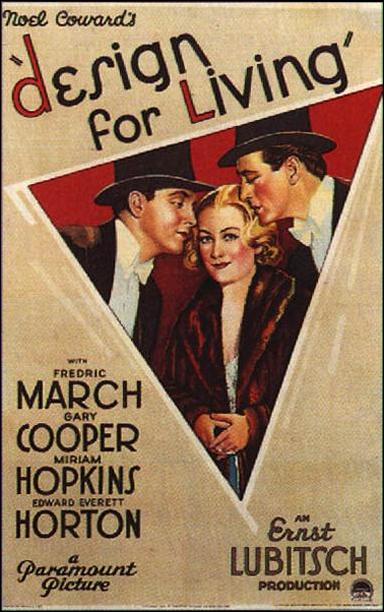
THE GENERAL DIED AT DAWN (Lewis Milestone, 1936) the third film on the first disc of Universal’s Gary Cooper collection, and while it definitely suffers in comparison with Hathaway’s PETER IBBETSON and Lubitsch’s DESIGN FOR LIVING (both covered in Auteur Files #15), it still has quite a lot working in its favor. Milestone is one of numerous prestige directors that ended up in the late studio-era doldrums; most notable to casual film fans as presiding over ALL QUIET ON THE WESTERN FRONT and THE FRONT PAGE, by 1960 he was helming the original, unexceptional OCEAN’S ELEVEN and working in episodic TV. He gets lambasted rather strongly by Sarris in THE AMERICAN CINEMA (Less Than Meets the Eye, natch) but maybe the nastiest denigration of Milestone’s talents that I’ve read (at least recently) was courtesy of Bertrand Tavernier in the Dec ’63-Jan ’64 issue of CAHIERS DU CINEMA. Yet even he, working in the once infamous polemical mode of early Auteurist criticism, admitted that Milestone exhibited talent in his “less ambitious or less celebrated productions”, naming GENERAL as one example. And it’s indeed a fun, somewhat kooky bit of business, essentially an espionage pic set in mainland-China with a gun-running Cooper finding himself at odds with a Feudal warlord played by Akim Tamiroff. With a screenplay by Clifford Odets, it comes as no surprise that Coop is dealing weapons on behalf of The People against the evil murderous tax-levying exploiter that is Tamiroff’s character. Frankly, I can relate to the sentiments expressed, but the occasional platitudinal sermonizing does create some dissonance in what’s generally a strong script. Admirably, GENERAL wastes no time getting into the thick of things, and Milestone’s visual scheme is quite appealing if not mind-blowing, particularly a nicely executed dissolve early in the film. Later, there is a magnificent if brief multi-screen segment that justifies the time spent with GENERAL all by its lonesome. For the most part however, the direction is spirited and efficient, matching the tone of the story, which Western Union touches aside, is loaded with double-crossing, nicely building intrigue and even some lovey-dovey stuff. Along the way I was very impressed by Milestone’s handling of a complexly structured hotel room scene, with control shifting, characters intruding, guns toting and missing loot hiding-out right underneath everyone’s nose. And the cast is peppered with quality players; William Frawley (aka Fred Mertz) as a mean and drunken gun dealer, Porter Hall as a squirrelly and doomed lackey for Tamiroff, the gorgeous Madeleine Carroll as Hall’s daughter and Coop’s love interest, and the great J.M. Kerrigan as a wily and mercenary thief who interjects himself into the thick of things and pulls off the shrewd trick of embodying two seemingly opposing qualities, being unlikeable and magnetic at once. Writer John O’Hara also has a bit part as a reporter, and he’s as wooden as a cigar store something or other. The ending is perhaps mildly disappointing in how it makes a large point about the vanity of tyrants, but that’s not a big deal. A bigger deal is the film’s employment of ethnic caricature; did I mention that THE GENERAL DIED AT DAWN is burdened with yellowface? I didn’t? Okay then; THE GENERAL DIED AT DAWN is burdened with yellowface. Specifically, Tamiroff as General Yang and Dudley Digges as Mr. Wu play Oriental grotesques that stand out even more because they mingle with supporting players who are of authentic Asian ancestry. Every cinephile’s sensitivity varies in relation to questionable or downright objectionable content, particularly if the offense hits close to home. For me, GENERAL’s racial stereotyping is a definite weakening factor, but it doesn’t sink the ship; Tamiroff and Digges are off-screen a whole lot. But your fuel economy might differ. And on one hand the script’s progressive qualities jives not a bit with the ol’ Chinaman shtick, but on the other this ideological incongruity lends the film a certain historical accuracy; true progress is always problematic. The racism here is also in plain sight, which to me helps in neutralizing its toxicity. The trickier, subtler, occasionally subliminal racist qualities that afflict certain contemporary films are a much bigger problem (And yes, my perspective on this whole issue comes as a white male, likely the least discriminated against group in the planet’s history). In my estimation THE GENERAL DIED AT DAWN has paid the price; it seems to be a film often mentioned but rarely talked about at length, at least in the polite company of the internet. Honestly, I only watched it because it was included on a disc with the Lubitsch and Hathaway flicks. I needed to bone up on my Milestone and figured what the hell. Well, I’m glad I did yellowface issues and all. GENERAL is no masterpiece, falling just shy of classic status for me, but any quality film is a welcome one. Milestone will likely never climb beyond mid-level in my personal hierarchy of directorial esteem, but I can’t deny that his early stuff is pretty agreeable.


DRIVE (Nicolas Winding Refn, 2011) the critical reaction to this arty crime flick has generally been positive, with a few dissenting voices speaking up to lend some needed perspective. I liked it a lot, though it has a few non-fatal flaws; for a start, Carrie Mulligan is miscast as the love interest of Ryan Gosling’s Driver. While it didn’t totally strain the bonds of credibility, I simply didn’t buy that he would be so taken with the pretty but also somewhat plain mom living next door. Was the fact that she’s easily the most fundamentally decent character in the movie supposed to convince me to Gosling’s attraction? Well, no; that’s just too easy. Furthermore, this is a film purposefully and effectively dominated by male performances, but I could have stood more screen time from the electric Christina Hendricks. She was totally convincing as the type of tough bird who’d rob a pawn shop without blinking an eye. Gosling is quite solid in his role, but I think the best performances in DRIVE belong to Bryan Cranston as a hard-luck garage-owner perennially trying and failing for bigger things, Oscar Isaac as Mulligan’s just sprung from prison husband, a role/portrayal that could’ve easily been one-note but is invested with a real sense of human dimension as a guy stuck between a butt-ugly rock and an impossibly nasty place, and Albert Brooks as a fearsome crime-boss whose persona lands squarely between no-nonsense and excessively talkative. But the real star of DRIVE is Refn. This is a meticulously crafted film, as self-conscious an auteur maneuver as I’ve seen lately, with the good far outweighing the bad in its construction. It opens with a thrillingly concise bit of action as exposition then settles down into a long stretch of existential narrative atmospherics that get punctuated and eventually overtaken by bursts of extreme violence. Refn knows how to film action and he’s a bold stylist, so he also knows how to film inaction. DRIVE’s color scheme alone is worthy of commendation, and in general the movie is a visual feast. Some commentators have taken the long view, making references to Yates’ BULLITT and Melville’s LE SAMOURAÏ. This doesn’t seem inappropriate, but the more accurate connection is to ‘80s flicks like Mann’s THIEF and Friedkin’s TO LIVE AND DIE IN L.A. A big reason for the comparison is the use of color (and a font bluntly cribbed from Brickman’s RISKY BUSINESS), but an even bigger signifier comes through a rather heavy-handed synth-pop score; if Refn’s intention was to repeatedly hit a note of cheesiness as homage, well he certainly succeeded. I forgot to check the credits to see if the recurring tune with the almost parodically banal lyrics was indeed titled “The Driver’s Theme”. If not, it should’ve been. But while some of the music definitely registers as a flaw (the more ambient stuff is actually very good), it does ultimately assist in illuminating Refn’s personality and significance as a filmmaker. DRIVE may reference the abovementioned films, but directorially, at least here, Refn feels more in league with Quentin Tarantino; BULLITT, THIEF and even LE SAMOURAÏ are movies with reputations that built slowly, developing cults of cool that grew as more people experienced the films. By contrast, DRIVE is very deliberately telegraphing its coolness so the impact is felt long before the tuchus leaves the seat. And the music makes this point quite clear. The work of Lalo Schifrin for Yates and Tangerine Dream for Mann is now revered in soundtrack circles, but again, this didn’t happen overnight. The pop song elements in DRIVE are obviously attempting a hip retro vibe, but the tactic flounders to my ear, feeling instead like a descendant of Berlin’s work for TOP GUN. Oh well, nice try. In the end, DRIVE has far less in common with the films it references and is more appropriately comparable to Tarantino’s DEATH PROOF. Two car movies yes, but more importantly, two films with blatant, inherent surface debts to filmic precedent that are actually intrinsically contemporary. Don’t know if Refn deserved the Best Director Award at Cannes, but DRIVE is an assured, high-quality piece of work.


HELL’S HALF ACRE (John H. Auer, 1954) inspired by the inaugural entry in Dave Kehr’s new FILM COMMENT column “Further Research” (July/August issue), a typically well written text on Auer, I streamed this low-budget Republic Pictures entry in the rather substantial if generally unavailable filmography of a widely ignored director; he signed his name to dozens of pictures from the 30’s through the ‘50s, yet until Kehr’s article I hadn’t encountered anything of substance devoted pro or con to the guy’s work. But if HELL’S HALF ACRE is representative of Auer’s style, he was a very interesting and unusual talent. Hawaiian noir is what’s happening, with a low budget and an abundance of energy; Wendell Corey plays Chet Chester, an island émigré with a shady past going clean with his gorgeous island gal Sally Lee (Nancy Gates). We’re introduced to the pair via the nightclub of Roger Kong (Phillip Ahn, who also appeared in THE GENERAL DIED AT DAWN), a native that just happens to be an ex-partner in sketchy dealings with Chester. He’s throwing a party in Chet’s honor, and before the couple can sit down to order dinner another ex-partner enters the story (Robert Costa), sitting by his lonesome and glaring menacingly with the intention of blackmailing Chester. Kong gets on the house PA to announce that the evening’s shindig is a premier party for a song, specifically an ode to the islands, which Chester wrote and recorded. This is where things really get interesting; as the tune fills the nightclub and floods the soundtrack, we are confronted with Chester’s disembodied voice as part of the music while the person delivering the words sits mutely at his table. And in the club a choir sings, musicians play and dancers dance. Chester’s words are spoken not sung, feeling like narration as we are simultaneously asked to read (along with Sally Lee) the blackmail note from the glowering nogoodnik, whose seat is now conspicuously empty. She excuses herself from the table, tracks down the dude and follows him to a small side room where they bulldoze through a bunch of necessary exposition; with Chester’s background and the nefariousness of this character’s scheme fully illuminated, Sally shoots him in the forehead with blunt efficiency and then returns to Chester as his weird singing/narration reasserts itself, the voice detailing the islands as a near utopia, an opinion that’s been handily undercut by the story in under ten minutes of running time. A bit surreal? Yes. Impressive? Oh, very much. From there Chester insists on taking the fall for Sally because he’s convinced he’ll get off light. It’s the least he should do. And then all sorts of twists and turns occur. But enough about story, the real star here is the direction. While I liked some of Auer’s decisions concerning camera movement, particularly one bit that made me think of Preminger visiting Poverty Row, HELL’S HALF ACRE’s best quality is its evocation of seedy atmosphere; the film’s title relates to the unsavory section of the islands, and Auer is quite successful at making tenement apartments look like dives and an under-populated dancehall reek as just the kind of joint where a smattering of down-on-their-luck dames might make a few extra coins paying attention to some schlubby heels. It becomes readily apparent that Auer was a director able, at least on this film, to turn the constrictions of budget to his distinct advantage. I’ll add that ACRE is more of a thematic noir than a pictorial one, though this shouldn’t register as a slight to the film’s visual strategies. It’s ultimately a story about what one guy perceives as a paradise curdling into something resembling his own personal hell; yes, archetypally noir, and it helps that nothing like redemption is in the cards for our protagonist. Also on the plus side is a strong cast, particularly Corey, Elsa Lanchester as a lovably eccentric Irish cabbie, Keye Luke as the police chief, the great Marie Windsor at her cold-hearted best and Jesse White as her booze-addled scumbag husband. Oh, and Evelyn Keyes, who turns up from Californ-i-aye as Chet Chester’s long lost wife. Did I say the story had some twists in store? But for all the quirks of narrative, ACRE never feels convoluted. Auer packs a lot into 90 minutes, but he’s not afraid to linger if needed; he gets good mileage out of two person conversations that advance story, strengthen character and deepen mood. Thematic comparisons I’ve read to THE THIRD MAN are on the money, and it’s very nice to see a flick set in an exotic locale that strikes a depiction of the indigenous population that’s not stereotypical, condescending or otherwise misguided (it’s a safe bet that Ahn preferred this role to the one in GENERAL). In conclusion, my investigation of John H. Auer has gotten off to fine start. Netflix streaming is currently the only place where HELL’S HALF ACRE, apparently never released on VHS or DVD, can be seen. It’s a print of surprisingly high quality for its vintage and it’s presented in the proper aspect ratio, something Netflix (or, to be fair, their suppliers) aren’t always conscientious about. Not sure where or when I’ll get to see more Auer, but I’m definitely keeping my eyes open.


THE CRAZIES (George A. Romero, 1973) one of William Lustig’s many gifts to film fans via his company Blue Underground (sort of the Criterion Collection of grindhouse/exploitation/hyper-violent/otherwise-transgressive cinema if you didn’t already know) was giving this long hard to find early Romero effort a DVD release. Since then, the pretty good Breck Eisner directed remake has helped to somewhat increase the profile of its inexplicably neglected source material, a movie of low budget and high aspirations; it’s about a virus outbreak in a small town and the attempt by the military/government to contain it. THE CRAZIES is very much a film of its time. Specifically, it posits that something is inherently bad about authority, certainly an unsurprising Vietnam/Watergate-era mindset, but in pitting the denizens of the town against the intruders from the Army Romero goes to great lengths to cloud the waters. For example, the movie’s most charismatic if not necessarily sympathetic performers fall on the side of authority. Amongst the townspeople we find an implicitly racist sheriff and a grandstanding mayor, both figures of local importance whose power is usurped by the invading group. Romero’s main objective is delivering a tightly-wound horror-thriller, but anybody with basic knowledge of the man’s work understands that his films reliably feature a surplus of ideas. Unlike the sluggish, soporific zombies of NIGHT OF THE LIVING DEAD, the afflicted in THE CRAZIES are an unpredictable lot; once infected the carriers of the virus end up displaying a terrible combination of lunacy, anger and aggression. The movie’s first third depicts with hyperactive discipline the struggle between a roughshod and desperate (if at its core, well intentioned) group of military and the confused, panicky townspeople as they react in different ways to being placed under martial law. As violence between both factions comes to a head, the film’s mid-section additionally details the interior friction on both sides; the military with their government advisors, the local population simply amongst themselves. These storylines play out in THE CRAZIES’ final third, further complicated by building issues with identity. For one instance, it becomes increasingly difficult to differentiate between the truly infected and those simply breaking down under stress. Like many a smart low-budget filmmaker, Romero knows how to ratchet up suspense and conflict through dialogue; when combined with the well-executed fast-cutting strategy THE CRAZIES achieves an admirable intensity. Normally, when I see a film with this much editing I start to get uncomfortable, thinking the makers have something to hide, and in this case Romero is effectively hiding his lack of budget, admitting as much on the DVD’s commentary track. But since his objectives are clear and his artistry genuine, this strategy works very much in the film’s favor, being the polar opposite of Hollywood’s recent tendency to get all coverage drunk in an attempt to cover up a poverty of filmmaking skill. From an editing standpoint this movie is by no means perfect, with Romero and Lustig actually pointing out a few mistakes as they chat on the commentary (though I didn’t notice them beforehand), but it is far more successful at delivering a kinetic yet coherent experience in storytelling than are so many recent over-budgeted and underwhelming filmic disappointments/disasters. When this common-sense visual approach is combined with a well-written, all-business script the narrative effect is something like fertilizer hitting a huge industrial fan. People are yelling and doing strange things and it all keeps getting worse. Probably because nobody really knew who he was in ’73 and LIVING DEAD had yet to become a cornerstone of modern horror, Romero didn’t hesitate to reuse/reconfigure LIVING’s classic opening sequence, and to strong result; this is what happens when the anxiety of expectations is essentially absent or overwhelmed by the cold hard facts of just having to get the job done. The opening of THE CRAZIES is by no means a carbon-copy of DEAD, but it does use a similar trope for no other reason than its blunt efficiency. In contrast, Romero’s fine casting of black actor Lloyd Hollar as Col. Peckham feels like a much more conscious decision, again likely based upon the precedent of LIVING, but in this case with a far less weighty influence on the film’s mechanics. Those well familiar with DAWN OF THE DEAD will immediately recognize actor Richard France, here playing a military scientist with the hammy chutzpah of the kind of dude constantly perceiving himself as the smartest person in the room, and yet not unlikeable for that fact. The three way arguments between France, Hollar and Harry Spillman as Major Ryder are a study in how to advance story and heighten tension all in one scene, one room in fact. But THE CRAZIES does so many things well it’s easy to overlook the occasional flaw. One such misstep is its foray into “funky police-drama chase scene” soundtrackery, a decision that really stands out in comparison with two of the movie’s superb and subtle sound maneuvers; a near constant ambient hum of machinery in the scenes from the military headquarters, and a fantastic howl of feedback pealing from a CB radio to sharply punctuate a line of dialogue and serving like the canned brass & strings from a film thirty years its vintage. There is also a wildly inappropriate credits song (penned by Carole Bayer Sager and Melissa Manchester) sporting a mournful Earth-Mother vibe, but that’s easily overlooked. Wisely, the big reveal that the virus was lab-created comes early, helping to establish the government as the true villains of the story. The scenes taking us to a conference room full of bickering suits where we are ultimately shown via video monitor the back of the President’s head could be characterized as ill-advised, but I really like how they embody the film’s desire to go all the way with its material, reminding me a bit of fellow ‘70s genre-mechanic Larry Cohen in the process. But where Cohen much more habitually hangs out on limbs of eccentricity, Romero is generally as sober as a steamroller (with the occasional accent of dark humor). After three viewings THE CRAZIES has entered my personal top tier from this brilliant director. Back in the day, blurb reviews in various movie guides would consistently underrate or mock this film as a misfire; sadly, I was never able to locate one of the VHS editions to decide for myself. Catching up with it in 2011 has proven quite illuminating. While he’s not quite at the peak of his game (that would be DAWN, a movie I consider one of the true masterpieces of post-studio-era American filmmaking), he’s awfully close, and with far fewer resources at his disposal.


DEATH WISH (Michael Winner, 1974) This is a bad movie. I could leave it at that, with a bluntly ambiguous dismissal, and in a sense that’s what this film deserves, for a lack of complexity is one of DEATH WISH’s biggest problems. Because there isn’t anything wrong with making a vigilante flick (like say Scorsese’s TAXI DRIVER) and because there isn’t anything wrong with making a movie that’s pro-gun ownership (such as Ford’s THE MAN WHO SHOT LIBERTY VALANCE, though I’m sure some will disagree with my characterization), and because there isn’t anything wrong with making a film that skewers liberalism as being soft on crime (how ‘bout Siegel’s DIRTY HARRY or Karlson’s WALKING TALL [which come to think of it sits in my memory as a fine example of a no-nonsense vigilante movie]?). But Winner’s picture suffers its biggest setbacks by being overrun with one-dimensional characters that never develop into anything more than stunted representations of ugly, cartoonish inhumanity. Street thugs are drugged-out, visibly depraved and barely able to compose themselves between crimes. This sort of cardboard characterization has been a part of storytelling for a long time, exploitation cinema being particularly indebted to the practice, and there is nothing especially wrong with it in operation. But DEATH WISH, in the end, is only half an exploitation flick, though it gets off to a good start; its story consists of an avenger, some victims, a city full of potential targets, criminals running roughshod, and law enforcement going through the motions of maintaining a semblance of control. Anything in the movie that can be linked with the problem of urban decay is skewed toward the exploitative. That’s basically rampant vandals, muggers and rapists, along with ineffectual, callous cops and the poor people who clutter up the city and make it look ugly. And DEATH WISH is a very ugly looking film, though I think on purpose; I consider Winner to be a bad director, but I’m not sure I’d call him an inept one. However, in contrast to the movie’s exploitative portraiture of its bad-guys, the character played by Charles Bronson (Paul Kersey) along with his wife, daughter, son-in-law and a few associates are afforded a level of humanity in their affluence, even if its depiction is all rather tritely executed. It’s sort of like Reefer Madness meets the characters in an undistinguished TV Movie of the Week circa ’74 or so. And this ultimately brought to mind one of the best lines from Kubrick’s A CLOCKWORK ORANGE, when the old lady who’s putting up a fight against Alex says something close to “I’ll teach you to break into real people’s houses”. DEATH WISH draws the lines between the real people and the murderous, thieving, sub-human hoards pretty clearly. Mingling with this inconsistency is Winner’s direction, which possesses a brutal artlessness. It’s almost as if he deliberately designed shots to communicate a canvas drained of aesthetic qualities while being sure not to disrupt the film’s narrative flow or its function as a commercial piece of rock ‘em sock ‘em cinema. I counted maybe three shots in the whole movie with appealing composition. One was at a funeral in a snowstorm. This tactic, if that’s indeed what it is, turns the early home-invasion scene into a particularly repellant passage, a strategy that makes some sort of ideological sense; ugly actions like rape and murder shouldn’t be pretty to look at. But the whole movie is burdened with this sensibility. From the beginning the editing is choppy, and some music cues are so blunt as to become alienating. Other long sequences either falter into the visually drab or look like rejected footage from some junk-ass contemporaneous police drama. And yet DEATH WISH has other issues. One is the nagging problem of race. I’ll be clear that in no way is the movie explicitly racist. But this is a film that definitely has race (and how that connects to the issue of class, and how that connects to the issue of urban crime) on its mind. Earlier I almost typed that DEATH WISH is a picture totally devoid of subtlety. But no, that’s wrong. WISH is actually fairly nuanced in how it promotes a certain circular equation: CRIMINALS = POOR PEOPLE = NON CAUCASIAN PEOPLE = CRIMINALS. When the topic of Bronson’s mystery vigilante being racist gets broached and briefly debated at a party the movie seems to be attempting to stamp down accusatory controversy before it begins, but in so doing it just can’t help exposing its mindset perhaps a bit too much. If DEATH WISH was a person, it would likely be that jerk at the bar informing the unfortunate patron next to him that “I’m no racist” before uttering the inevitable “but…” and then plunging into an odious and longwinded screed. So yeah, DEATH WISH’s other big problem is that the half that’s not an exploitation flick turns into a message movie, with the message being: well-to-do Whitey is under siege in warzone New York City due to poverty and darker skin-tones breeding a pestilence called Crime, and the only way to beat this situation is to start taking matters into our own hands, because the cops, lawyers and judges are more interested in job security than in keeping well-to-do Whitey safe. Message movies on the left are very often just excuses for self-congratulatory back-patting (see Paul Haggis’s CRASH, amongst many others). Right wing message movies like DEATH WISH are often just excuses to identify a problem and then fantasize over how it should be dealt with, if only those soft-hearted liberal pansies didn’t muck-up the works. Meanwhile, violent crime statistics, particularly in urban areas, are nothing like they were in ’74 and haven’t been for a long time, and that’s not due to every Tom, Dick and Dirty Harry flying off the handle like wannabe-Bronsons. Fact is, the NYC of this movie is an absolute fabrication, feeling like an urban battleground in some arid science-fiction future, and in retrospect it’s a bit embarrassing that Vincent Canby (he of the home-team NY Times) reacted so strongly against it, taking the bait hook, line, sinker, poll and Michael Winner’s right arm for good measure (and to be fair Canby was far from the only one stirred up). But DEATH WISH has become a period piece in regard to its message and its violence (yeah, even that home invasion/rape/murder) and the reactionary mindset it espouses, both having been outdone many times over, its attitude even figuring into some films I happen to like a whole lot more than this one. Christopher Sorrentino, noted author of the novels SOUND ON SOUND and TRANCE (and son of the late great Gilbert, he of MULLIGAN STEW and many others) has a new book out, part of a series of short ditties from the Soft Skull Press that enthuse on less celebrated films, and he picked DEATH WISH as the subject for his entry. I’m pretty stoked to read it, largely because I know he’s going to have a very different viewpoint than I do. It’s doubtful I’ll ever consider DEATH WISH to be a good film, but never underestimate the powers of persuasion. We’ll just have to wait and see.


THE FRENCH CONNECTION (William Friedkin, 1971) an undeniably influential policier that I happen to like a lot, even if it can be accused of lacking mise en scène in exchange for a perhaps slightly overdone gritty urban realism. Given the choice between enhanced reality and smartly constructed fiction, I will almost always take the latter, but FRENCH is so well done that it becomes near impossible to resist. The story is a fairly simple one. Two narcotics officers stumble onto the attempt to smuggle a huge amount of heroin into the country. Gene Hackman and Roy Scheider are the cops, Fernando Rey the smuggler, Tony Lo Bianco is the middleman for the buyer. Friedkin uses this setup based on real events to deeply examine the complex tug-of-war between criminality and law enforcement while offering up a portrait of New York City that’s hyper-gritty and constantly abuzz with intensity. The director has detailed how he placed his camera-people into situations that produced a deliberate spontaneity. It’s been described as a documentary look, but another way of putting it is that FRENCH eschews composition and design for rugged, moody atmosphere with an emphasis on realist detail. Along the way things get blurred a bit. Hackman’s character, James “Popeye” Doyle, is a bit of a shit, albeit a fascinating one, with an abrasive personality, a racist streak and a skewed ethical compass as just three of his problems. Rey’s trafficker, while bluntly depicted as a criminal with ties to murder, is also shown as a man of culture and manners who behaves decently as a husband and cultivates an image as a respectable businessman. Doyle, with the more reserved Buddy Russo as played by Scheider seemingly keeping him from going completely off the rails, is a study in obsession. As the film speeds along, Hackman’s behavior feels far less motivated by the desire to do good than to simply emerge victorious in the struggle with those on the other side. THE FRENCH CONNECTION isn’t very subtle in the points it wants to make, but it also isn’t heavy-handed; during the extended surveillance scenes a frigid and miserable Hackman is depicted suffering not only the weather but undrinkable coffee while Rey and his henchman/hit-man enjoy a multi-course meal in a classy, warm restaurant. The contrast is obvious but again not overstated. One of this scene’s functions is to tip audience sympathy toward a rather difficult character, but I like how Friedkin doesn’t force the issue. I ultimately don’t sympathize with Hackman; it’s true his blustery and somewhat odious persona has become a staple of the contemporary law-enforcement procedural, e.g. the dirty cop aka the rule breaker that gets things done, but what quickly becomes apparent is just how deeply his obsessiveness and need for adrenalin combine into the pathological, again becoming far less about right and wrong and almost entirely about winning and losing. As such, Scheider’s Russo is far more sympathetic, especially when he’s stuck between his partner and a sour, perpetually spoiling for a fight fed agent named Mulderig (Bill Hickman). THE FRENCH CONNECTION is justifiably famous for its centerpiece chase scene, and it’s certainly a great one, but in delivering the visceral thrills it really emphasizes just how unconcerned Hackman is with the concept of public safety in the pursuit of what he wants, the sequence culminating in the moral ambiguity of Rey’s hit-man accomplice getting shot in the back. Also, it’s been pointed out that Friedkin really whittles away at the film’s expositional properties and yeah, that’s on target. While far from the first to recognize the filmic literacy of his audience, Friedkin did however seize upon the era’s changing mores to craft a picture with the understanding that the viewer (or most of them anyway) would implicitly apply certain elements from past experience as movie-going convention: good cop/bad cop, the friction between different law-enforcement jurisdictions, the foreboding ambiance of the drug trade. And yet this process of elimination is selectively applied, and to positive effect. A conversation between Hackman and a street informer could’ve been handled much more perfunctorily, but instead becomes one of the best sequences in the film. In the end, even though I consider THE FRENCH CONNECTION to be a great achievement, I do think it’s a bit overrated, particularly after catching up with such major, unfairly neglected ‘70s films as Yates’ THE FRIENDS OF EDDIE COYLE and Culp’s HICKEY AND BOGGS. But upon re-watching this I liked it a lot more than expected, and I’ll give Friedkin credit for not getting stuck in this docu-realist mode in his subsequent films. I’m suddenly very interested in catching up with SORCERER.


BORN TO WIN (Ivan Passer, 1971) many pre-DVD home video consumers may recall this movie being peddled rather shamelessly on ultra-cheap-o Extended Play VHS-tapes as starring a young Robert De Niro, who in reality plays a fine if undistinguished supporting role to George Segal’s junkie and Karen Black’s slumming gal who can’t help falling for him. Passer, a Czech New Wave figure and Milos Forman associate who defected his home country for the States after the Soviet invasion of ’68 is an artist probably most notable today for the Jeff Bridges-starring cult item CUTTER’S WAY from ’81. I’ve wanted to catch up with WAY for a few years now but have stubbornly resisted, hoping to get an opportunity to see ‘65’s INTIMATE LIGHTING, Passer’s feature debut in the desire for the potential clarity of chronological development. Well, no dice, since LIGHTING is currently unavailable in the US. It’s true I’d already watched BORN TO WIN circa ’93 or thereabouts, but so much time has passed that I retained only the vaguest of memories about the substantial quality of its qualities. Sort of a hybrid of dark comedy and the “going-down-slow” slice-of-life dramas that were quite common in the early ‘70s, Passer’s film actually strikes a workable balance between the two, with his camera documenting turn of the decade New York as a place so ingrained with low-rent seediness that it starts to border on bland, the style raw but not-undisciplined and able to naturally capture a specific period reality without slipping into stilted or gaudy datedness. As such, I value BORN TO WIN over De Palma’s largely unsuccessful HI, MOM! and much more than Schlesinger’s terribly overrated MIDNIGHT COWBOY. Ex-hairdresser on the needle Jay Jay (Segal) meets Parm (Black) while trying to steal her car. They engage in some witty if obviously typewritten repartee that nails him down as a bullshit artist with a certain downtrodden charisma and a heart of if-not-gold than surely something resalable on the open market and situates her as a sort of divining rod made flesh for the fundamental decency in flawed, complex characters, which is to say they talk, then go back to her place to talk some more. Along the way the movie introduces us to Jay’s wife Veronica, a fellow addict turned prostitute embodied by Paula Prentiss as the type that can’t resist maudlinly apologizing while high for some perpetually undefined offense. Her pimp, The Geek, played with calm menace by Hector Elizondo, is also Jay’s dealer and occasional employer in illegal activities. As junkies are wont to do, Jay runs afoul of the law and attempts to betray The Geek, his lack of success plummeting him deeper into a quagmire and making plain that his biggest problem isn’t heroin but the near inability to do anything right. BORN TO WIN catches some crap for being a comedy about drug addiction, but I’ll credit this dicey blend as sincere and remarkably consistent; Jay Jay’s unshakable sense of failure is as ingrained in this story as it is in some early film comedy, though like in those movies his character also has an occasional fleeting success. To wit, the scene where he escapes the clutches of some adversaries by flashing neighbors through a window wearing a frilly nightgown, effectively luring the cops and allowing him to abscond (temporarily) victorious, is delivered with an audacity reminiscent of a screwball from 30 years previous. In this, BORN TO WIN is only really a “dark” comedy because it has tracks running up and down its arms and that it ends not with a swing into redemption or good fortune but with a fitting bleakness. Again, Passer’s visuals are low on flash and lack attention grabbing elements, instead favoring the accumulation of urban ambiance, and its druggy theme makes me want to lump it in with (and re-watch after too long) Schatzberg’s PANIC IN NEEDLE PARK, Morrissey’s TRASH and Van Sant’s DRUGSTORE COWBOY, but maybe the film’s best attribute is its outsider’s perspective on America, shedding light on the crummy underbelly of freedom. This element really places BORN TO WIN in a more interesting context, lining it up with Antonioni’s ZABRISKIE POINT, Wim Wenders’ PARIS TEXAS and Wong Kar-Wai’s MY BLUEBERRY NIGHTS, all films by non-native directors that are about America to differing but significant degrees. Interestingly, Passer’s film is the only one of these four to not encompass some manifestation of the West, being almost entirely set in New York City, though a futile trip to the beach by Jay and Parm links it to the others in presenting movement as an intrinsic aspect of American allure (if things get too bad, just pickup and go somewhere else). I’ll add that the performances here are uniformly strong (I really like Jay Fletcher as Billy Dynamite, Jay Jay’s ill-fated junkie sidekick), and further speculate that the film’s public domain status has actually contributed to its relative neglect. Some of those VHS covers were brutally shoddy, simply oozing fast-buck opportunism, the movie becoming sorta notorious back in the day as “that flick about a junkie that De Niro’s in for ten minutes”. I reacquainted myself with it through Netflix Streaming, though it’s also available for free through the auspices of the Internet Archive, and I think it’s a great, somewhat misunderstood film from a director whose career has suffered more than its share of bad breaks. Highly recommended.

Friday, September 30, 2011

The Auteur Files #15: Some Short Takes - Eleven, In Fact; Or, The Time Zones Of The Former Soviet Union Edition - Films by Marguerite Duras, Raffaello Matarazzo, Seth Holt, Armando Iannucci, Luis Buñuel, Richard Lester, Rodman Flender, Bert Stern/Aram Avakian, Cy Endfield, Henry Hathaway and Ernst Lubitsch


NATHALIE GRANGER- (Marguerite Duras, 1972) it’s certainly an understatement that the filmography of Duras is as difficult to see as it is (or once was, anyway) relatively easy to pluck a substantial portion of her valuable bibliography from the shelves of a few well-stocked used book stores. I still pine for INDIA SONG to be released in an affordable edition available to this US-based cinephile, but I am truly happy to report that a prime example of her early work finally found its way into my film consciousness, and am even more pleased to share that the movie not only satisfied but far exceeded the burden of long-term expectations. NATHALIE GRANGER features slow pacing, an overflow of alienation, a creeping sense of foreboding, unexpected comedic elements and a deliberate lack of resolution, all in crisp, expertly photographed black and white. It’s sorta like a team up of Samuel Beckett and Val Lewton, thanks to the casting of an awesomely sleek black cat. Violence is a constant off-screen element in the story; evolving radio reports of thrill killers under siege in the woods nearby the house (which serves as the film’s only locale) in addition to the apparent anti-social behavior of the young girl who gives the movie its title. All the players are excellent, even the two children, but I’m particularly fond of the performances of Gerard Depardieu and Lucia Bosè; he manages the difficult task of injecting comedy, absurdity and a burst of language into a film that up to the point of his arrival had carried the aura of largely non-verbal weariness and worry, and Bosè is simply an amazing physical presence in front of the camera. The subtleties of her facial expressions alone add so much to the first scene with Depardieu that by the end of the film I was completely taken with her embodiment of the character. NATHALIE GRANGER is a beautiful, concise, somewhat demanding yet expertly crafted work of art. The two-disc set from Blaq Out/Facets has some informative documentary extras featuring producer Luc Moullet and assistant director Benoît Jacquot. I think this beautiful baby is out of print, and if so that’s a shame, but its release was recent enough that copies shouldn’t be that hard to obtain. It’s quite clear from NATHALIE GRANGER that Duras was more than just a front-rank woman of letters; she was also a director of distinction. Onward to INDIA SONG!!


NOBODY’S CHILDREN- (Raffaello Matarazzo, 1952) watched through the auspices of an excellent local-film club, this picture, the third disc in Criterion’s Eclipse series’ recent box-set uncovering and spotlighting of a heretofore basically unknown Italian genre cinema specialist titled RAFFAELLO MATARAZZO’S RUNAWAY MELODRAMAS, NOBODY’S CHILDREN was as captivating and revelatory as its caretakers intended. I found its vigorous soap-opera quality quite attractively conceived and in striking contrast to the supposed real-world documentarianism of the concurrent Neo-Realist movement (UMBERTO D was released the same year). If Rossellini and De Sica were prized exemplars of Italian art-making, then Matarazzo was an expert at giving the people what they want, which was a relentless pile-up of plot; suffering women, unwed mothers, petty bad guys, scheming old-ladies and suave, well-intentioned if fallible male leads. What’s interesting is how NOBODY’S CHILDREN, very possibly due to the advances of Neo-Realism, boldly integrates lower-class rock-quarry laborers into its story. And what’s markedly different is how the life-station of these workers isn’t the main focus of the narrative. The sympathetic quarry owner played by Amadeo Nazzari fully desires the best conditions possible for the workers under his employ, but there exists in the film a powerful sense of permanence; the poor will always exist and suffering will be their lot. I chalk it up as a melodramatic thing. Bad shit and suffering is gonna happen maaaannnn, and it’s all about how the characters deal with it. Escape one trauma and wait for the next one. Individuals can rise from poverty or can escape the dire straits of a twisted, hyperactive fate, but there is always a whole bunch of someones positioned to take their place, and a titanic fall from grace is always in the cards. Unsurprisingly, religion plays a big role. As does a dog. NOBODY’S CHILDREN’s no-nonsense direction might seem, for those weaned on bolder, more self-conscious contemporary auteurs anyway, to lack distinctive style, but no. Most contemporary directors could only hope to express so much narrative information with this much economy. It’s true that Matarazzo was assisted by the lack of realist requirements; he didn’t need to waste time trying to make his viewers believe since he was making films for a genre audience that was actively seeking to be swept up in the tale. Based on this sweetly tidy and effectual effort I can’t wait to see more. Not a masterpiece, but it wasn’t trying to be. Instead it’s something just as good; a slice of visual storytelling told with everyday excellence.

DANGER ROUTE (Seth Holt, 1967) in Andrew Sarris’ THE AMERICAN CIMEMA, Holt lands in the delectable category Expressive Esoterica, though it’s kind of hard to see why, since the entry devoted to him is largely negative. Basically due to his inclusion in Sarris’ guide/bible, I’d always kept an eye open for rental opportunities of the director’s work, but sadly never stumbled onto any. Holt started as an editor in Ealing comedies before graduating to the rank of director in the prolific Hammer horror scene. He’s got some prime credits in his slim filmography (TASTE OF FEAR, THE NANNY with Bette Davis), but DANGER ROUTE, viewed via Netflix streaming, serves as my introduction to Holt’s work, and it’s a small-scale doozy. A spy film produced by Hammer’s competitor Amicus Studios, the movie obviously wouldn’t have been possible without the precedent of the early-Bond thrillers, though DANGER ROUTE is distinctive in its approach. No gadgets, no guns in fact, a lack of nationalism and an eschewal of shallow glamour in favor of a put-upon protagonist excellently played by the smooth Richard Johnson. He’s an expert killer who achieves his deeds with his bare hands, but he’s done with spying and wants out. Tough thing; his Secret Service superiors have other ideas. One last job to kill a defector gets him in quite a tangle and twist. Holt’s direction is brisk as per the demands of action cinema, but he’s invested enough in the material to give the movie a distinct flavor; to start, DANGER ROUTE seems to sit in deliberate contrast to the unblinking hero worship of the Bond franchise. Johnson’s character experiences a series of raw deals that make his life not a bit enviable. And where in my recollection Bond films started out great and generally devolved into unexceptional attempts at grandiose finales, this film limits its uncommonly smart conclusion to one set, specifically a small boat, and it is here that Holt passes the test with flying colors. Spying is ultimately revealed to be a rather shitty, double-crossing plagued way to plow through existence, although there’s certainly a high ratio of gorgeous women involved. In particular, it’s great to see Carol Lynley (of Preminger’s masterpiece BUNNY LAKE IS MISSING) as Johnson’s live-in girlfriend (yes, much different than Bond, I’ll say), and I’ll give special mention to the plump and striking Diana Dors who plays a maid that gets taken for an emotional ride by our protagonist. Holt’s film is methodically colorful, with a fine sense of pacing (even in the talky parts) and it ends on a satisfyingly downbeat note. This appealingly minor effort has essentially slipped through the cracks of history only to be resurrected through the new streaming platform, and I’m glad to see it. Chalk up one for Holt. If Expressive Esoterica is yr bag (or one of ‘em, anyway) DANGER ROUTE is available and more than worthy of checking out at the earliest opportunity.


IN THE LOOP (Armando Iannucci, 2009) there was a substantial amount of fanfare for this movie during the year of its release, but I missed out on it until a recent viewing at the aforementioned film club. Bluntly, I found myself disappointed by its squandered potential, specifically in relation to its unimaginative direction. To elaborate, IN THE LOOP has an excellent core script given a very fine workout by a quite talented ensemble cast, but for me it’s hampered by a reliance on a faux-documentary “realist” approach that smacks of television (see THE OFFICE) and left me wishing the film had been helmed by a director with more inventive (or just appealing) visual inclinations; Soderbergh, Coens, Mike Leigh or David Fincher for just a few examples. Iannucci spun this movie out of his TV program THE THICK OF IT, a show that seems to have potential from within the context of the old cliché that TV’s a writer’s medium, but with that said I doubt I’ll ever watch it. Why? Dunno. Because TV’s a writer’s medium? Maybe. I don’t have the answer for everything and get off my back, ‘kay? The film satirizes the run-up and spin-doctoring of the last Iraq War, specifically the relationship between the English and American politicians involved and it gets good mileage out of lampooning the bureaucratic friction between “hawks” and “doves”. I’ll be clear that IN THE LOOP is by no means a bad film. Its zooms, swishes and attempts at fly-on-the-wall perspective just really took me out of the proceedings. Now, I’m perfectly willing to admit that the faux-documentary style (or fake-vérité, if you will) is a perfectly valid convention that can be used to good effect. And it has surely been used to worse ends than IN THE LOOP. But it comes on pretty strong straight out of the gate to this largely non-fan of the style, and by the time I had adjusted to it I was then bothered by the misuse of a sub-plot concerning a local crumbling wall (featuring Steve Coogan, who’s rarely been better) and how it relates to the perceived waffling of the Cabinet Minister played (again, quite well) by Tom Hollander. I still recommend the movie to those that enjoy watching strong casts giving it their best; Mimi Kennedy, Anna Chlumsky and James Gandolfini are all superb, and Peter Capaldi is just brilliant in the way he elevates a seemingly endless stream of vulgarity to the level of agitated poetics. IN THE LOOP isn’t a waste of any movie fan’s time, but for myself, a primarily directorial-focused viewer, it was a case of “what could have been”. With a more sure artistic hand at the helm, it could’ve been one for the ages. As it stands, it’s only slightly above average.


A WOMAN WITHOUT LOVE (Luis Buñuel, 1952) an extremely hard to see film from one of my favorite filmmakers, this adaptation of a short story from Guy de Maupassant is one of the least talked about entries in this master’s oeuvre except when it’s detailed that the director considered it to be his “worst film”. Well, he might’ve thought so, but I (and others) find the movie to be of great interest. A melodrama not very far in content from the ‘50s work of Douglas Sirk (though the sense of scale and form is quite different), LOVE is basically devoid of the surrealistic touches that essentially define Buñuel’s work. Honestly, if I’d stumbled upon the film without knowing who made it I’d’ve never guessed the auteur. Some will claim that as a detracting mark, but not me. It’s clear that Buñuel had a job to do and saw that the project didn’t afford him the opportunity to invest it with personal touches that would help it to stand out and grow into a movie more in keeping with his unimpeachable tradition. This might be why he disliked it so. But the man tells this story with palpable emotional investment and the sure-footedness of a true veteran, displaying just the right amount of old-school flair. He does right by his cast, which includes fine performances from Rosario Granados in the female lead and Julio Villareal, who plays her husband as the kind of bourgeois knucklehead that Buñuel often carried to the cleaners in his later, more prestigious films. Granados’ character experiences just as much suffering as does the female character in the above Matarazzo film, but the pacing is notably more measured, not languid but perhaps more relaxed in how it deals the dish. The story concerns a loveless marriage, infidelity, a child born of that affair, and the unavoidable complications of secrecy. Unlike NOBODY’S CHILDREN, A WOMAN WITHOUT LOVE culminates in something approximating a happy ending, but that’s just how these things were often wrapped up. If yr main interest in Buñuel relates to “weirdness” then this just might be one to skip. However, if you find that this incomparable director’s authorial stamp extends far beyond the surrealist touches that continue to define him in truncated surveys of cinema history, then I’ll recommend A WOMAN WITHOUT LOVE as essential viewing, both for encouraging understanding into how this creative survivor handled even the most uncompromisingly commercial of assignments, and also for the pure enjoyment this finished film provides. It’s a good one, a very good one even, and ultimately shows that Buñuel could deliver art in the guise of quality product when playing it straight. This movie has in the past been notoriously rare and the only place I’ve found that currently stocks it on disc is Netflix, so if you’re a true acolyte of this cornerstone director then jump on this one before it surely returns to the land of unavailable titles.


THE BED SITTING ROOM (Richard Lester, 1969) Lester is a director that I admire very much, though sorta quietly. There are still a few key works in his filmography that I need to catch up with, mostly from the ‘70s (ROYAL FLASH, THE RITZ and CUBA for example), but I’m methodically closing ground. I recently watched JUGGERNAUT, Lester’s entry in the grandiose ‘70s disaster genre for the first time and found it excellent, in big part due to how he took the job seriously; not condescending to the material has always been one of numerous qualities in his favor. Of course Lester is often at his best when dealing with inspired source material. HOW I WON THE WAR and PETULIA are notable in this regard, as is THE BED SITTING ROOM, which I’ve just caught up with again after a too long absence. A truly strange absurdist comedy that’s British to the deepest marrow, it’s also an anti-war film, specifically of the WWIII variety, and because it takes place in a future devastated by nuclear hostilities, it’s also occasionally has a very tweaked sci-fi vibe. BED SITTING has been described as surreal, and it certainly does hold plenty of moments that display this quality to its advantage, but what makes it such a profound film (and one fully deserving of its cult status) lies in how it mixes this surrealist imagery with such intense and well written (and acted) levels of pointed absurdist humor. The story concerns a group of survivors and how they keep on keepin’ on in a world of post-bomb desolation. Not surprisingly, nearly every character continues to cling to specifically meaningful traditions of the past, with three of the players most caught-up in rituals of pre-holocaust activities undergoing intense changes of physical character; one turns into a house, one into a cabinet of drawers and one into a parrot. Yup. Rita Tushingham is also seventeen months pregnant. Based on a play by Spike Milligan and John Antrobus and featuring Dudley Moore and Peter Cook, THE BED SITTING ROOM possesses a definite cutting, Swinging edge. Folks that cozy up to the more irreverent side of Brit humor from this era should definitely give this movie a whirl, for it can be hilarious and audacious and bewildering all at once. And as is the case with any seriously humorous artwork, BED SITTING is more than just pratfalls and punch lines. On top of the rather obvious (though very nicely handled) idea that nuclear war is bad, the film engages in a quite deft rumination on class and being British. It’s telling that the stuffy, aristocratic character played by Ralph Richardson (namely, Lord Fortnum of Alamein) turns into the building of the film’s title, which in the US would be called a boarding house or efficiency, basically a hovel for poor people, and after the change he provides the film with one of its funniest and most memorable passages of dialogue. My favorite line of deadpan hilarity however is uttered by Tushingham, the actress who proved so problematic for the great critic Manny Farber that he wrote a caustic piece specifically on her screen presence; I’m pleased to say that she acquits herself quite well throughout. It’s also a gas to see Roy Kinnear and Marty Feldman. Lester’s cinematic portraiture of an outlandish landscape unfolds superbly, the strangeness never overwhelming the momentum of the story, which is ultimately a bunch of bits and sketches weaved around a very basic narrative. The color palate in the night scenes is especially worthy of mention. Works of art made (or issued) in the final year of a decade often hold a simultaneous sense of closure and fresh possibility and from my perspective THE BED SITTING ROOM possesses this duality. Lester, like his American cohort Arthur Penn, started working at the tail end of the studio-era (his short with Peter Sellers THE RUNNING JUMPING & STANDING STILL FILM won an Academy Award in 1960) and flourished through the transition years and into the eclipse of the New Hollywood, but to his advantage he was never really part of any movement, not even the Swinging London scene that often claims him. THE BED SITTING ROOM’s fate at the box office was dismal (Lester didn’t work again for four years), and its subsequent cult canonization happened rather quietly. Tons of people still have no idea it exists. It’s a major work that’s still in need of reappraisal.


CONAN O’BRIEN CAN’T STOP (Rodman Flender, 2011) as documentaries increasingly follow the path of pseudo-clever meta-shallowness (this isn’t really a documentary, it’s actually an examination of the culpability of spectatorship and a rumination on the responsibility and motivations of a filmmaker toward his subject as it’s slowly revealed that his subject isn’t really his subject at all but is in fact a…ZZZZZZZZZZZZZZZZZ) or lazy opportunism (“…dude, You’re friends with the bass player in [insert mildly noteworthy band name here] and I own a [insert camera bought at Best Buy here], let’s make a movie about them! It’ll be our calling card as filmmakers! The point? Who cares? Something about the pressures and difficulties of making it in the contemporary music scene and about how their songs are awesome, even though I don’t really think their songs are all that awesome. This is going to be great….”) it’s nice to see a doc that’s both ambitious and unafraid to be exactly what it is. For me the most important part of CAN’T STOP’s success is that it’s well directed; crisply paced but not overly edited and with a disinterest in drawing attention to itself as a film through gimmicks, trickery or intrusive formal tropes. This certainly isn’t at the docu-auteur level of Wiseman, the Maysles Brothers, or even Scorsese, but in quality it’s not far behind such pleasing recent examples of the form as Jeff Malmberg’s MARWENCOL (2009) and Marc Singer’s DARK DAYS (2000). Flender released a couple of Hollywood features back in the ‘90s that haven’t developed any sort of following and he’s also directed some episodic TV along with doing a fair amount of acting. But if he can invest the strengths of CAN’T STOP into less personal projects (Flender has known O’Brien since college) then future work as a non-fiction filmmaker seems more than promising. He easily avoids the trap of CAN’T STOP becoming a puffy piece of advertizing for its subject. Those who dislike O’Brien should be advised to skip this, but viewers simply indifferent to Late Night-style comedy could easily find the film of interest as a portrait of the compulsive behavior exhibited by people afflicted with a insatiable desire to perform. O’Brien is presented warts and all as an often controlling, obnoxious and occasionally even mean person to those closest to him (often those in his employ) while being overly accommodating to fans and others that interact with him from a distance. One scene in particular recalls a moment from Pennebaker’s Dylan doc DON’T LOOK BACK. Or maybe it doesn’t. Surely, there is the question of how much of what we see is truly natural, but that’s been a big factor in documentary filmmaking since its very inception, and in this case the movie’s success is not especially reliant upon whether O’Brien’s guard is completely down or if he is to some extent still performing for the camera. In the end it feels “really” “real”, again not an exercise in self-promotion but instead a strong snapshot of a guy going about his daily business while leading a large portion of his life (intentionally, ‘tis true) in public. As such it’s not a big deal, but it is a good watch.


JAZZ ON A SUMMER’S DAY (Bert Stern, Aram Avakian, 1960) Jonathan Rosenbaum has described this film as “probably the best feature-length jazz concert movie ever made”, and he’s dead on the money. He’s also right about Stern not having any idea how to tell great jazz from mediocre jazz, but ultimately this doesn’t hurt the film. About the only thing that does hurt the film is the footage of a nearby Americas Cup boat race and the narration concerning it that inexplicably drowns out Thelonious Monk’s solo on “Blue Monk”. I wouldn’t have a problem with this (well, I would, but I’d keep it to myself) if the movie were called JAZZ AND A YACHT RACE ON A SUMMER’S DAY. But it wasn’t called that. Sheesh. Fashion photographer Stern’s greatest strength herein is how he captured such a range of vital footage; of the musicians, of the listeners, of the milieu, and then presented it with the essence of the moment so near to completely intact. The movie works as pure documentation of a bunch of music fans gathering with varying levels of seriousness to hear some bands of varying levels of quality; casual listeners chat and laugh and attend to their acquaintances and dates while more intense devotees lend their ears with undivided attention. Young and old, Black and White mingle and relax and take it all in. As day turns to night the crowd gets bigger and the music turns from strictly jazz. Big Maybelle and Chuck Berry represent the attempt to widen the appeal of the festival (some would say pander to the youth market) with R&B/R&R. Maybelle growls up a storm but the music falls far short of gutbucket, and Berry’s “Sweet Little Sixteen” finds some swing guys attempting to join in and floundering profoundly. As such it’s quite fascinating in its failure. Berry was the only true rock ‘n’ roller on the bill but Gerry Mulligan certainly played the role of “rock-star” with ease. Wearing a bright red suit jacket, paying his respects to the crowd by standing (and dancing) face forward (contrast this with Miles “back to the audience” Davis a decade or so later) and playing nearly constantly, even under trumpeter Art Farmer’s solo, he was surely (like Chet Baker) a good-looking sophisticated icon for the many young people (the intellectual set, ya’ dig?) not then under the sway of R&R. Too bad his tune wasn’t hotter stuff, since Mulligan really had the goods, though Farmer sounds strong as always. George Shearing’s unexceptional excursion into Brazilian rhythms contrasts sharply with Chico Hamilton’s (with Dolphy in tow) Exotica-laden but musically strong entry from later in the evening. Anita O’Day simply kills it like the talent drenched diva that she was, Dinah Washington sings wonderfully, plays some vibes and works the crowd, and Louis Armstrong, well ensconced in his “Goodwill Ambassador” phase, sings (and talks) a whole lot and plays very little and is a magnificent presence anyway. His bantering bit with the vital early trombonist Jack Teagarden moved my young ass not a bit when I first saw it twenty (or so) years ago. Now it registers as two great men holding court and having an extended moment as much for their own pleasure as for anybody else’s within hearing distance, and as such it’s an emotionally resonant high point. Mahalia Jackson closes the fest with her powerful gospel vocalizing, holding the crowd in the palm of her hand through her amazing transformation of “The Lord’s Prayer”. Undeniably, there are parts of JAZZ ON A SUMMER’S DAY that major jazz heads like me will quibble with; Sonny Stitt and Sal Salvador are presented well over midway through a tune, picking up in the midst of Stitt’s particularly hot solo, for just one example. But the footage of Hamilton’s band rehearsing (some shirtless!) in a nearby homestead, the sublime sound of the Jimmy Giuffre 3 (the Hall, Brookmeyer, Guiffre line-up) opening the film, Eli’s Chosen Six (featuring future free-jazz trombone ripsnorter Roswell Rudd) wailing Dixieland through the byways of Newport in a jalopy, a particularly lively suds-drenched house-party (Rheingold!) and so many other little touches transform this document into one of the great intersections of music and life ever filmed. Stern and Avakian’s massive achievement points with gusto toward Pennebaker’s MONTEREY POP, and any music lover, jazz buff or not, that hasn’t watched this true classic should remedy that problem toot sweet.


THE SOUND OF FURY aka TRY AND GET ME! (Cy Endfield, 1950) a mixture of socially conscious “message picture” and the bleak hopelessness of deep noir, with the latter winning out due to the film’s point getting the pile-driver treatment, unfolding in an unexpectedly nasty conclusion; this is a movie that still packs a heavyweight punch. Those familiar with Fritz Lang’s outstanding FURY from ’36 will have some idea of the story, which is a condemnation of mob violence. Only in this film the victims are guilty, and that’s where the noir comes floating in like an inky black fog of despair and futility. Lloyd Bridges is excellent as a vain psychopath that hooks into a desperate, down on his luck family man played by Frank Lovejoy; Bridges is shrewd, volatile and so blatantly narcissistic that his self-admiration blurs into homoerotic come-on while he’s getting to know/putting the make on Lovejoy. As powerful as Bridges’ performance is, Lovejoy ultimately gives the film’s strongest showing as a man spinning down a whirlpool of criminal culpability, despondency, heavy drinking and an eventual mental breakdown that leads to his (and Bridges’) undoing. First the pair pull off some hold-up jobs (Lovejoy being the driver), then they attempt a kidnapping that (inevitably) ends in murder due to Bridges blowing a mental gasket. The performances by the whole cast are generally raw in delivery, suitably lacking subtlety; THE SOUND OF FURY isn’t trying to impress the viewer with finesse or shading of its position. A major part of the story concerns “yellow journalism” and the rights of the guilty in a free society. Suffice to say that sensational newspaper coverage contributes to whipping an angry, frightened populace into a murderous frenzy. A generally decent but misguided newspaper reporter played by Richard Carlson is strong-armed by his boss (Art Smith) into writing fear-mongering falsehoods, and the dynamic of their relationship nicely parallels that of Bridges and Lovejoy. Perhaps the weakest part of the film concerns Carlson’s moralistically lecturing intellectual/scientist friend (Renzo Cesana) who’s visiting from Europe. His speeches on violence and humanity can easily be derided as classic well-intentioned liberal oversimplification (even if I agree with some of it), which might disappoint certain viewers, but that I found pretty easy to swallow in the context of the whole film, a movie that again eschews subtlety in favor of sheer boldness in both caricature and action. By far the nicest surprises here are the roles played by Adele Jergens and Katherine Locke, both bringing much depth to the yin-yang of a Brassy Broad and Miss Mousy. Endfield’s direction is rugged and kinetic, with superb pacing and the impressive self-discipline that flourished on the low-budget level in the ‘50s. Right from the unusual bum’s rush of the film’s opening, where a blind street preacher desperately questions oblivious passerby, to the brute force sucker punch of its finale, the power of the movie lies in expert directorial skill. Endfield was a victim of the Blacklist and ended up working in England, though his career there lacked the prolificacy of his fellow blacklisté Joseph Losey. This is a stone drag, since by the evidence of SOUND/TRY Endfield could’ve easily helmed some Hollywood B-division productions to excellent results. This film was the subject of a recent internet fund drive for much needed restoration, though the Netflix stream currently on offer is adequate enough until the job gets done. In summation, THE SOUND OF FURY/TRY AND GET ME! is a modest classic that deserves much higher status.


PETER IBBETSON (Henry Hathaway, 1935) here’s one I passed on numerous times through the years, and boy do I feel like a stupe, for this film’s disparate elements fit together to form a satisfyingly and languidly (the pace has been called “glacial”) strange whole. Watching it, a person could surely be tempted to say “they don’t make ‘em like that anymore”, and this would certainly be true, but in reality they never really made ‘em like this back then; IBBETSON, based on a 1891 book by the intriguing cartoonist/novelist George du Maurier, featured at its very core the unflinching belief that “love transcendeth all”, a sentiment that was likely already considered old fashioned, at least to some extent, by the standards of the mid ‘30s. Combine this romantic sensibility with a story line that focuses upon a non-macabre psychic bond/spiritual union between the title character (Gary Cooper) and Mary (Ann Harding). You see, Peter and Mary were childhood loves that were tragically separated, only to be brought back together in adulthood with the complication that she is married to the Duke of Towers. When Peter and Mary rediscover their old bond and that they can inhabit each other’s dream state, they exude a closeness that eventually becomes too much for the Duke, who attempts to shoot Peter; he misses and is clobbered to death with a chair. After being sentenced to life in prison and getting a broken back from a nogoodnik guard, it appears that Peter’s ready to call it a life, but just when things are darkest Mary appears in his dreams. They continue to connect psychically in their dream states, Peter slipping easily from the confines if his cell and entering a lush paradise with Mary; they both remain young while together and grow old while apart. Eventually Mary dies but returns to Peter one last time to assure him that after a short period apart they will be together forever. PETER IBBETSON has many things working in its favor that adds up to a powerful viewing experience. The film unreservedly believes in its subject matter which makes the sentimentality easy to swallow (not only that, but sort of refreshing in the current mode of filmic cynicism). It’s impeccably shot (courtesy of Charles Lang) and directed with confidence and vigor by Hathaway; again, the film is a strange one, but it never strains for its unusual qualities and the whole experience registers as being under the director’s secure control. The slow pace of the film works in the favor of believability; we spend appropriate time with Peter and Mary as children, get a good glimpse of Peter as an adult bachelor afflicted with a deeply morose disposition that distances him form nearly everyone in his sphere, and see enough of Mary’s empty marriage to understand the transformation the pair undergo when their past is uncovered, so that when the spiritual union stuff begins in earnest it comes not as an obstacle of plausibility but as a real sense of relief that these two wayward souls are finally getting to spend some quality time together. PETER IBBETSON was a beloved film of the Surrealists, Breton and Buñuel in particular, but it’s also straight enough in narrative sensibility to appeal to folks with a big sweet spot for old fashioned melodrama. Pictorially it goes down smooth, but the lushness of the cinematography, specifically the deep attention to sunlight beaming through (often barred) windows and the integrity of vastness and claustrophobia in proper geographical spaces (big manors, jail cells) helps IBBETSON feel unlike any other movie I know (formally, there is diagonal detail here that recalls nothing else in my experience except possibly Laughton’s NIGHT OF THE HUNTER), and it’s quite different from the other Hathaway films to make my experience. Cooper does a great job of inhabiting the deep melancholia of his role; this means far more to the film than does the British accent that he smartly never bothers with. Harding also does fine work at being the less willful but more emotionally anchored of the two. PETER IBBETSON ultimately feels like some kind of masterpiece and definitely an uncelebrated one in the landscape of Hollywood’s first decade of talking pictures. Its reputation as a curiosity is fair, but it has a whole lot more going for it than that.


DESIGN FOR LIVING (Ernst Lubitsch, 1933) included in the same set as IBBETSON (a five-film two-disc Gary Cooper collection), I couldn’t resist watching this even though Criterion has it on their slate for DVD/Blu release in December, where it will doubtlessly look superior to the not at all bad transfer presented here. My last viewing of this sublime bit of Pre-Code shenanigans was either via VHS in the late ‘90s or in the early ‘00s through Turner Classic Movies, so I was primed to be surprised all over again. And I was. Lubitsch was a master director, simply one of the greatest of the classical period, but in my experience DESIGN FOR LIVING doesn’t get talked about as much or as passionately as many of his other films. Hopefully the Criterion release will change this, for DESIGN is as essential a piece of American Cinema as has ever met my acquaintance. For a start it proves with ease the frustratingly persistent fallacy regarding contemporary film’s edge over early cinema in regard to sophistication, wit and open-mindedness. DESIGN FOR LIVING is a movie about a love triangle; the characters played by Cooper and Fredric March are struggling boho artists, the former a painter the latter a playwright, and when they collide with the force of being that is Miriam Hopkins, all sorts of lovely hell breaks loose. She loves them both, loves them both all the way, and the film makes no bones about that fact; that DESIGN handles this with a sense of decorum is refreshing and by no means a cop-out. Lubitsch was in no way slipping one past the goalie. Any attentive viewer will understand that Hopkins has been naughty with both Coop and March. When she decides that she can’t choose between them and instigates a monogamous threesome for the betterment of all involved, Hopkins states in no uncertain terms: “No sex”. Problem is, when March hits the big time and gets his play produced in London his absence inspires Hopkins to succumb to physical relations with Cooper. When informed by letter, March takes it in stride like a champ. But when he goes to Paris to pay them a visit and finds Cooper on a trip painting portraits for rich patrons, he and Hopkins fall into a liaison of their own. After Cooper returns and everything is out in the open, she impulsively decides to marry an über-square, played to absolute perfection by Edward Everett Horton, and from there we are set up for a delicious conclusion. One aspect of DESIGN that I love without reservation is how Hopkins is never for a millisecond set up for derision as a loose floozy for being unable or unwilling to choose between these two guys. Actually, the movie implicitly states that a mental and physical powerhouse like Hopkins was simply too much of a thriving human specimen to be satisfied even by a pair of cats as cool as Cooper and March. Her eventual misery with Horton makes this clear. When a woman is placed in a quandary between two dudes in contempo flicks, she is almost always resolved to choose at film’s end; not to be a spoiler, but no such choice it presented in DESIGN, and that’s to the film’s ultimate thematic distinction. What’s so impressive about Hopkins’ grand flouting of expectations is how Lubitsch, while certainly sophisticated, played the story, unlike say Von Sternberg, to the appetite of the masses. DESIGN is based loosely on a hit play by Noel Coward. Ben Hecht basically rewrote all the dialogue and Lubitsch directed this piece of high-comedy to perfection. Quite simply, this movie flows like oil from a freshly tapped rig. The laughs provoked by DESIGN still ring true and I find it to be substantially funnier than any recent movie in my memory because it never strains for laughs. Sometimes it’s subtle, other times obvious. But it’s always natural. The storyline is delivered via tightly constructed scenes that build a narrative momentum that plays out as joyous. One example: early in the film it is established without dialogue that Hopkins is a successful working woman who uses artistic ability to commercial ends as a sketch artist, and all the while oozing the flair and sexiness of the zeitgeist (most characters in today's mainstream films can only hope to be this liberated and naturally glamorous); Lubitsch shows instead of tells in this instance, but like a master he knew just how to tell when it was appropriate, and not a frame of this movie feels awkward. It’s said that Coward’s play was more open about the bisexuality of the characters played by Cooper and March, but the film’s restraint in the matter is in no way a cop-out. Rather it points to the attitudes of the times and the difference between theater as an erudite medium and film as a far more populist one. The bisexuality issue is very implicit here; in fact it’s debatable if it’s even there at all. One of the strongest remarks I can make in favor of DESIGN FOR LIVING is that it is a movie for adults, and its success shows up so many more recent film's efforts to be edgy or risqué as simply the work of children. DESIGN remains a resonant, perhaps perfect achievement and I can hardly wait to see what Criterion does with it in December.