Monday, August 1, 2011

The Auteur Files #14: Adventures in the Criterion Collection Part Six; Or, Men Are Pigs - Kenji Mizoguchi's OSAKA ELEGY (Eclipse Series 13a)


I first watched Kenji Mizoguchi’s OSAKA ELEGY over twenty years ago, renting the VHS shortly after graduating high school. It left a big impression, and I intended on going back for subsequent viewings, but alas, until now, it was not to be. Life is funny like that. For me, a largest part of the benefit of collecting various art objects is simply having them close at hand, so that when inspiration strikes at 3:47 am on a Tuesday morning (I just gotta watch/hear/read that again…), it’s only a short trip to the shelves for near-immediate satisfaction. But one tough reality about collecting is how, unless the focus is severely restricted, it’s well nigh impossible to collect it all. And if you did somehow manage, where would it all go? Into a huge catalogued air-conditioned warehouse? The pipedream of collecting everything would require vast amounts of money and so much effort that it would likely mean having little or no time to actually enjoy the rewards of such a titanic endeavor. I mention all this since there were easily at least a dozen instances where I wished to see OSAKA ELEGY over the years and simply couldn’t. Those are what’re called the breaks. A fringe benefit of this denial of access is that the longer the senses go without absorbing an esteemed work of art, the more it can inch back toward that state of undiscovered bliss. A return engagement can therefore be like getting blown away by a film all over again. That’s just what happened with me and Mizoguchi’s 1936 masterpiece. OSAKA ELEGY is simply one of the most forward thinking films to come out of cinema’s classical period. I feel safe in making this claim in part due to my extensive reading of and trust in the expertise of other far more knowledgeable film writers. My biggest reason however derives from my own direct experience with the film; it is a work of sincere feminist (and therefore humanist) conviction, but it never sacrifices the necessary depth of characterization or the importance of a strongly built story in its desire to make a bold statement. To the contrary, Mizoguchi’s point is greatly enhanced by how well he develops his tale and the characters that inhabit it. Foremost is Ayako, brilliantly played by Isuzu Yamada; a young switchboard operator victimized by the conventions of Japanese society and treated harshly by the members of her family for falling outside the accepted norms of the time, she’s in no way a shallow angelic figure, instead possessing faults and weaknesses like any member of the human race.


And this is ultimately what makes her fate so emotionally resonant to this very day; Ayako registers as legitimately, recognizably human, like us, Mizoguchi understanding that the societal wrongs he was methodically railing against in no way required a one dimensional beacon of faultless virtue, a caricature not a character, to secure the sense of patriarchal violation. Ultimately, the film attains its lasting importance and status of mastery due to the basic humanity that is given to not only Ayako, but all of the figures in the story. Mizoguchi is often compared to Ozu, and for good reason, but watching EARLY SPRING and OSAKA ELEGY in such close proximity really amplifies a large difference, at least in relation to these two specific films. In SPRING, Ozu establishes a mature, calm acceptance. He’s not trying to change the world, he’s just hoping to widen and deepen our understanding of it. In contrast, ELEGY is an angry film, or even better, it is “post-angry”, being calmly, solidly resentful of injustice, a feeling that’s enhanced when light is shed upon Mizoguchi’s autobiography (investigate it at yr leisure). SPRING notably has no villains in its story, and for that matter neither does ELEGY. But the males in Mizoguchi’s film surely do serve as the agents of antagonism for Ayako, who by film’s end takes on the status of anti-heroine.


If Ozu presents a level playing field for humanity that might subtly favor the feminine, Mizoguchi is far more overt in his sympathies. And again, the males in ELEGY are provided with the same essential humanity (if not the depth of portraiture), so that specific actions register as something much different than the methodical tropes of fictional villainy. Specifically, after Ayako’s arrest and disgrace for soliciting, the decision of her father and brother to favor the norms of cultural tradition against the bond of family feels egregious, particularly in light of Ayako’s movements away from the norms of society owing directly to the weakness of the father (in short, gambling debts that lead him to getting caught with his hand in the till) and the needs of the brother (a college student short the tuition money necessary to finish his last semester). Briefly, she slips into a role of mistress/kept woman to her boss in order to settle these debts, and then serves in the same capacity to an associate of her boss until she abruptly attempts to end this liaison in hopes of marrying a young co-worker. When her spurned lover has her arrested, Ayako’s world crumbles. Ultimately her family’s shunning of Ayako shows them as trapped by the circumstances of Japanese culture, and it’s important to also note that the younger sister shares in the male figures’ maddening and distasteful opprobrium. They are all presented with a choice, an extremely difficult one, forced between either sharing her fate or casting her out in the attempt to save some semblance of face. When it becomes clear they have elected for the later, the pain of the situation is intensified by the ambiguity over the disintegration of this familial bond in a culture where adherence to an odious hierarchy and mode of behavior is basically everything.


Do they even love Ayako, now that she has disgraced herself and by extension them? Did they ever love her, or were the activities of family simply a delusional ritual that provided normalcy, safety and the illusion of support until the bounds of acceptable behavior were breached? I couldn’t help thinking of Nathaniel Hawthorne’s THE SCARLET LETTER when considering Ayako’s treatment, though obviously there are some big differences between the text and the film. Hawthorne was in part concerned with religion and how an adherence to a puritanical standard of conduct clashes with unavoidable human desires and the fallout from this friction. Mizoguchi is again plainly disgusted by the ingrained structural oppressiveness of gender inequality, and it’s telling how LETTER is carefully, wisely set at the very beginnings of the American republic while the film is defiantly placed in the present: OSAKA ELEGY’s credits open with a swell of jazz, aka classical filmic shorthand for modernity, but the possibility of contemporary progressiveness is quickly trampled. Mizoguchi presents modern surfaces and then inflicts them with a regressive emotional atmosphere, pulling the rug out from underneath the notion that the present day has the market cornered on enlightenment.


These tricky surfaces take on a variety of forms, from the structural landscape of urbanization to the bickering between a husband and wife, where it initially seems the woman holds the upper hand, only to see her later undercut as the disparity of freedom that’s ingrained in codified tradition is revealed. There is a significant difference in ELEGY between appearance and reality. Had the movie been a period piece, it likely would have inspired less controversy upon its release (it was called “decadent” by the Japanese authorities and apparently withdrawn from circulation, its era being global wartime after all). Distance often plays a role of comfort in works of art: it’s easy to point and wag the finger at the past, and ELEGY’s worth is greatly increased by how it denied the viewer this escape hatch at the time of its release. Additionally, simply knowing that Mizoguchi placed his story in the present greatly reduces the temptation for finger wagging when looking back at the film in the here-and-now.


If in SPRING Ozu looks upon all of his characters with affection, Mizoguchi reserves his love for Ayako. But again, she transcends her status as victim to prevail as thoroughly recognizable and resonant in the modern world, all while remaining truly representative of her era. This is what’s called timelessness, and it’s a quality that can never be a conscious endeavor on part of the filmmaker, since striving for it results in failure. On the subject of form, OSAKA ELEGY distinguishes itself with ease, even through the visible evidence of age and wear on the source print, which in fact we should thank our lucky stars exists at all given the disdain and indifference that greeted the film’s release. Mizoguchi favors long takes with deliberate cutting, though his visual style in this film, while by no means invisible, is very much in the classical tradition of not drawing undue attention away from the narrative. The viewer instead feels the artistry through subtle directorial touches. If the director’s images in this film are in obvious service of the story, lovers of mise-en-scène can rest easy that the quality of those images is of superior stuff (even if the film print isn’t; I’ll add that the darkness of the celluloid actually feels somewhat appropriate if not welcome); they infuse the tale with a slowly building power that startles at the film’s denouement.


And in contrast to Ozu’s reputation as a “slow” storyteller, Mizoguchi in ELEGY displays a rather crisp handling of the narrative. He surely allows scenes to breathe and gather power through well-ordered visual presentation, but the story does move at a pace that’s recognizable to anyone cognizant with the mainstream of classical cinema. But in the end the aspect of Mizoguchi’s masterwork that connects with me most strongly is his forward thinking clarity. The last scene of ELEGY, finds Ayako alone on a city bridge, guilty of soliciting, spurned by her family, her chance at a happy marriage with the man she loved gone forever. The initial mood is quietly troublesome, with the ambiguity over Ayako’s future mingling ominously with the certainty that there will be no happy ending. There is some sense of relief when it becomes clear that she is at the bridge for reflection upon her life instead of a cessation from its misfortunes, and after a brief bit of dialogue with a recurring character her defiant stride threatens to overtake the camera and then ends the film on a striking note, Ayako suddenly larger than life in a world huge and cruel.


Japanese poster

A similarity to the conclusion of THE 400 BLOWS has been pointed out, but I don’t know if I would have made the comparison on my own. In Truffaut’s classic, the end seems to encompass so many different actions and emotions, wonder, fear and mystery among them. It does share with ELEGY a lead character that refuses to be tamed by authority and who has essentially lost the love/support of family because of this willful lack of conformity/acquiescence. But the freeze frame in BLOWS promotes feelings of lingering vagueness over Antoine Doinel’s future while the directness of Ayako’s powerful movement into the lens displays a steadying of emotions and an energizing of spirit that feels quite different. She is by no means a broken individual, and it seems very likely that she will continue to assert herself as a fly in the ointment of societal inequity for some time to come. Perhaps it’s my knowledge of subsequent human events that colors my impression of Ayako at the end of OSAKA ELEGY, but I like to think it’s the look in Isuzu Yamada’s eyes and the way that Mizoguchi films her in these last sublime frames: I don’t see uncertainty or regret; I see a burst of resolve. I also see so much of what I treasure about film; beauty, complexity, empathy, passion, and yes love. Mizoguchi wears his heart on his sleeve and for that I’ll be forever thankful.


Mizoguchi in Europe circa 1953


Thursday, June 23, 2011

Great Regional Compilations of the U.S. Punk/Hardcore/Underground Era Part One: the CLEVELAND CONFIDENTIAL 7" (1980) and LP (1982)


Over the decades, the Cleveland punk scene of the late ‘70s/early ‘80s has developed a well deserved mystique. While Ohio surely had important goings-on statewide, particularly in Columbus and Akron, it’s really no argument that Cleve-o ruled the punk/u-ground roost, steadily secreting a dark and bilious strain of oppositional noise that reflected their locale’s rep for pollution, malaise and stagnation. Some bands practiced a pummeling and nihilistic pure punk brutality (The Pagans), others conjured up a potent blend of art and rock that someone coined avant-garage (Pere Ubu), and a few mixed these extremes into a harried mess of anti-social sound (Electric Eels). And it wasn’t just a handful of band’s on which the city’s rep rests.


The young Mike Hudson

The Pagans’ Mike Hudson formed the record label Terminal and did a fine job of documenting just what was happening in Cleveland at the dawn of the ‘80s with a couple of essential compilations, both titled CLEVELAND CONFIDENTIAL. The first was a six-song 7” EP, the latter a 15-track full length album, and the pair do a thorough job of documenting the area’s deep and varied activity during the period. By the point of their release the possibility of realizing any kind of widespread commercial success playing raw punk was basically nil, and these two comps avoid any last-gasp-grasping for that elusive/bogus brass ring and were instead clearly preoccupied with annotating the assorted personalities and styles of a community that was engaged in a small-scale, basically local exchange of ideas. The Overground label has combined the contents of these records onto one CD, but I don’t have it, and since the careless mislabeling of two tracks makes their endeavor seem rather mercenary (or at least lazy), I doubt it will ever fall into my possession. Plus, the CD places the 7” after the album, and that’s another error. Sure it’s a mistake that’s easily corrected with the pressing of a few buttons, but it seems rather obvious from simply listening to the records that chronological sequencing was the appropriate way to go. The EP serves as an attention-getting jab, and the LP still stands as a walloping haymaker full of the artful channeling of anger, alienation and dysfunction. But enough carping from me. The CD is no longer in print anyway, so if you don’t want to pay collector prices to hear this stuff a studious search of the internet is the smart way to proceed. And since petty theft and the illicit sale of amphetamines helped to fund the production of these records (so sayeth Mr. Hudson), it’s not like anybody can get all high and mighty if you just snatch the tracks from the web. And if you do, try to secure and listen to the EP tracks first, for that swell half-dozen deserve to function as more than just an addendum.


the 7''

Hell, The Clocks’ riffy rethink of The Stones’ attitudinal cornerstone “Time Is On My Side” displays a fine level of workaday invention, and things just roll from there with a nice diversity of texture and sensibility. That The Pagans’ “Cleveland Confidential” rules the roost here shouldn’t be a surprise, since they were one of North America’s greatest punk bands (and still unheralded relative to their level of quality), with this track being no exception, featuring wall-to-wall guitar throttling (and a gorgeous solo), a brilliantly basic rhythmic attack, and wailing/squealing vocals via Hudson that pierce the air like a slightly less overwrought Bobby Soxx. It’s some seriously primal huffing. Invisibles explore a similar zone, but their wigged-out rave-up ultimately feels a bit like a more punk-reverent Midwest-version of Urinals. Broncos really stick out with an arty/oddball mix that falls somewhere between shambling and catchy. “TKO” eschews distortion, embraces the vocal style of a sleepy nerd (which is a great vocal style to embrace) and rides a loping mid-tempo into territory that’s not far from what was happening in UK DIY during the same period. The Impalers and AK-47’s both utilize a sludginess that became a major component in u-ground rock roughly a decade later, though the former’s “Hit and Run” is a femme-voxed belter (makes me think in the gal-wing of the ‘90s Pacific Northwest scene) and the latter’s “Accident” is more of a slow grinder (recalls “My Dad’s a Fucking Alcoholic” by Denver’s The Frantix, though no, it’s not as great as that classic).


The Pagans

What these six tracks emphasize is a general disinterest in the streams of developing punk orthodoxy, particularly the need for speed over time-tested rock dynamics. Hardcore never really gathered much steam in Cleveland, at least not to the extent of igniting any kind of historically relevant scene. What caught on instead was a mix of classique punk spirit crossed with various strains of stark subterranean rock invention. And the results still kick out sparks and shards of heavy relevance. The LP’s level of misanthropy starts strong with “Cry 816” by The Womanhaters, who were essentially a brief Mike Hudson affair between the first two incarnations of The Pagans.


The LP

They avoid standard punk qualities in favor of pulsating blues-like slide guitar swampiness, and the atypical throb helps to register the band’s moniker as darkly literary ala Jimbo Thompson (and prescient of Pere Ubu’s 2006 CD WHY I HATE WOMEN) instead of just a cheap ploy for attention through shock value (My!! Those boys sure are misogynistic!). And the song features vocal assistance from Laura West and Mary Hudson (Mike’s wife), their growl really helping to thicken the stew. So it’s doubtful they hated women all that much. Impressive stuff for starters. The band Severe feature Broncos’ vocalist Keith Matic and bassist Tim Allee, and they tone down the quirk in favor of a quick and heavy grind that’s not that far away from early Cali beach punk. But weirder. Since I don’t have Hudson’s notes in front of me, I’m not really sure how Menthol Wars fit into this picture. Soon to be famous artist Robert Longo was the Wars’ singer, and much info points to them as a New York band.


Robert Longo

Well, there’s always been a NYC/Cleve-o connection, so it all feels right. On “Even Lower Manhattan” Longo’s vocals sound a bit like a slightly more agitated Ric Ocasek and the music lands somewhere between keyboard-driven wave-oid herky-jerk and an anonymous Coyote Records’ band. It kind of makes me want to pin badges (or buttons) onto a threadbare thrift-store suit jacket. How trendy of me.Defnics’ “Suicide Trip” offers inspired riff-chug bombast augmented with extended slashing soloing and a saliva-drenched microphone. Grouchy stuff.


Robert Griffin is known by some as the guy who started Scat Records. Many more people know Scat Records at least indirectly as the label that helped propel Guided By Voices to international fame and countless hops-inspired bathtub slumbers. But back before that, as a young teenager, he joined up with a bunch of other youths (13-15 years of age) to form The Dark. And if you’re hoping for Red Cross you’ll be disappointed. Instead, “I Can Wait” features some thick doomy crunch before undergoing the sort of up-tempo shift that countless ‘80s punk bands so heavily embraced. Any city or region with a sizeable scene likely had a band or three that sounded like The Dark, and at this late date that’s pretty okay. I’m sure it would’ve been even better live. On the other end of the spectrum, there were very few bands anywhere that sound like The Styrenes. Formed in 1975 from the ashes of the brilliant proto-punk band Mirrors by Paul Marotta and Jamie Kimmik, The Styrenes played a major role in Cleveland’s proletarian art attack, and any history of the city’s soundscape that doesn’t address their importance is woefully incomplete. The track included here, Marotta’s “Jaguar Ride” differs radically from its previous appearance in the discography of Electric Eels, where it existed as a caustic dose of street-punk in the lineage of The Stooges. Here it’s nicely mut(il)ated into a choppy, strummy shout-along with vocals that suggest a Noo Yawk drug-friendly incarnation of J. Richman, cosmopolitan/slummy scarf wearing attitude and all. At under a minute thirty they provide the record’s most concise and yet most expansive statement. At least up to this point.


The Styrenes

If the Styrenes seem like a hard act to follow; well, yeah. But Invisibles make a return appearance from the 7”, and frankly those fuckers have moxie, giving more of that insistently minimalist Happy Squid-like sound, with fi as lo, at least on the punk front, as anything this side of The Injections’ “Prison Walls”. The band’s sole discography consists of these two comp tracks, both recorded live, and the lore surrounding them suggests difficulties of artistic temperament contributed mightily to their scarcity of catalog. Drinking in one long look at Bernie Invisible (see here) radiates a vibe not unlike that produced by a character from an unfilmed early Jarmusch screenplay, the kind of snarky miscreant that drives everyone in his proximity half-batshit. Yet leeway is given for it’s understood that the skinny, obnoxious urchin just might be capable of great things. And in their own small way Invisibles proved up to the task, opening for Talking Heads at CBGB and Cramps in their own backyard. I’d love to hear the rest of those live tapes, if they weren’t impulsively chucked into the flaming Cuyahoga. Lab Rats close side A with a faithful yet cacophonous cover of the Shocking Blue warhorse “Venus”. Appearing roughly four years prior and to absolutely no fanfare, it’s still almost enough to wipe my memory banks clean of the ’86 “hit” version by those glitzy models in Bananarama. Where the excellent original has always felt a bit like Grace Slick trying for a solo one-off pop hit from back before the Airplane so horribly crashed and morphed into the ungainly thing that was Starship, this version is more like late ‘70s Patti Smith attempting the same sorta feat but without the songwriting auspices of that Fonzarelli-wannabe Springsteen. There are wheezing horns, a wheedling synth and a general high level of racket, so high in fact that any pop potential is most assuredly illusory (But I ask, can we not, should we not dream?). Opening side B, Keith Matic steps out front with his third contribution to the record, “I Really Want to Stay (Lost In Rome)”. It’s his most fully realized effort in conventional rock terms, though it still has its punk roots showing through the toughness of the instrumentation. Songwriting wise, it hints at a slightly poppy ‘60s inclination, which fits well with the sorta-nationwide tendency in this period as many grew upwards from basic punk beginnings and started moving beyond the standard proto-punk cornerstones (think Paisley Underground and the early Athens and Hoboken scenes). At its best, this movement forward by looking back avoided the trappings of phony post-new wave posturing, and Keith Matic is a fine example. The guy’s collected tracks share definite commonalities (alienation over anger, popish bedrock) yet are still distinct. It’s enough to make him appear like a neglected figure. Wow, another one. To be blunt, a name like Jazz Destroyers basically demands that Borbetomagus-like levels of clamor and scree be attained. Or at least Last Exit. Well, the band falls so short of this mark that I kinda feel like a jerk for even bringing it up.


Dave E. circa-Electric Eels

Where Dave E.’s previous band Electric Eels did create quite a bit of momentary noise-skronk havoc that acknowledged the exquisite mayhem of free-improv (without actually being comparable to the genre), “Love Meant to Die” is ultimately far too mannered and flat out structured to disrupt much more than a church picnic. It is a good tune, though. They just set themselves up for derision with their provocative name. Offbeats have gathered a bit of retrospective panache over the years as one of ‘80s Ohio’s more traditionally minded punk acts, and their slightly poppy and highly speedy “I’m Confused” shows that their oeuvre is more than worth the effort. At those times when nothing but unfettered punkoid velocity and tunefulness will do the trick, Offbeats should fit the bill quite nicely, without leaving the impression of wasted time.


Speaking of punk, Pagans’ “Boy Can I Dance Good” is so infused with vocal snot, guitar snarl, bass throb and spot-on drumming that it’s a dead ringer for this comp’s best straight-up punk cut. And with backing vox from Pere Ubu’s own David Thomas, it has much added historical interest. Now, Red Decade’s “Scars of Lust” is where the situation really takes an unexpected turn. Over eight minute’s worth of riffy, angular instrumental hoo-hah that utilizes the usual rock lineup with saxophone added, it’s a tour de force of being stuck between cyclical holding patterns and forward momentum. As such, it’s more than slightly reminiscent of No Wave, except Red Decade doesn’t really appear to have any Noo Yawk-style chips on their shoulders. Hudson favorably compares them to Glen Branca, and yeah I can hear it, but I don’t think I would’ve made that connection without his assistance. It might also be appropriate to compare this to the outsider Cali art damage that hung around the fringes of that state’s punk scene in the early ‘80s. Not so much the L.A.F.M.S but more so the sweetly weird shit that was splattered upon the side 2’s of those long lost LIFE IS…. comps. “Scars of Lust” is much more fully realized than that stuff though. So, hey. Hey! I just know there was a busload of folks scratching their heads and cursing over the inclusion of this one.  What a cool prospect. Now, cool of an entirely different sort is John Lovsin’s slice of guitar-pop brilliance “Key of E”. So unapologetically polite in comparison to everything else here that it sticks out like a sore something or other, it’s also a flat out joy. That politeness factor also keeps me from corralling this into the arena of power-pop; instead of exuberant attitude it excels at the elevation of a downtrodden sensibility. But since this is pop, it never gets too caught up in its own emotions. And not even a blip of artiness. What a standout. Now to wrap things up, let me just say that in my estimation there is only one Jim Jones. That Guyana Cult guy? Dead to me. The real Jim Jones was a Cleve-o fixture, adding luminous invention to not only early Papa Ubu and the excellent Home and Garden, but also to the justifiably legendary Easter Monkeys, whose “Cheap Herion” wraps up this LP.


Easter Monkeys

A molten slice of advanced avant-garage mulch, the tune grinds and bruises into a mid-tempo groove, with the doom laden pulse leaving spacious room for an extended dialogue between a scathing, agitated guitar and a squealing, anguished synthesizer. Urban disaffection doesn’t get any better. One of the most galvanizingly lost of all lost bands, Easter Monkeys prove in one cut that all the hot air and drool spent over the rarified status of the Cleveland Ohio underground has been well deserved. If anything, the city (and state) might still be a mite underestimated. Times have certainly changed and the environment(s) that helped shaped the type of hyperactive regionalism on display here is likely gone forever. Most of the folks on CLEVELAND CONFIDENTIAL probably had a difficult time connecting (both emotionally and in the flesh) with people on the other side of their forsaken city, much less on the other side of the globe. But they managed to dodge the slings and arrows of fucked-up circumstance and get it all done anyway. Good job, Hudson. You can rob me anytime.

The old Mike Hudson

Friday, June 17, 2011

Two dishes from the Dischord kitchen- The Chester Records picks of the week (Joe Lally and Fugazi)


Joe Lally with Emanuele Tomasi and Elisa Abela. Photo by Antonia Tricarico

the relevant passages can be found here

Fugazi

Thursday, June 16, 2011

The Auteur Files #13: Adventures in the Criterion Collection Part Five; Or, Life Is Ephemeral -- Yasujirō Ozu's EARLY SPRING (Eclipse Series 3a)


“I tried to avoid anything dramatic, and instead piled up scenes where nothing at all happens, so as to let audience feel the sadness of their existence.” Ozu on EARLY SPRING


I’m quite candid over Yasujirō Ozu’s TOKYO STORY being my all-time favorite film. It’s certainly possible that some masterpiece will one day enter my consciousness and topple it from this position, but the quiet, sublime humanism of this enduring classic from 1953 affects me on such a profound level that I’m quite doubtful. For years in my little nook of the globe Ozu was brutally hard to see, so when the opportunity presented itself to watch STORY, a film that was consistently bandied about in serious critics-polls as one of the greatest ever made, I didn’t hesitate. That its beauty far exceeded my expectations is credit to its placement in the cinematic canon. One of the sweetest turns of events over the last few years is the increasing availability of Ozu’s films both early and late, with Criterion’s Eclipse series knocking out two boxed volumes of the man’s work for cinephiliac consumption. LATE OZU, a five disc set dedicated to a large chunk of his masterly final period, is simply an essential document that’s sheer value is incalculable. EARLY SPRING, the film that directly followed TOKYO STORY in Ozu’s oeuvre is included in the set, and while a gap of three years occurred between the works it’s quickly apparent that the director suffered no diminishment in his creative powers.


The first thing that should be said, indeed the first thing that is often said regarding Ozu (in order to prepare the curious and scare away those with insufficient attention spans or inappropriate expectations), is that his cinema is slow. This slowness doesn’t register in the manner of art-film/indie/experimental tropes, methods that often strive to aestheticize alienation and existential stasis to varying degrees of success. No, Ozu’s slowness is much closer to the grammar of classic film style, the sturdy deliberate quality and the quiet stateliness joining in deep harmony with his themes, ideas deeply concerned with the emotional effects of human relationships instead of the often flashier intrigues of plot. Contrary to the quote above, many things do happen in the films of Ozu; people wake, rise, work, converse, eat, laugh, play, argue, sleep. And while these activities unfold and provide the characters with quiet dignity, the story’s weight unfolds. EARLY SPRING is easy to describe in terms of its core narrative. Shoji and Masako are married. They’ve lost a son, and both are somewhat dissatisfied with their marriage and with life in general. Shoji is a “salaryman”, a non-skilled office worker who commutes to Tokyo by train. He establishes friendships in his daily routine and eventually succumbs to an affair with a fellow commuter. Masako shoulders the weight of domesticity and begins to suspect Shoji’s infidelity as he grows more distant. Eventually the fact of his adultery drives a wedge between them, with Masako leaving their home and Shoji accepting a transfer to a small town and departing alone. The film ends with Masako making the trip to rejoin her husband and the two resolving to make a fresh start, a denouement that lacks any sense of false hope or “happy ending” triteness, instead working in perfect agreement with Ozu’s intentions.


Yes, stuff is happening in EARLY SPRING, but it’s often the same stuff; he expertly uses structural repetition, depicting the same or similar activities as commentary on the mundane cycle of daily life. The soundtrack music during the opening credits is reminiscent of old Hollywood style, but once the film’s action begins the scoring is minimal, mostly used in scene transitions. In contrast, Ozu favors incidental music, the singing of characters or none at all. As the narrative gradually unfolds the film is peacefully respectful to how these characters carry on through the commonplace activities of their lives, and much information is communicated to the viewer without needless dialogue. The way the camera captures the routine of workers preparing for departure on the Tokyo train shows a life that is burdened by the necessity of daily ritual, for one instance, or the atmosphere of non-dynamic repetition that is office work for another. When his workers converse and attempt to inject spontaneity into their lives with a Sunday hike, the activity is shown to be hampered by familiarity; there is mild comedy here, but Ozu’s overall intention is to give portraiture to the malaise of life. When Shoji and the woman of his eventual affair, named Goldfish due to her large eyes, hitch a ride unexpectedly, their action departs so much from the expected sameness of the hike that it inspires a large commotion in the rest of the group.


The main focus of the story is how one couple deals with a marital indiscretion, but the overwhelming theme of the film concerns a large cast of characters coping with the inevitable disappointments of human existence. And they are truly well fleshed out characters, not symbols or stereotypes; the amount of time and care that Ozu gives in their depiction is absolutely essential. Early in the film, there is an easy conversation between Shoji, his older visiting friend Onodera and the proprietor of a local milk bar. All three express dissatisfaction with the paths of their lives’ vocations and the general atmosphere feels like a collective indulgence in a round of “the grass is always greener”. Late in the film, after his marriage has splintered and a close young friend has died, Shoji partakes in another conversation, the subject similar to the first but this time much more grim in tone.


There is profound sadness over this sick man dying at age 32, overdosing on sleeping pills while living with his mother. When the line “We live on, but we’re not happy” is delivered and it is suggested that the dying man may indeed have been lucky, it is the depth of the characters, the truth of their experiences and the precision with which Ozu moves them through his world that allows them to register not as callow or self-centered but to instead strike a universal chord that one character succinctly states as “life is ephemeral”.


The way Ozu composes shots of humans in rooms is a joy, as is EARLY SPRING’s long shots of city buildings that feel like B&W paintings; but the form is always securely tied to the content, the connection as deep as it is in the work of any old Hollywood master. It’s no surprise that Ozu was an admirer of Ernest Lubitsch, and in fact TOKYO STORY was at least somewhat inspired by Leo McCarey’s masterwork MAKE WAY FOR TOMORROW. And the director is fantastic at showing us sides of the human condition that transcend borders or cultures. A mother is concerned for her daughter, curious without being meddlesome. There is woman talk over spinsters, widows and the idea of remarrying. A line of dialogue succinctly expresses being taken for granted (“Wife is just a cooking machine”) while a husband, angry over an unprepared dinner, goes out to hang with the boys. We see the seemingly universal ritual of group-singing and revelry and drunken shit-talking. And gossip permeates the air like a foul wind. Just one aspect that makes Ozu’s cinema so amazing is even with all this common human ground his cinema is still profoundly Japanese, existing as a true doorway into another culture and time. Another interesting element is that the film holds not only no villains, but also no overt indicators for audience sympathies. Yes, I suppose it’s easier to identify with Masako than Goldfish, particularly since the latter is volatile and somewhat immature, but this tendency is part of our preconditioning, not anything coded into the film. No music accents Goldfish’s statement that “I hate you’re wife now” or tugs at our heart strings to take sides when Masako and Shoji drift apart.


And the scene of a drunken home invasion by Shoji and two old army buddies is brilliantly depicted, with the viewer left to struggle with moments of comedy (the small gesture of the hand of an inebriated man caressing the ass of a mannequin is simply perfect) amidst the despair and resolve of Masako, dealing with not only her crumbling marriage but the eve of the anniversary of her son’s death. And earlier, the grace with which that army reunion switches from alcohol-fueled camaraderie into something far more somber is a trait that shows Ozu’s sheer skill with acting, space, composition and the rare ability to use silence as an expressive tool. Along the way, Ozu is powerfully evenhanded in regard to gender. Men are shown as being possibly the worst gossips, and no way is domestic life belittled. On the contrary, the women, particularly Masako and her Mother, are possibly the strongest characters in the film. This fairness to gender spreads over to the concept of age. While older characters like the Mother and Onodera are possessed of wisdom and acceptance, this is in no way pitted against the inexperience of the young. Goldfish’s problematic immaturity is given as much dignity as anyone in the story. Even a meddling neighbor holds human dimension. When this woman describes to Masako how she discovered her husband’s infidelity with his mistress in a rented apartment, going so far as to divulge the food he was preparing at the time (tofu and bonito), it at first feels aberrant in the midst of Ozu’s grand human scheme. But when she leaves to join her husband, the irony that they are going to partake of the same meal, and prepared by him no less is a beautiful leveler, suggesting that her actions and surroundings speak far louder than her words. But three scenes in the film really bring home Ozu’s commitment to humanist filmmaking.


First, at the moment Goldfish and Shoji are consummating their affair, the camera turns away to study the movements of an electrical fan. Instead of prudish, this decision feels non-judgmental, an acknowledgement of human weakness, and also a gesture of respect to his characters dignity in the face of our possible judgment. Second, in a conversation between Shoji and a co-worker, there is a powerful contrast between the loss of Shoji and Masako’s son and this co-worker’s fears over the unplanned pregnancy of his wife. Shoji shares his experience with total understanding and respect for the co-worker’s worries over money and the change this child will bring, the two ultimately bonding over the unexpected inevitabilities of their lives. Last and most important, Shoji and Masako’s reconciliation registers as sincere, again not as a shallow happy ending but instead as the admittance and acceptance of a mistake and furthermore as a way for the two to battle the existential pain of life together, a regeneration of energy through union after the solitude of their estrangement proved worse for the them both. There is no false sense of optimism. The unavoidable nature of existence is still very much in front of them, and now they must face it for three years in a small, unappealing town full of huge, billowing smokestacks. Ozu’s film shows life as it is; an endless struggle, with fitful moments of joy in the midst of pain, disappointment and uncertainty.


These two lovely but unexceptional representatives of humanity’s beauties and faults choose two of the most affirming of all actions, sincere regret and forgiveness, in hopes of moving forward, and in so doing give this wonderful film a truly appropriate sense of closure. It’s been said that Ozu’s cinema is out of step with the times, but the more of his work I see the more I think that’s bullshit. I’m gonna make it plain. Ozu isn’t out of step with anything; he died in 1963. The reality is our times are seriously out of step with the eternal qualities of his work. Attentively watching EARLY SPRING, meeting it on its terms instead of demanding it conform to contemporary expectations, it’s impossible to not be absorbed on some level by the rendering of the human condition, but sadly that’s in direct opposition to the overload of sensation, stimulation and distraction that is such a large part of contemporary life. Can’t see the forest for the overabundance of fake plastic trees. But I don’t want to come off like some sort of cultural grump-ass, so enough. Some will love him, most will never encounter his name, but Yasujirō Ozu is NOW.
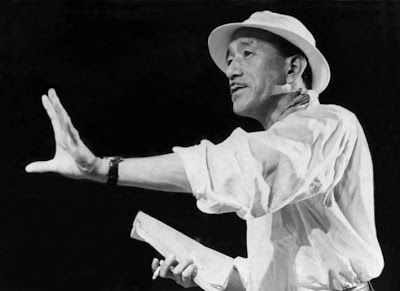

Yasujirō Ozu