Sunday, January 31, 2010

more late night listening


Kraftwerk’s debut record finds the core duo of Ralf and Florian deep in the heart of Krautrock experimentation. Four extended cuts feature the brittle coldness and abrupt sonic detours which were part of that still fascinating ‘70s German art-rock movement’s aural palate. For those that love that Motorik beat as exemplified by Neu! and Kraftwerk’s later AUTOBAHN (and also absorbed rather smartly into the Stereolab sound), well you can find some of that here. The total sum of the record’s duration is a far more abstract proposition, however. I’d be okay with Radiohead playing some future Super Bowl Halftime show if only for the miniscule chance that they’d decide to pull a cultural fast one and cover this record’s “Ruckzuck”: it’s got a great beat and you can dance to it.


THE LIFE OF THE WORLD TO COME continues The Mountain Goats’ progression into the large, warm, unashamedly polished territory that is coming to define the 2nd or maybe 3rd “era” of John Darnielle’s work. As raw and startling as the early boombox stuff was (is), it’s really starting to feel that his more recent, more “pro” (sorry) albums are going to define this dude’s legacy for subsequent generations. But hell, he’s still got a long way to go. And the mutually beneficial relationship between the sound of Darnielle’s voice and the sturdy beauty of his lyrics continues: when he utters the line “I will do what you ask me to do/because of how I feel about you” in “Genesis 30:3” it gets me every time. As great a record about faith and humanity as I can think of right now.

Lowell Davidson’s sole recording, a 1965 trio date for ESP Disk featuring Gary Peacock on bass and the mighty Milford Graves on drums, is a major work in advanced piano studies. Davidson’s style is comparable to early ‘60s Cecil Taylor in its spikey determination to forge new paths, but his playing also rubs up against the great harmonists Monk and Herbie Nichols. There is higher density and moments of increased momentum on display in Davidson’s sound that when coupled with Peacock and Graves’s righteous refusal to even momentarily entertain the idea of falling into a trad piano trio accompanist role basically insures Davidson will never leave the margins of outsider jazz lore. Only recording one album doesn’t help matters either. Oh well. It’s there if you want it.

Can’t say that I’ve ever really been seduced by the sound of Sinatra. Sure, the stuff with Riddle is a major achievement, particularly when heard on a sweet hi-fi setup, but so much of the guy’s output inspires little else in me than the desire to chain smoke cigarettes and regress into outmoded social mores. Sorry. I kept hearing people speak highly of WATERTOWN however, often making comparisons to Scott Walker. And I’ve only listened to this a few times, but I feel it’s a good one. It may grow into a great one. It definitely has an open desire to engage a rock-era audience, though it never trips up and falls prey to ham-fisted attempts at being hep. There is a lushness and grandiosity that’ll certainly make fans of Walker and Serge Gainsbourg stand up stiff and salute. Did I mention it’s a concept album? No? Well, it is. An ambitious and, dare I say it, classy piece of work.


James Carr has been described at least once as the Syd Barrett of soul. “The Dark End of the Street” is his most famous tune, and while he was never considered a hit maker (seven of his singles made the R&B top 40, though), he’s justifiably legendary for the depth and range of his emotive abilities and for the focused uniqueness that defines his work for the Goldwax label. Carr excels in my ears at mid tempos, where he recalls the sturdiness of Otis Redding while never sounding even remotely like a rote copyist. The bands backing up Carr on THE COMPLETE GOLDWAX SINGLES are simply shit hot, landing in classic southern soul territory defined by Stax and Muscle Shoals, but with more modest recording circumstances lending the music a tougher, more garage-like feel. And frankly, there’s not a bad song in the bunch. Even a dangerous endeavor like covering the Bee Gee’s twee-pop nugget “To Love Somebody” succeeds. Every bit of James Carr’s retroactive status as a deep soul superstar is deserved.

Thursday, January 28, 2010

Late night listening


Pere Ubu’s THE MODERN DANCE is one of the strongest and strangest debut records to ever lose record company money, a wild, weird, and tough as nails mixture of punk and experimentalism that could only have been birthed in the dark days of 1970s Cleveland: a little chugging, some misshapen dub, blown out tire rubber on the side of the highway, broken glass and synthesizer shrapnel, and frontman David Thomas as Dadaist ringleader. As intellectual and idiosyncratic a piece of punk rock that ever was, yet fiercely proletarian. Ground level stuff, dig?


And THIS IS DESMOND DEKKAR is as soulful a slab of island ska as you are likely to find. Slinky grooving with just the right amount of backbone, this stuff (at least for me) sounds best on warm and breezy summer days while lounging half crocked (or half baked) in a lawn chair imagining those big fluffy clouds are really smoke signals from giant invisible Indians. They’re trying to tell us something.


Certain recordings possess a greatness that resists being adequately expressed with brevity of language. They really must be heard, soaked up in real time, allowed to impact the mind and body with the totality of the sound, the inexhaustible and irresistible nature of the creative impulse, and THEN if you write 50,000 words on the workaday brilliance, the genuine offhand mastery of Sam Cooke tearing down the house LIVE AT THE HARLEM SQUARE CLUB (just one night among many), you might get lucky and land somewhere close to the ballpark of doing the record some serious justice. Two figures tower behemoth-like over the creation of soul music: Ray Charles and Sam Cooke. If you need a primer in the genius of Soul Stirrer #1, this will hand yr ass to you but good.


SCORPIO is a vital document of free-jazz in the late-1960s expatriates in France style (BYG/Actuel division), featuring three horribly under-recorded guys: session leader Arthur Jones on fiery post-Shepp-ian sax, Bob Guerin doing a sweet and loose variation on Jimmy Garrison stylistics on bass and Claude Delcloo splashing and slapping and skittering in a slightly (Sunny) Murray-like manner on drums. The trio mingles and melds minds in a very attractive fashion, setting the search-mode to simmer instead of full boil. Small group free-jazz is most often still about communication (in contrast to large group excursions where the objective is collective catharsis and wall pinning mania). SCORPIO holds much warmth and thorny beauty in its two grooves.


Bert Jansch was one of the prime UK folkies of the 1960s. His playing and singing deftly mixed toughness and prettiness, weariness and smoothness, and it’s no wonder the guy remains so revered by those turned on by the starkness of acoustic guitar and a nude voice. These are the assured initial efforts of a major artist. If you dig pre-psyche Donovan and don’t know Jansch, then you’re missing a big piece of the puzzle.

Thursday, January 21, 2010

Some films watched and reflected upon (the nature of how this place works....)


TRIAD ELECTION is a fine piece of artful modern gangsterism from the Hong Kong auteur Johnnie To. A sequel to a film I’ve not watched, it holds up well as a stand alone work, though I look forward to re-watching this after acquainting myself with the original ELECTION. To’s style is tough, vivid, compositionally precise and focused on momentum: He’s an action director par excellence. I look forward to delving deeper into his work, the better to examine the recurring themes that are noted regarding his oeuvre.


Lucrecia Martel’s THE HEADLESS WOMAN is a prolonged meditation on class, allegorical in nature and perhaps difficult in its unconventional (lack of?) structure. The story presented here could work as a big-budgeted Hollywood suspense film, but in Martel’s hands it’s profoundly post-modern, a bit like Akerman and a touch like ‘80s Godard, but also with flashes of an almost Bunuelian sensibility. Yeah, this baby crawls to its conclusion, but it does so like a budding young genius in a colorful cloth diaper. Uncompromisingly major, it would work well in a double bill with Todd Haynes’ underrated and misunderstood SAFE.

Jim Jarmusch is one of my faves, maybe my personal tip-top American director post 1980 (his only real competition being Wes Anderson and Dave Lynch). THE LIMITS OF CONTROL continues his unabated string of mastery, and I found it to be a sweet little accidental bookend to Martel’s WOMAN, in that CONTROL feels sorta like a movie about a hit-man made in 2009 by Antonioni circa 1962, all the suspense beaten flat and replaced with studied deliberateness, ennui, and a predilection for the integrity and beauty of small gestures. All shot wonderfully by Christopher Doyle. Along the way, observations are made, characters arrive and fade out, and an agent of imperialism comes to the end of his foul journey. I love happy endings.


I think the strength of Jason Reitman’s UP IN THE AIR actually rests on the strong abilities of its cast, since the directorial style at work just largely looks (to me) like television. That look isn’t really a bad thing, since these days TV doesn’t really “look” “bad”, but I guess my point is that it seems “undistinguished”. Maybe I just need to see more Reitman. The bigger picture Re: AIR is how well acted and powerful its story is, how that story is complex and ambiguous in the way it tackles the subject of the alienating effects of life in late-Capitalism, and by extension how that alienation bleeds into every aspect of our personal lives. And, y’know, I’m not even sure if that’s what the filmmaker’s intended. With a stronger visual approach it could’ve been a flat-out masterpiece. As it stands, it’s merely great.


THE BOOK OF ELI, on the other hand, is drenched in visual stylization, with varying degrees of substantive achievement. As far as post-apocalyptic westerns go, it’s got some good things going on, but it also has some big plot holes, or maybe more specifically gaps. There are some fine shots courtesy of the digital Red camera, Denzel and Oldman are both very strong (Jennifer Beals, also), but overall it can’t shake being just slightly above average. The Hughes Brothers are capable of so much more…

Monday, January 18, 2010

Listening to the sounds of the recently departed: Chesnutt, Mitchell, Reatard, Howard, Pendergrass


One of Vic Chesnutt’s strongest attributes was his desire and ability at collaboration. And he seemed to have an unerring sense of just the right people to partner with in adapting his songs and shaping them into complete works that make his discography such a thick and hairy joy to absorb. AT THE CUT is the second of Vic’s team ups with Thee Silver Mt. Zion/Constellation records crew/Guy Picciotto, and it’s just as darkly folkish and moodily transcendent as NORTH STAR DESERTER. Sadly, there will be no more collabs, but the man’s music will provide endless rewards.


In addition to being a fine musician in his own right, Willie Mitchell sat in the producer’s chair at Hi Records and helped to craft some of the finest soul expression to ever hit vinyl: Syl Johnson, Ann Peebles, O.V. Wright and of course the great Al Green, whose GETS NEXT TO YOU is not only a near perfect example of the Reverend’s soul testifying, but is also a major spotlight on how Mitchell worked at harnessing and directing the energies and artistry of such a galvanizing and uplifting vocal force as Green’s.


From one Memphis great to another, the soon to be deservedly legendary Jay Reatard, doing what he did best (IMHO), on SINGLES 06-07. The guy’s short and direct bashing was surely and unapologetically in the garage-punk tradition, but his sound also encompassed such wide ranging elements as bent pop ditties and synth-punk wig-outs. He had heaviness in abundance and more hooks than a goddamned bait shop. That a compilation of his singles could solidify and flaunt the feel of a fully realized album seems like a strong and fitting tribute to a guy who left us far too soon.
I tend to think that The Birthday Party get something a bit like short shrift in the histories of the whole global post-punk scramble, and when they are discussed it’s often to just spotlight the early career of Nick Cave. Yeah, Cave was of course a huge part of what made The BP such a zonked and brutal concern, but the truth is that Nick has always been beholden to the players that surrounded him, the late Rowland S. Howard in particular. PRAYERS ON FIRE may not be the best example of Howard’s dense and damaged guitar style, but it’s surely not far from the top. Raw and thrilling sounds.


Harold Melvin & the Blue Notes were fronted on their classic early ‘70s recordings by Teddy Pendergrass, a singer so emotive and simultaneously sure footed in his range that he spent a significant amount of time as certain discerning soul aficionado’s make-out maestro of choice. This is the group’s first LP from ’72, featuring the smash classic “If You Don’t Know Me by Now”, and the grooves in total are a fine testament to the sound of soulful Philly, and to the power of Pendergrass.

Monday, October 26, 2009

A flighty fragment concerning Ralph and Jilly and Dr. J


Ralph had one eye on the digital clock that sat under the smudged mirror and the other on Jilly’s vintage Julius Erving poster, this one recording and preserving for all eternity a certain seemingly illogical yet perfectly controlled “tomahawk” style jam, and as he noticed the large red numbers abruptly change to display the numeral one followed by three zeros, the quartet halved by a colon, the time silently taunting him that he was now a full hour tardy for work, his gaze shifted from the clock on the cluttered dresser and the room’s choice of décor to his companion of the hours previous, his focus now fully on the owner and designer of this room, and as he watched Jilly drowsily pull up her socks so that they met the bottom of her kneecaps, he inquired over her possible even probable interest in the game of basketball and stood looking with hidden desire reignited as she cocked her head sideways, shrugged her shoulders laconically and while fumbling for her first morning cigarette and the accompanying primer grey ceramic ashtray she replied that basketball was okay, but the reason for the poster concerned cherished memories of her father, memories of sitting in the cheap seats at Seventy-Sixer’s games all through elementary school and well into her teenaged years, until their shared experience shifted to the sofa in front of the television and eventually culminated in her sitting in a hard backed chair holding his bony chilly hand as they watched from his hospital room, and as these words came tumbling out into the air and mingled with the first exhalations from the freshly lit tobacco, he leaned forward and first kissed her forehead, then kissed her lips, and last exhorted her to call him, reminding Jilly that his number was stored in her phone, and while slowly backing to the door that sat diagonal from Dr. J’s imposing physical presence and announcing with distaste that he was late for work, he said a last goodbye and demanded with what he felt was just the exact amount of urgent sincerity for her to call him, waiting for her to smile and nod, cigarette dangling, and then darted for her front door to engage in a jog that slowly developed into a full sprint down the sidewalks of his hometown to his unpleasant destination, his employment, his desk, the place where he could sit for just a bit and not be bothered while collecting his thoughts, thoughts that were already shifting away from the idea of an impulsive one-night stand and heading toward the possibility of something vague but certainly more substantial, and as he second-guessed himself and obsessed over just what was causing him to change his mind, he gave up looking for specifics and instead just settled on and slowly drank in the image of her socks stretched up to the knees.

Thursday, September 10, 2009

"It's almost dawn and the cops are gone, let's all get Dixie Fried" - Thoughts on the life and art of Jim Dickinson (and Sylvester Weaver)


Jim Dickinson in 1966: Backwoods hipster (photo by William Eggleston. I think)


As I type this I’m listening to the brilliant blues guitarist Sylvester Weaver and considering the mind-blowing life and art of Jim Dickinson. Weaver was the first person to be captured on record performing acoustic “country” blues in 1923, and also the first person documented playing slide guitar: simply put, he’s a versatile, legendary figure whose music still sounds vital today. Dickinson was a musician, record producer and byproduct of the cultural and artistic melting pot that was mid-20th Century Memphis Tennessee. He died just recently, less than a month ago at the point of this writing, but it seems safe to conjecture that Dickinson is still predominantly an underground figure, though one that millions of people have heard play piano on “Wild Horses” by The Rolling Stones. He was a member of The Dixie Flyers, an Atlantic Records’ house band that helped make, amongst others, Aretha Franklin’s severely underrated 1970 LP Spirit in the Dark such a long-standing mover, and he was able to mold the madness at the core of Big Star’s incendiary and claustrophobic 1978 bombshell Third/Sister Lovers into the masterpiece that many of us continue to clutch to our chests on chilly, lonely late nights. Dickinson also released his own lovingly off-kilter recordings (under the name James Luther Dickinson and in the group Mud Boy and the Neutrons), classics of a life-affirming sensibility possessed of depth and sincere no-bullshit erudition, albums drenched in a personality so rare and valuable that hepcats like Bob Dylan went to visit him. Weaver and Dickinson are both very significant artists, but their legacies aren’t overtly linked. However, thinking of them in tandem has solid benefits when trying to gather a handle on the heaving heft that’s been the last 100 years of this country’s (that would be the US of A) musical progression.


Nice lid.


Weaver was born in 1897. He began recording in the 1920s, a young man in the middle of some massive cultural upheaval, just one guy who had the good fortune to not only be a strong solo performer but also a sympathetic collaborator. By the end of 1927 his recording career was over and 1960 marked the final year of his life, an existence that ended without fanfare or the accolades of rediscovery that were then being bestowed upon other bluesmen both living or dead. The year Weaver died institutional segregation was still in full effect, William S. Burroughs’ The Naked Lunch was published, John F Kennedy was elected President of the United States, and the appearance in record stores of the Robert Johnson compilation The King of the Delta Blues Singers was still a year away. Jim Dickinson was 19 years old.


Dickinson in the studio
.
To be 19 years old in 1960 means being the perfect age to really soak up some of the era’s prime social upheaval. Living in Memphis must have just made it that much more intense. To read or hear Dickinson speak about his youth is to gain clear and rich insight into the circumstances the gave birth to rock ‘n’ roll. In his account, the pressure cooker of artistic magnetism of the ‘other’ that ran roughshod over certain young people during the 1950s isn’t laid at the feet of Elvis Presley but instead is awarded to a pill-headed disc jockey named Dewey Phillips, the kind of ‘crazy whitey’ who engaged in subversive behavior like playing Hank Williams tunes between the gutbucket gospel of Sister Rosetta Tharpe and the feral madness of The Howlin’ Wolf: A type of accidental cultural disruptor, simply getting his kicks and changing history in the bargain. Dickinson makes the bold and rock-solid claim that without Dewey Phillips there would’ve been no Elvis, or specifically those first ten songs recorded in Sun Studios that caused so much sweet shit to hit the fan before Elvis sold out to Hollywood a year or so later. The play-list integration of Dewey Phillips made Presley possible.


Sylvester Weaver’s blues has nothing significant in common stylistically with rock ‘n’ roll, and his seductively loping, at times slightly Hawaiian-ish style has almost no ties to the blues-rock boom of the ‘60s. Weaver was from Kentucky, not the Delta, and his warm style lacks the doomy, desolate qualities of Charley Patton, Son House or Robert Johnson. Instead, he shares the accessible feel of musicians like John Hurt or even Willie McTell, a folky sensibility that’s casual and inviting. His style of blues features qualities of refinement (a certain studied smoothness), but it’s still undeniably rooted in the country. Weaver’s music is quite at home rubbing shoulders with the hokum and jug bands that proliferated in this era.


.
LP art by R. Crumb


This isn’t any major revelation, but I find it worthy of mention since one of Jim Dickinson’s early musical epiphanies was hearing The Memphis Jug Band, a group with roots in the 1920s, the decade that holds the entirety of Sylvester Weaver’s recording career, 1923- 27, just five years that fits on two archival compact discs. Like Will Shade’s Memphis Jug Band and their contemporaries The Beale Street Sheiks, Weaver was a pro musician. He had a personal solo style but also excelled at duo playing, backing both prolific gospel blues singer Sara Martin and his young discovery Helen Humes. In the same period Martin recorded with Fats Waller and Humes later became a member of Count Basie’s Band. Weaver’s milieu prized adaptability and the desire if not the consistent ability (though his music was popular in its day) to reach a wide audience while retaining a distinct personality, the stamp of individuality.


Sylvester Weaver and Sara Martin
.
For many, this sort of ‘pro’ mentality is less appealing than the raw quality of specific records, most from the Delta, that seem almost accidental in their existence, their reality owing mostly to a very young recording industry having no solid idea what was sellable or commercial. The strung out, eerie sound of Skip James, the tough, ragged style of Charley Patton, the otherworldly croak and moan of Blind Willie Johnson; this was ‘hard’ music that remains impenetrable for many listeners to this day. It’s worth noting that in the rediscovery 1960s Skip James and John Hurt often played the same festival circuit. James felt his style of blues to be superior to the deceptively mellow playing of Hurt. The sound of Hurt’s voice mingling with his sweet finger picking seems perfect for relaxation and might even effectively lull babies to sleep, in spite of the fact that Hurt’s lyrical content often concerned death and strife. But James’ oeuvre is murder music of a blatant sort, the sound of malice and slaughter and suicide pure and simple, and he looked down his nose at Hurt’s accessible style. Folklorist and American Primitive guitar giant John Fahey considered Skip James to be a monumental asshole, but in this case that’s sort of beside the point. If we must get to the point the point will be that not all old-timey music is stylistically congruent. The jug bands are often the middle ground between polished professionalism and the uncompromisingly raw. Sylvester Weaver seems, at least from this distance to be a fellow traveler of the jug band aesthetic, and it was the sound of what many consider the greatest jug band ever recorded that helped to impact the consciousness of Jim Dickinson.


.
Where'd these guys come from?


Again, adaptability. The constant risk in being a pro musician is losing the root of it all, the danger of watering down or distorting the vitality of the sound/style in the desire to reach the ears and pocket books of some sort of hypothetical audience. The opposite extreme is often embodied by the suffocating demands made by purists, people that get so caught up on a concept of authenticity that they often miss the forest for the trees. The forest (or the trees, take yr pick) can be how distinct musicians with unique sounds and directions are often lumped together simply because the music has the surface similarity of sounding ‘old’. Jim Dickinson’s era is that of early rock ‘n’ roll, and if there is a period that is inherently opposed to the concept of purity, this is the one. Once white kids and black kids started getting turned on by each other’s sounds and styles and cultural signifiers (and simply turned on by each other) it was a ball that couldn’t quit rolling, and it was only a matter of a few years before the rest of the world, either willingly or grudgingly, followed suit. This is what the Rockabilly purists and R&B snobs often refuse to understand: that Bill Haley and Gene Vincent were the respective Beastie Boys and Justin Timberlake of their day. And on the other side of the fence, a phenomenon like Bad Brains can be traced back to Chuck Berry. Which is to say, can’t you hear the Hank Williams in Berry’s “Rock and Roll Music”? I sure can. And yes, the risk is Pat (or Debbie) Boone or Vanilla Ice or Milli Vanilli. But ya’ know, I think that’s a chance worth taking. And I don’t think Jim Dickinson ever felt he had a choice.


So get this old news: rock ‘n’ roll is the beautiful multi-racial child that resulted from the mixing/blurring of class, ideology and simple skin color. This is of course no startling revelation. A few huge forests have certainly been chopped to the ground to provide the pulp to make this point for both true believers in the cathartic gush of the R&R whatsis (that’s me) and for those whose interest in the music/movement is historical (that’s me, too). But it’s a truth that’s often forgotten partly because the give and take wasn’t a smooth 50/50 split, white music being influenced by/borrowing/stealing from black music with much greater frequency than the opposite, and also because the USA seems to love deliberately not thinking about race and class (read the current headlines to see how people act/react when confronted with an issue that's intrinsically linked to race and class). But I think to play truly vital rock ‘n’ roll (and this is the only form of music where the following statement really matters, in my opinion), an acknowledgement or at least sub-conscious acceptance of the cultural/racial/class based back and forth is essential. When the Rolling Stones lost interest in this underlying conversation in their music, they started to suck. Before they started to suck, back when they were a thriving band, they would get Jim Dickinson to play on their records.


The wonderfully warped reality of James Luther Dickinson wasn’t possible anywhere other than Memphis. This was the birthplace of not only Sun Studios (where Jim released a single with The Jesters) and its wildest success Mr. Presley, but also the studio and record label known as Stax/Volt, a building/company/state of mind that put into everyday practice the righteous intentions of integration and racial equality. Dickinson loved music and was in it for the long haul. Memphis made his journey possible. His ability to genuinely contribute to such a wide variety of southern music (both geographically and in spirit) is a mind-bending thing. Not just Aretha and Alex Chilton, but also Primal Scream and Panther Burns, The Replacements and Ry Cooder, The Cramps and Furry Lewis, Dee Dee Warwick and Mudhoney, Doug Sahm and Sam and Dave. One of Dickinson’s earliest musical exploits was a group called The New Beale Street Sheiks, a shrewd idea that seems to simultaneously reference the name of (also recently deceased) Mike Seeger’s then contemporary folk group The New Lost City Ramblers while giving props to Frank Stokes’ and Dan Sane’s late ‘20s answer to those other Sheiks of Mississippi, the Chatmon Brothers.


So here we are back in the era of Sylvester Weaver’s fleeting bout of recording. And getting up close to the sound of Mr. Weaver is just a fine place to be, his playing at moments refined yet appealingly weird, while at other times being direct and spare. At his best when playing sly instrumentals, he’s responsible for a handful of succinct masterpieces of early blues, three from his last year of recording, where he seemed to be really getting a grasp on the slippery tension in his work.


Sylvester Weaver was born in the 19th Century and was sadly long forgotten by the birth year (1941) of Jim Dickinson, a man who almost managed to get a full decade of his too short life into the annals of this fresh and fucked millennium. Dickinson played piano on Dylan’s Time Out of Mind album, a record that seemed to jumpstart Bob’s creative fire and landed him a Grammy Award for Best Album. From the stage Dylan gave props to Jim, calling him a brother, but this was in reality a reciprocal gesture, since Dickinson had covered Bob’s early song "John Brown" on his 1972 underground classic Dixie Fried (featuring Dr. John and an uncredited Eric Clapton). Indeed, I can easily see these two kicking back in Jim’s Memphis trailer home, discussing how to get Dylan backstage at an upcoming Mud Boy and the Neutrons’ gig, while taking sips from a jar of high quality hooch and listening to some sounds of equally fine vintage, perhaps even Sylvester Weaver’s “St. Louis Blues” or “Soft Steel Piston”. Oooohhhh mama, can this really be the end…………..


Mr. Dickinson, you’re already missed.


Friday, August 21, 2009

You can leave now if ya don't like what's happenin' - Van Morrison's first four (with a few asides)


Outside of the expected radio fragments, the music of Van Morrison never really entered my consciousness until I was well into adulthood, and even then it was initially in less than optimal circumstances – crowded parties or noisy bars or an acquaintance endeavoring to familiarize me with the man’s greatness and then proceeding to talk over the entire first side of whatever record they’d felt was so necessary to impact upon my consciousness at that very instant. I don’t think this hit and miss fragmentation is particularly unusual; Morrison is just one example of a popular musician who is often elusive in the mainstream, known and casually categorized more than they are actually listened to, suffering a friction between a surface notoriety and the lack of deep recognition that also shrouds names like Joni Mitchell and Tom Waits. But Morrison is a curious case, being extremely busy in his first five/six years as a recording musician in a variety of contexts.


.
Them


He started out as the front man for Them, a very worthy example of gritty Brit Invasion R&B that scored a few hits, among them one classic that often gets confused as a Rolling Stones tune (“Here Comes the Night”), and one canonical non-hit (“Gloria”) that will eternally serve as a cornerstone for the garage-rock explosion that followed shortly after the band’s demise, an explosion that seems to regenerate momentum every decade or so.


A catastrophe of cover design
.
He then broke out solo, managing to get almost immediately screwed over by his label Bang while simultaneously scoring a smash hit, the biggest of his career, with “Brown Eyed Girl”, a song I feel safe in conjecturing every human being over 25 years of age that resides in the US/UK has heard at least a dozen times. Easy. But the other initial examples of Van by his lonesome are considerably more complex than the jukebox euphoria of “Girl”, and it’s a head-scratcher why some of the songs collected on his 1st LP Blowin’ Your Mind (no false modesty from this Irishman, or to be truthful, from the label that apparently released the record without Van’s knowledge) weren’t more ensconced into the “classic” rock mainstream during my formative years. Tunes like “TB Sheets” and “He Ain’t Give You None” are grand examples of exquisite stretching out, the later drifting into some impromptu vocal loopiness that these days is as rare as a tooth on a chicken. And “Goodbye Baby (Baby Goodbye)” (the B-side to “Brown Eyed Girl”) is maybe the tune that should’ve been his follow up hit, with its blue-eyed guitar based funkiness, it’s sweetly idiosyncratic backup singers, and an expert slow build to a manic soul testifying that carries not an ounce of fat on its frame. Jeepers. I guess a big part of the problem is that the album seemed to be scarce for a long time; at least I never saw it anywhere during the long hours of music shopping I chalked up from age 13 to 30. Its available now with bonus tracks, however, and for folks that are generally inclined to look at the cut of Van’s jib with a warm smile and an approving nod, I’d say give it a shot if you haven’t already. It has a clued in sensibility that I imagine pleased the punch out of that era’s burgeoning rock elite (those growing out of garage and in need of something a bit heavier but not necessarily louder) while also ruffling up the feathers of the more Modish Disco-Tek inclined movers and shakers. Or perhaps I’m woofing up the wrong eucalyptus. After all, I wasn’t there.


The debut was followed up with a recording for a new label (Warner Brothers) that is generally considered to be his enduring masterpiece. Astral Weeks continues to be a challenging work that yielded no hit singles and wasn’t initially a strong seller. Plus, reports conflict as to how immediate and fervent was the record’s critical reaction. I’ll state right now that I’m just getting reacquainted with the album after a long period of non-ownership. To elaborate, I first bought Weeks on cassette from a gas station tape rack when I was roughly 23, taking it on a test drive with a friend into the guts of Virginia and being suitably smacked upside the head with its lushness, its slightly stressed emotionalism, and its moments of caustic beauty, an overall thrust that falls somewhere between toughness and melancholy. That cassette lasted a few years before shredding and necessitating a replacement, also a tape (second hand, because I’m a cheap-skate) which lasted until it inexplicably vanished as tapes often do. So here’s the rundown: The very first time I heard the damn thing I simply KNEW it was a classic, particularly by the moment the slow burning aching prettiness of “Cypress Avenue” started bleeding out of the speakers, closing out the recording’s first side in exemplary fashion (the kind of song that potentially makes a listener wait for an unspecified period before flipping or continuing with the rest of the music, an effect that’s mostly lost in this post-compact disc era, though Weeks has recently been reissued on high quality vinyl for those with the sexy chutzpah to own a working turntable), or the scrambling up-tempo shrewdness of Side Two’s opener “The Way Young Lovers Do”, with its onion-like sound layers, horns vibes and acoustic bass too expertly delivered to simply appear as a nod to jazz influenced validation (a.k.a. “my, aren’t we hip?”), instead existing as an injection of adrenalin that gallops along avoiding clichés and gathering strength until abruptly it’s over, and the gears are slyly shifted onto what is for me the record’s centerpiece, the slowly pummeling “Madame George”, an exhibit of gradually building string motion and wounded atmospherics that rise and level off and then lunge out one last time like a maddeningly deliberate baroque fever dream before slowly fading away, making me feel like Nico’s goddamned ghost just took over my body for nine minutes: A draining but ultimately rewarding encounter with a psyche that perhaps loved and lived a little too much. Yeah, it’s like that.
And yet I must confess that Astral Weeks is an album that I held at arms length for a long time. I’m not sure why. Perhaps it was a generational thing, the fact that it wasn’t produced by someone that had a birth date in rough proximity to my own. But I doubt it, since I was then championing music from this record’s era both well-known (Blonde on Blonde, Electric Ladyland, Live/Dead) and obscure, at least at that point (Oar, Pink Moon, Chelsea Girl) to anyone who’d suffer my verbiage (like you’re doing right now). As I peck out these words I’m leaning toward the possibility that I just wasn’t….ready….for the record. Lacking in maturity is maybe a self-deprecating spin on it. But whatever, because I’ve listened to it about a dozen times in the last month and it really truly (finally?) feels, through my ear canals and into my bloodstream, like the heavyweight masterpiece that it’s been described as for the last few decades. It’s not a flawless record; part of its greatness stems from the fact that it’s imperfect and rough in spots—“Slim Slow Slider”, the album’s relatively brief closing song apparently stretched out for a couple years and needed an edit that makes the tune feel a bit anti-climactic, though maybe a dozen more listens will change my mind. Another aspect of the LP is how the intensity of the songs, a quality that at times borders on abstraction is totally matched and elevated by the musicians playing it, which in turn seems to send Morrison almost to the brink of his talent. There are spots where it sounds like his outward-pushing to embrace and match the music forming and building around his songs flirts with oblivion, or to put a finer point on it: this was a higher class of musician than Van was accustomed to interacting with, veterans from the take no prisoners American jazz scene that Morrison has since admitted he knew almost nothing about at the time. But to be clear, these aren’t faults. The details in the last three sentences all clearly work in the album’s favor, heightening its greatness and making it one of the most singular musical experiences ever committed to tape. I really don’t think I’m being hyperbolic.

.
So. Those knowledgeable in the specifics of Morrison’s output know what’s next. It’s Moondance, which pales in comparison to the majesty of its predecessor, but still has much to offer, even if I feel it’s a flawed record. It’s flawed foremost because its title-track can’t withstand the repeated play it’s received over the decades (it was finally released as a single seven years after the album). Frankly, it’s just not a very good tune, being a pastiche of phonus jazz-isms that reek of a guy who discovered Dave Brubeck ten years too late. Dude, you’ve been hangin’ with the wrong crowd. The rest of the album is far tighter, and much more polished than anything from Weeks, though this isn’t really a negative. Unlike the previous record, Moondance is primarily a pop album (singer-songwriter division), though it mines R&B/soul territory so successfully that many people might be given pause if asked to place it in a genre. This is partly because Morrison, like John Fogerty, is quite unique and expressive, though always tasteful in his soul music borrowings. “And It Stoned Me” sounds a bit like The Band augmented with a sweet horn section (nothing too tight or clumsy), and “Crazy Love” comes off like some lost early Aaron Neville single that’s gathering value in the back of a New Orleans junk shop. “Into the Mystic” glides along on pretty acoustics, the rhythms subtly building in intensity to a crescendo that culminates with a majestically delivered (so well controlled) horn section vamp that can stick in the memory for freaking days. Maybe the best track on the album, it deserves to be as well known as this record’s “Everyone”, which plays over the credit sequence of Wes Anderson’s film The Royal Tenenbaums and has a cadre of fans who don’t know Van Morrison from Van Gogh or Van Halen. The song following “…Mystic” feels like a misstep to these ears, however. “Come Running” isn’t terrible, but its upbeat motions to a gospel-tinged joyousness never really succeed in their intentions. That’s okay though, for the rest of the record registers as varying degrees of rich bullion. Overall, the tidy professionalism and studio polish of Moondance lacks the power of Astral Weeks’ nude rawness, its feeling of artistic exhaustion, the rich gamble that’s still paying confounding dividends. They are both certainly different animals, one a stunning soul-purge the other a (mostly) savvy piece of construction. I can clearly recall the first time I drunkenly swayed along to the sounds of Moondance at a field party with a plastic cup full of foamy lukewarm keg beer. I’d heard the record maybe twice in it’s entirety previous to that point, and I didn’t consider myself a fan. In those days I was much stronger in my vocal advocacy of the enduringly tough formalism of Them, a band I still love like a brilliant and vivacious sibling. On that night my intoxication helped to loosen the bolts of resistance. And so I danced under the moon, oblivious to the irony at the time. What I remember thinking in the moment concerned how I never felt so “adult”. ‘Twas a bittersweet and paradoxical experience.


There is no electric sitar on this record
.
But, hey! How about one more? Van’s next record, released the same damn year (1970) as Moondance, titled His Band and the Street Choir, still sounds quite worthwhile to these increasingly weathered ears and noticeably scales back the smoothness of the previous release while retaining Van’s concise examination of largely R&B-based songwriting. There’s an urgency here that’s lacking on Moondance, and the hit single “Domino” which opens the album still retains its power through its years of steady rotation on classic rock and oldies stations. Easily Morrison’s most direct homage to the music that helped shape his artistic sensibility, “Domino” is one of that rare breed, a hit single that sits on the album that spawned it and doesn’t feel like a let down. Of course it is the opener, but I’m predicting that if I played the songs in reverse order I’d feel the same way. How about that for bold hypothesis? But the strongest aspect of His Band is the small moments of oddity and warmth that add up to a big whole. The strange soprano sax bleating on “Crazy Face” might’ve made the late great Steve Lacy wince, but to a non-player like me it simply feels like a gutsy beauty move. That it slides into and doesn’t disrupt such an intensely pretty tune shows just how deft these folks were at shaping this stuff on the fly (two albums in a year, remember). Tunes like “Give Me a Kiss” hover on a tightrope between the gulfs of throwbackery and contemporaneousness, chugging along like an extremely highly-regarded local bar band having the greatest, grandest night in their existence, the kind of night that inspires table dancing and marriage proposals. Even that cop in the corner is having a good time. And what’s he doing here, anyway? “Call Me Up in Dreamland” actually succeeds where Moondance’s “Come Running” flounders, managing to pull off a looseness that grows and emits an almost tent-revival feel. When the sax solo starts, any doubts that it would fracture the tune’s fragile grip on a non-polished celebratory gush is laid to rest, for the horn playing is the loving definition of elated amateurism, thick and drenched in pure love. How sweet it is. But I’ll confess that my favorite tune from this record is the fairly well known “Blue Money”, an eccentric little noodle into some gal-guy-greenback nonsense as zonked-out profundity that’s so attractively bent I can listen to it five times consecutively without any lessening of it’s qualities. There are half a dozen more strong tracks (unlike Moondance, no duds), but my personal pick of the bunch is……well. It could be “Gypsy Queen”, the best slow-groove old-school rhythm and buh-lues make-out tune I’ve heard in quite some time. This is to say it really makes me want to make out. Oh-well. Instead I’m sitting in front of this keyboard, which holds its own distinct pleasures and rewards.
In just a smidge over five years, Van Morrison grew from a stern and sharply-suited vessel of the new Caucasian R&B, squeezing off a few spectacular sparks that any true fan of garage punk should recognize and appreciate, and into a young solo artist of raw ambition that was somewhat similar to another Brit Invasion-era figure that had soaked up the sweaty and bottomless influence of the American blues idiom, namely Eric Burdon. From there he kicked out a recording that many consider to be the greatest of the last century, and while I don’t go that far, I do think that it’s not unapt to describe Astral Weeks as being comparable to Gertrude Stein’s novel Three Lives, a book that I’d been thinking about in this context (honest) before oddly stumbling onto a copy in my local used book shop just recently. There exists a concurrent aspiration and approachability in that defining work of modernist literature, a successful commingling of rich language and deep detail that still retains a sincere accessible quality that is very reminiscent of Morrison’s sprawling, demanding yet ultimately inviting masterpiece. In addition Van, like Ms. Stein (at least at the point of her debut) is attracted to conjuring portraits of fictive characters and locales that mark him as similar to Dylan certainly, but also can’t help but bring to my mind the vast expanse of literature’s past. And so, sweet Gertrude, if you will permit me the liberty. But it’s also telling that she and he went in subsequent directions that differed due to their own temperaments and the unique parameters of their chosen art forms. Morrison reigned in the sprawling severity of his vision and developed as a commercial artist in a performance based medium, and Stein did just the opposite, perhaps primarily because literature is a solitary act of creation, where even the appreciation of the finished work is largely on a one-to-one basis (Mr. or Ms. Writer meet Ms. or Mr. Reader), a factor that allows authors to be at least in theory less concerned with the follies and whims of those receiving their work. Again, at least hypothetically. What’s not a theory is their stature as artists. Stein is simply unimpeachable, and if Morrison had stopped after his fourth solo record, he’d still be called a master. But he didn’t, and there is more (much more), but the examination of his later work is for another time, and perhaps for someone other than myself to undertake. But who knows? The more I hear about this Tupelo Honey, the more I’m intrigued, an interest that’s starting to border on the smitten. What can I say; I’m a sucker for a classy lassie…

Wednesday, August 19, 2009

some filmic favorites (with images)

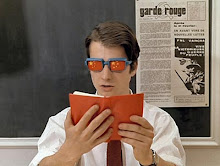
I'm stumped as to why Cahiers du cinema never called about that staff writer's position.


1- Tokyo Story (Ozu) a small story about generations and family with an emotional impact that's just devastating. It possesses a maturity and assurance of vision that elevate it above any other film I've seen. The quiet beauty of the visuals infuses the narrative without ever being manipulative. Nothing is rushed; the characters are developed gradually, through activity and shading, and their dialogue is elevated by the camera's observational approach. This minimal technique increases the emotional content and, by the picture's end, the level of empathy that I feel is greater than that inspired by any other movie. A perfect film.


2- Au Hasard Balthazar (Bresson) an intensely beautiful film by a very complex and unusual director. Bresson's work presents the story (about a donkey and humankind's numerous shortcomings toward the animal and themselves) in a rather striking way: instead of histrionic method-y acting and/or gratuitous visual signifiers, we get performances that gain emotional intensity through their lack of strained dynamics and a mise en scene that is completely devoid of artifice. Much has been written about Balthazar's allegorical significance (Christ, essentially), but this is presented as just one possibility; believers and agnostic alike are invited to feel the profound poignancy of Bresson's film. Couple the transcendent qualities of the visuals with the gracefulness of the storytelling and the non-accusatory tone, and what you get is an amazing work.
-

3- Vertigo (Hitchcock) the greatest film by the greatest of English language filmmakers. I can't think of a movie that better details the destructiveness of human desire and the difficulties of communication and understanding. The cumulative effects of Hitchcock's art are simply overwhelming. The use of color, the photography, the casting, how the actors are placed in the scenes, the use of sound and music are all seamlessly integrated with total mastery. Genius.


4- The Mother and the Whore (Eustache) long, sprawling, often bitter, and sometimes borderline reactionary, it's ultimately a kick in the groin to whatever was left of the Nouvelle Vague. Jean-Pierre Leaud's character is the embodiment of the early '70s pendulum swing away from the good-vibe optimism of the previous decade. He's not a character I look up to; rather, I'm in total awe of his anger, nihilist energy and the torrid momentum that carries him and the rest of his whole sick crew (sorry Thomas P.) to a mind-bending anti-conclusion. To me, the movie's greatest achievement is how it successfully depicts the disillusionment of its characters and their era, without ever being condescending or cynical. The supreme '70s film.


5- Weekend (Godard) a cathartic and caustic protest film from my favorite director. It features the greatest tracking shot in the history of cinema, and an unrelenting depiction of a nightmarish world that just totally unravels by the dénouement. One of Godard's most striking successes is how he deals with class issues in a manner that's all but unheard of in commercial films. Couple this with his deep distaste for society's self-destructive tendencies and the shallowness of humankind, and what you get is the filmic equivalent of a Molotov cocktail. But to be clear, a film that's just an excuse to make some political or social points is never much of anything: Godard's biggest strength is that he believes in the art of cinema, not only as a vessel of commentary and as an instigator of prospective change, but also purely from an aesthetical standpoint.
-

6- Paris, Texas (Wenders) sometimes it takes people from distant countries to make the most profound films about American culture. But like the movies of many great auteur talents from cinema's classic period, Wenders work doesn't bludgeon the viewer with the significance of its message. And actually, whatever message that's here isn't really all that tangible, except for rather obvious things such as the difficulty of communication and the unintentional emotional damage that people cause each other. Ultimately, Wender's restraint is his best tool. Whereas the vast majority of American filmmakers deal with matters of the heart in numerous inappropriate ways, going for bombastic moments or thick sentimentality (or a cool, hip detachment) that rings false, this director instead allows the characters to carry on with dignity that's quite rare.


7- Limelight (Chaplin) his silent films are excellent, of course, but Chaplin's sound pictures are the most meaningful to me, with this being at the top. It's a truly wonderful film, a work that shows that Chaplin was so much more than just a comedian: he was someone that possessed rich understanding of humankind's struggles, and the ability to tell stories about those struggles with subtlety and grace. He was a true man of the world, a quiet, dignified warrior, a champion of the downtrodden, and a consummate artist.


8- Detour (Ulmer) the greatest low-budget noir of them all, from a director that could create significant, meaningful films from the most unlikely resources. No money, blink-of-an-eye shooting schedules, undistinguished or downright banal scripts, whatever actors were on hand: Ulmer just plowed forward and used all of it, coming up with some against the odds artworks that show just how formidable ingenuity and imagination can be. Detour is a study in weird darkness, failure, rotten luck, and a dense hopelessness that is very much of its era. In spite of the above circumstances, or perhaps because of them, the film retains a strange, otherworldly power. One sure way to evaluate the abilities of an artist is to see if they can come up with something worthwhile from almost nothing. In Ulmer's case, this is probably a bit hyperbolic, but the point still stands. Given the type of circumstances that Ulmer routinely navigated, most filmmakers would flounder or produce something of mediocre quality. Detour is absolutely brimming with the spirit of raw creativity.


9- The Discreet Charm of the Bourgeoisie (Bunuel) simply put, the man was a genius, an oftentimes surreal, always interesting master of visual language that, like Hitchcock, made films through six decades without ever losing his relevance. One of the best things about Bunuel's satires, of which this is one, is how they lack the mean-spiritedness that curdles so many satirical films, especially contemporary ones. Instead, the characters are placed in a narrative of increasing outlandishness, with the effect of expert lampoonery and calm commentary that is sometimes gentle, other times biting. Bunuel's cinematic achievements are so unique and assured that there isn't another filmmaker that's comparable (possibly Jean Vigo, but he made so few films that it's not really an appropriate contrast): he stands alone as an iconoclastic visionary whose films continue to gain significance with the passing of time.


10- Touch of Evil (Welles) Kane is a brilliant film of course, but I find myself in thrall to numerous other works by Welles, this one in particular. Its unique ruminations on the concept of sleazy noir have lost none of their power, the opening long take is possibly the greatest I've ever seen (plus the photography overall is flawless), and the quirky casting is wildly effective and quite contemporary (though many recent films tend to overdue this). Welles in particular plays his role with a sweaty, obese power that's just riveting. The restoration is the essential way to see this film, with the opening returned to Welles' original intentions and the masterful balance of visual and aural artistry on display throughout.


11- Rear Window (Hitchcock) what most filmmakers would see as limitations Hitch uses as strengths. A room and the view of a courtyard from a window. Add a small group of expert actors and a story that's full of tension, ambiguity, and questionable ethics, and what you get is a film that proves the old adage of addition by subtraction. Frame after frame, Hitchcock infuses the proceedings with subtlety and sophistication, integrating all his elements within the film with meaning: there are no empty gestures here, as well as no blunt, clumsy visual metaphors. One of Hitchcock's strongest qualities is his assurance of vision. He was able to articulate in visual terms through the medium of the entertainment film recurring motifs that, once those movies shed their contemporaneousness, revealed their true nature as art films par excellence.


12- Faces (Cassavetes) a film that's positively infused with the raw energy of human emotions. It is also thoroughly tied to the changing mores of the 1960s, and is populated with characters that are fighting to overcome a profound unhappiness. A broken marriage is at the center of this narrative, and the two participants drift through a series of events in an attempt to escape disillusionment and fear. Yet at every turn they encounter and interact with other people who are similarly at sea. One of the most heart wrenching aspects of this movie is how deeply it illustrates one of the hardest realities of growing old: coming to terms with who we really are and the lives we've made for ourselves. But there is more, of course. Faces is also one of the nails in the coffin that is one-dimensional, superficial, or downright false female characterization. The middle-aged women who appear in the film's second half are presented warts-and-all, but are also shown as complex and beautiful. The honesty in the content of the film is superlative, but only because its form is just as truthful. It is the antithesis of shallow Hollywood glamour, and strives to depict a reality without falling prey to the often stultifying effects of capital R realism. Its camera is rugged and blunt, a window into consciousness that most films could never manage.


13- Bringing Up Baby (Hawks) Howard Hawks made so many great movies in so many different genres that to examine his work in total is to be awestruck by a master craftsman who constantly elevated his work to the upper echelon of commercial filmmaking. I could easily replace this film on the list with at least a dozen others from his filmography: this one, however, seems a good choice not only because it's given me great pleasure over multiple viewings, but also due to how it seems to stand as representative of a certain type of studio-era filmmaking. That is to say, it relies on economy, momentum, and a certain understated approach to how it transmits its artistic essence. Hawks was so understated, in fact, that until the 1960s, many people (particularly in the USA) felt his films lacked any artistic merit. This is nonsense, of course. But what is not nonsense are the man's movies: they are perfect examples of a direct, intuitive style that is all but vanished from the medium.


14- Night of the Hunter (Laughton) one of the strangest American movies ever made. It is a surreal, noir-like excursion through backwoods USA. Robert Mitchum's murderous phony preacher is like something from a horror film, Shelly Winters' character embodies an emptiness and hurt (that is, before she's killed and dumped in the Potomac river by bad Bob) that seems meant to represent the state of mind which plagued countless women from the pre-feminist era, and Lillian Gish's protagonist radiates with a peculiar energy and pragmatic intelligence that serves as the film's emotional core. And the narrative is heightened by the aforementioned surreal atmosphere, a visual tour de force that is so much more effective at conveying the urgency of the story than the more conventional methods used by most narrative filmmakers. If it sounds a bit like Flannery O'Conner writing a screenplay for Luis Bunuel during his '50s period, well it is a bit like that, but it's mostly its own thing: a strikingly creative film from a one shot director who brought all of the talent manifest in his acting to the helming of this sui generis work.


15- M (Lang) his American films are what I hold in highest esteem, for they are in many cases little movies (at least on the surface) that add up to a formidable sum. But M is a dark, pessimistic, frightening work that is saturated with modernity from beginning to end. Lang was looking at the times in which he lived, and simply didn't like what he saw. But rather than propose a solution or even deliver an upbraiding message, he just lays the story out there to fester in the viewer's consciousness. Here's the world, now deal with it. Part of the attraction for me of Lang's Hollywood period is how he had to navigate the constraints of the studio system and still produce distinctive, original films. With M, he was obviously far less encumbered by meddlesome producers (and also had the uncertainty of a still growing film business at his advantage), so he was able to transmit his vision to celluloid with far less restraint (though this unrestrained manner regarding content never spilled over to the film's form: apropos that, he always possessed a deliberate, masterful sensibility). Lang is in many ways the consummate auteur: taking whatever hand he was dealt and coming up with something worthwhile. In M's case, he dealt the world a flush and signed one of cinema's most enduring and influential masterpieces.


16- The Umbrellas of Cherbourg (Demy) some will say that it's sacrilege to rate this higher than any American musical, but I will only reply that I love this film's unabashed experimentalism, while at the same time being thoroughly caught up in its complete accessibility. It is a celebration of life, ultimately heartbreaking in its honesty, yet it is that honesty which provides hope and acceptance at the movie's end. Demy's use of color is flawless, and the score by Michel Legrand is an essential part of the film's richness. It is a picture made by a believer in the profound artfulness of cinema, populated by performers who believe in the vision of Demy, who in turn help raise its frames to the level of the sublime.


17- Shock Corridor (Fuller) the first time I watched this, I found it hard to believe the strange reality of the movie twisted existence. It's a B-film (by a legendary director, yes, but a B-film none the less) that walks a stressed tightrope between exploitation and human interest, while consistently moving away from the normal operating procedures for low-budget pictures: Shock Corridor is almost overloaded with content, its form assured and brutally direct. Unlike other B-pictures, it is never thin, lacking in continuity, or laughable. Instead, it is often bizarre, uncompromising, and darkly humorous. Sometimes tawdry, while never not being earnest, it's ultimately a tour through and indictment of stereotypes, injustice, and fear that's feverish in intensity and all the more effective for its low-brow quirks and lack of sheen.


18- Band of Outsiders (Godard) I could watch this movie 500 times, and it would never lose its appeal. The direction possesses such swaggering joie de vivre, the actors are perfectly cast and their dialogue is exceptional at capturing the nuances of youth and gender, the story is a perfect execution of the Nouvelle Vague tactic of bending genre conventions (in this case the crime film) into significant new directions, and the cinematography (by Raoul Coutard) is simply expert. For its duration, it exemplifies the qualities that make Godard such an amazing filmmaker: the blending of experimentation and classicism, the knowledge and references to assorted films, the integration of high culture and low, the singular characters and the actors chosen to animate them, the emphasis placed on aesthetic sensibilities. He can move from whimsical to erudite to foreboding in a matter of frames, and knows exactly which and how many conventions to push against or to break for the film's benefit. Some have described Godard's oeuvre as impenetrable, and for some of the films this is fair (yet only from a cursory perspective), but Band of Outsiders is far from difficult viewing.

19- Kiss Me Deadly (Aldrich) one of the defining films of the 1950s. Noir in style, vicious in its tone, populated by characters whose moral compasses are all pointing south to varying degrees, it's a masterpiece of kinetic subversion. It turns Spillaine's Mike Hammer, a cornerstone of the tough-guy private eye novel, into a low-rent jerk who's devoid of any hero qualities. As the story progresses, it becomes apparent that the world we see is overrun by self-interest, distrust, and cruelty. All the while, Aldrich's visual scheme is simply flawless: it appears at times almost instinctive how camera movements, lighting, angles, close ups, cuts, and edits enhance the narrative. Aldrich was one of the prime auteur directors to emerge after World War II, along with such disparate talents as Otto P, Anthony Mann, Nicholas Ray, Budd B, and Don Siegel, and what these men shared (at least in the earlier portions of their careers) was the ability to infuse their pictures with a subtle artistic presence that was implicitly absorbed by the audiences rather than overtly noted. In the case of Kiss Me Deadly this is a real feat, since nearly everything in the film in storyline terms is delivered with an aggressive bluntness that feels at times almost like blows to the head. It's non-self-conscious brilliance at its best.

20- Le Samourai (Melville) a film of calm assuredness and rich detail. Jean-Pierre Melville is often associated with the French New Wave, but more as an influence than as an active member of the movement. Here he is depicting the milieu of French gangsters, women who are drawn to them, and the police who are out to put them in jail. Since it stars Alain Delon, it's obvious that a certain level of cool stylization will be in evidence, but it is always kept in check; never is this film an example of style over substance. And unlike many (so-called) hip crime films that have come since, films that seem determined to throttle the viewer with loudness, hamminess, and empty quirkiness, Le Samourai represents the essence of restraint. Ten minutes of the film go by before a single word is spoken. The story progresses with the confidence and patience of classical cinema. Scenes develop and information is given with a graceful visual presence. Nothing seems at all out of place. Melville's film takes on an elevated reverence in relation to its subject matter and formal approach that rises to the level of sheer profundity.