Thursday, June 16, 2011

The Auteur Files #13: Adventures in the Criterion Collection Part Five; Or, Life Is Ephemeral -- Yasujirō Ozu's EARLY SPRING (Eclipse Series 3a)


“I tried to avoid anything dramatic, and instead piled up scenes where nothing at all happens, so as to let audience feel the sadness of their existence.” Ozu on EARLY SPRING


I’m quite candid over Yasujirō Ozu’s TOKYO STORY being my all-time favorite film. It’s certainly possible that some masterpiece will one day enter my consciousness and topple it from this position, but the quiet, sublime humanism of this enduring classic from 1953 affects me on such a profound level that I’m quite doubtful. For years in my little nook of the globe Ozu was brutally hard to see, so when the opportunity presented itself to watch STORY, a film that was consistently bandied about in serious critics-polls as one of the greatest ever made, I didn’t hesitate. That its beauty far exceeded my expectations is credit to its placement in the cinematic canon. One of the sweetest turns of events over the last few years is the increasing availability of Ozu’s films both early and late, with Criterion’s Eclipse series knocking out two boxed volumes of the man’s work for cinephiliac consumption. LATE OZU, a five disc set dedicated to a large chunk of his masterly final period, is simply an essential document that’s sheer value is incalculable. EARLY SPRING, the film that directly followed TOKYO STORY in Ozu’s oeuvre is included in the set, and while a gap of three years occurred between the works it’s quickly apparent that the director suffered no diminishment in his creative powers.


The first thing that should be said, indeed the first thing that is often said regarding Ozu (in order to prepare the curious and scare away those with insufficient attention spans or inappropriate expectations), is that his cinema is slow. This slowness doesn’t register in the manner of art-film/indie/experimental tropes, methods that often strive to aestheticize alienation and existential stasis to varying degrees of success. No, Ozu’s slowness is much closer to the grammar of classic film style, the sturdy deliberate quality and the quiet stateliness joining in deep harmony with his themes, ideas deeply concerned with the emotional effects of human relationships instead of the often flashier intrigues of plot. Contrary to the quote above, many things do happen in the films of Ozu; people wake, rise, work, converse, eat, laugh, play, argue, sleep. And while these activities unfold and provide the characters with quiet dignity, the story’s weight unfolds. EARLY SPRING is easy to describe in terms of its core narrative. Shoji and Masako are married. They’ve lost a son, and both are somewhat dissatisfied with their marriage and with life in general. Shoji is a “salaryman”, a non-skilled office worker who commutes to Tokyo by train. He establishes friendships in his daily routine and eventually succumbs to an affair with a fellow commuter. Masako shoulders the weight of domesticity and begins to suspect Shoji’s infidelity as he grows more distant. Eventually the fact of his adultery drives a wedge between them, with Masako leaving their home and Shoji accepting a transfer to a small town and departing alone. The film ends with Masako making the trip to rejoin her husband and the two resolving to make a fresh start, a denouement that lacks any sense of false hope or “happy ending” triteness, instead working in perfect agreement with Ozu’s intentions.


Yes, stuff is happening in EARLY SPRING, but it’s often the same stuff; he expertly uses structural repetition, depicting the same or similar activities as commentary on the mundane cycle of daily life. The soundtrack music during the opening credits is reminiscent of old Hollywood style, but once the film’s action begins the scoring is minimal, mostly used in scene transitions. In contrast, Ozu favors incidental music, the singing of characters or none at all. As the narrative gradually unfolds the film is peacefully respectful to how these characters carry on through the commonplace activities of their lives, and much information is communicated to the viewer without needless dialogue. The way the camera captures the routine of workers preparing for departure on the Tokyo train shows a life that is burdened by the necessity of daily ritual, for one instance, or the atmosphere of non-dynamic repetition that is office work for another. When his workers converse and attempt to inject spontaneity into their lives with a Sunday hike, the activity is shown to be hampered by familiarity; there is mild comedy here, but Ozu’s overall intention is to give portraiture to the malaise of life. When Shoji and the woman of his eventual affair, named Goldfish due to her large eyes, hitch a ride unexpectedly, their action departs so much from the expected sameness of the hike that it inspires a large commotion in the rest of the group.


The main focus of the story is how one couple deals with a marital indiscretion, but the overwhelming theme of the film concerns a large cast of characters coping with the inevitable disappointments of human existence. And they are truly well fleshed out characters, not symbols or stereotypes; the amount of time and care that Ozu gives in their depiction is absolutely essential. Early in the film, there is an easy conversation between Shoji, his older visiting friend Onodera and the proprietor of a local milk bar. All three express dissatisfaction with the paths of their lives’ vocations and the general atmosphere feels like a collective indulgence in a round of “the grass is always greener”. Late in the film, after his marriage has splintered and a close young friend has died, Shoji partakes in another conversation, the subject similar to the first but this time much more grim in tone.


There is profound sadness over this sick man dying at age 32, overdosing on sleeping pills while living with his mother. When the line “We live on, but we’re not happy” is delivered and it is suggested that the dying man may indeed have been lucky, it is the depth of the characters, the truth of their experiences and the precision with which Ozu moves them through his world that allows them to register not as callow or self-centered but to instead strike a universal chord that one character succinctly states as “life is ephemeral”.


The way Ozu composes shots of humans in rooms is a joy, as is EARLY SPRING’s long shots of city buildings that feel like B&W paintings; but the form is always securely tied to the content, the connection as deep as it is in the work of any old Hollywood master. It’s no surprise that Ozu was an admirer of Ernest Lubitsch, and in fact TOKYO STORY was at least somewhat inspired by Leo McCarey’s masterwork MAKE WAY FOR TOMORROW. And the director is fantastic at showing us sides of the human condition that transcend borders or cultures. A mother is concerned for her daughter, curious without being meddlesome. There is woman talk over spinsters, widows and the idea of remarrying. A line of dialogue succinctly expresses being taken for granted (“Wife is just a cooking machine”) while a husband, angry over an unprepared dinner, goes out to hang with the boys. We see the seemingly universal ritual of group-singing and revelry and drunken shit-talking. And gossip permeates the air like a foul wind. Just one aspect that makes Ozu’s cinema so amazing is even with all this common human ground his cinema is still profoundly Japanese, existing as a true doorway into another culture and time. Another interesting element is that the film holds not only no villains, but also no overt indicators for audience sympathies. Yes, I suppose it’s easier to identify with Masako than Goldfish, particularly since the latter is volatile and somewhat immature, but this tendency is part of our preconditioning, not anything coded into the film. No music accents Goldfish’s statement that “I hate you’re wife now” or tugs at our heart strings to take sides when Masako and Shoji drift apart.


And the scene of a drunken home invasion by Shoji and two old army buddies is brilliantly depicted, with the viewer left to struggle with moments of comedy (the small gesture of the hand of an inebriated man caressing the ass of a mannequin is simply perfect) amidst the despair and resolve of Masako, dealing with not only her crumbling marriage but the eve of the anniversary of her son’s death. And earlier, the grace with which that army reunion switches from alcohol-fueled camaraderie into something far more somber is a trait that shows Ozu’s sheer skill with acting, space, composition and the rare ability to use silence as an expressive tool. Along the way, Ozu is powerfully evenhanded in regard to gender. Men are shown as being possibly the worst gossips, and no way is domestic life belittled. On the contrary, the women, particularly Masako and her Mother, are possibly the strongest characters in the film. This fairness to gender spreads over to the concept of age. While older characters like the Mother and Onodera are possessed of wisdom and acceptance, this is in no way pitted against the inexperience of the young. Goldfish’s problematic immaturity is given as much dignity as anyone in the story. Even a meddling neighbor holds human dimension. When this woman describes to Masako how she discovered her husband’s infidelity with his mistress in a rented apartment, going so far as to divulge the food he was preparing at the time (tofu and bonito), it at first feels aberrant in the midst of Ozu’s grand human scheme. But when she leaves to join her husband, the irony that they are going to partake of the same meal, and prepared by him no less is a beautiful leveler, suggesting that her actions and surroundings speak far louder than her words. But three scenes in the film really bring home Ozu’s commitment to humanist filmmaking.


First, at the moment Goldfish and Shoji are consummating their affair, the camera turns away to study the movements of an electrical fan. Instead of prudish, this decision feels non-judgmental, an acknowledgement of human weakness, and also a gesture of respect to his characters dignity in the face of our possible judgment. Second, in a conversation between Shoji and a co-worker, there is a powerful contrast between the loss of Shoji and Masako’s son and this co-worker’s fears over the unplanned pregnancy of his wife. Shoji shares his experience with total understanding and respect for the co-worker’s worries over money and the change this child will bring, the two ultimately bonding over the unexpected inevitabilities of their lives. Last and most important, Shoji and Masako’s reconciliation registers as sincere, again not as a shallow happy ending but instead as the admittance and acceptance of a mistake and furthermore as a way for the two to battle the existential pain of life together, a regeneration of energy through union after the solitude of their estrangement proved worse for the them both. There is no false sense of optimism. The unavoidable nature of existence is still very much in front of them, and now they must face it for three years in a small, unappealing town full of huge, billowing smokestacks. Ozu’s film shows life as it is; an endless struggle, with fitful moments of joy in the midst of pain, disappointment and uncertainty.


These two lovely but unexceptional representatives of humanity’s beauties and faults choose two of the most affirming of all actions, sincere regret and forgiveness, in hopes of moving forward, and in so doing give this wonderful film a truly appropriate sense of closure. It’s been said that Ozu’s cinema is out of step with the times, but the more of his work I see the more I think that’s bullshit. I’m gonna make it plain. Ozu isn’t out of step with anything; he died in 1963. The reality is our times are seriously out of step with the eternal qualities of his work. Attentively watching EARLY SPRING, meeting it on its terms instead of demanding it conform to contemporary expectations, it’s impossible to not be absorbed on some level by the rendering of the human condition, but sadly that’s in direct opposition to the overload of sensation, stimulation and distraction that is such a large part of contemporary life. Can’t see the forest for the overabundance of fake plastic trees. But I don’t want to come off like some sort of cultural grump-ass, so enough. Some will love him, most will never encounter his name, but Yasujirō Ozu is NOW.


Yasujirō Ozu

Wednesday, June 15, 2011

Picks For Chester Records - The Early Weeks (LCD Soundsystem, James Brown, Dag Nasty, The Stanley Brothers, Deerhunter, Muddy Waters)


These six pieces were my first group of picks for Winchester, VA vinyl shop Chester Records, completed for the store's blog before I started sensibly linking them each each week in this space. Naturally I want them here, so below you shall find....


The growth of producer/musician James Murphy as documented by his activities via the DFA label has been impressive. Initially, his group LCD Soundsystem was just one of a hot handful of names under the DFA umbrella dedicated to combining dance music aesthetics with a punk/experimental edge. All that worked out surprisingly well, with Murphy and partner Tim Goldsworthy becoming in demand remix specialists, tackling tunes from sources diverse as The Blues Explosion, The Chemical Brothers and Justin Timberlake. Along the way, LCD slowly kept gathering momentum, getting nominated for Grammys while expanding the scale of the group’s sound. I use the word group loosely; Murphy is the creative force behind the LCD moniker, and the Top Ten charting THIS IS HAPPENING finds him attaining a consistently high standard. Utilizing a smart set of influences is a huge part of his success, but songwriting has also come to play an increasingly important role. THIS IS features a handful of cuts that display a maturing pop sensibility married to Murphy’s sonic attack. “All I Want” features the sort of anthemic melancholia that’s reminiscent of and a worthy successor to Bowie’s “Heroes”, and “I Can Change” feels like what might’ve happened had Vince Clarke replaced Gary Numan in The Tubeway Army. Lotsa soaring high notes and boing-boing robotics, ya dig? Other parts of the record fuse this popishness to Murphy’s now well-established off-the-cuff quirk with fine results. Album opener “Dance Yrself Clean” is the best example of this savvy combination, feeling like an early version of Depeche Mode that honed their chops not in England but in the dank New York clubs of the early ‘80s. And those who love the making it all up as he goes along mouthy quality from the earlier records have nothing to worry about. “You Wanted a Hit” and “Pow Pow” continue the development of LCD’s more extemporaneous side, with the later displaying sonic touches of the youngish New Order until the arrival of a down and dirty bass-line seamlessly shifts the focus to percolating techno-funk throb, and all the while Murphy’s talking and talking. While it’s nice to name check the influences (amongst other elements, Eno is a major implicit presence, there are touches of Kraftwerk’s techno-pop period, and the cover photo is obviously inspired by artist Robert Longo), what’s more important is how these reference points are assembled. As a 40-year old dude, Murphy heard a whole lot of his inspiration as it happened, and he’s had a whole lot of time to reflect on just how to integrate those elements. The punkish vibe of LCD (and DFA in general) has nothing to do with snarly snotty posing and everything to do with reverence for a period in the punk chronology where Suicide were considered as legitimate an example of the form as The Ramones. Experimentation as one part of a well-balanced diet. Another major factor in the success of the sound lies in the avoidance of the use of computer software. Murphy has a stated preference for analog sound (the synths he uses are the kind you play, not program), and that really makes a difference, since a longstanding aspect of LCD’s success is the sort of clinical iciness that has inspired black-clad pale-skinned boys and girls to mope around for roughly three decades. Underneath that icy quality however is warmth provided by the instrumentation. This mix of cold/hot goes all the way back to Cabaret Voltaire and The Normal’s “TVOD”/”Warm Leatherette”, and it’s a big reason why Depeche Mode and New Order still resonate with people born after those band’s formative years. On THIS IS HAPPENING James Murphy has set his personal bar extremely high, with nary a dud or a tangible dip in quality, and it’ll be interesting to see if he continues to mine this fertile territory or lights out in a different direction.


James Murphy


Lucky for us, since the dawn of recorded sound, history has handed us a steadily growing resource of music that can reasonably be described with the admittedly somewhat overused term “great”. Additionally, there exist a much smaller number of aural documents that sit at the highest level of esteem, what some would call essential listening and others might bestow as the absolute crème de la crème. The previous two sentences are a loquacious way of saying that there are records and then THERE ARE RECORDS: James Brown’s LIVE AT THE APOLLO is an example of the caps font variety. I’ll state the case and make it plain. This 1962 LP is almost certainly the greatest live recording of all time. Now, to expand a bit- the music found on this brief slab of vinyl is a rare glimpse of raw artistry distilled into a perfectly calibrated performance, where Brown, then at an early peak in his long career as a groundbreaking R&B bandleader par excellence, engaged in a glorious give-and-take/tug-of-war with his crack band The Famous Flames, their collective effort inspiring a feverish dialogue with a theater filled to capacity with passionate fans. It’s the personification of hard soul, and the ability of the band to navigate a varied terrain of raucous crowd movers/slow burners honed down to their very essence has lost none of its brilliance. Naturally, Brown presides over this dynamic showcase with faultless urgency and precision. Never is there any doubt that James is the crucial element of the show, and it’s his relentlessness, his joy, his anguish, his pleading that truly elevates the recording of this performance (just one of a weeklong engagement) to legendary status. The centerpiece of the record is “Lost Someone”, which takes up over a third of the album’s running time. Brown swings into a mode of extended gospel testifying before gradually shifting into a bout of call and response with the increasingly overwrought audience as the band sagely simmers and accents the proceedings, and then quickly, with an emphatic shout out of “Please Please Please”, the direction shifts into a medley of tunes that instead of feeling underwhelming or cheap (as medleys so often do), actually attains an aura of sensible grandeur. It’s almost as if playing the songs in their entirety would’ve caused The Apollo to spin into orbit from sheer euphoria. In the annals of soul music, there are two guys who basically invented it, Ray Charles and Sam Cooke, and then two other guys who took that impetus and ran with it full steam into the 1960s, Otis Redding and James Brown (we’ll discuss the girls another time). All four of these names deserve a monument at least the size of Rushmore. But it was Brown who seized upon the essence of this most communicative of pop music forms and boiled it down to a simple equation. Lungs + sweat + groove x (crowd) = Star Time. Are you ready for Star Time?


Mr. JB
 
 
Post-hardcore was a vague catchall term used in the late-‘80s to describe various advancements being made in the underground scene by aging punks looking for new kicks. Some of the noisier/artier bands that once fell under this description are now categorized as indie-rock, Dinosaur Jr. being a fine example. But many post-HC units were distinct from their peers in that instead of subverting or moving beyond the rudiments of hardcore punk they actively sought to expand the genre into something less rigid or predictable. Probably the two biggest locales for post-HC were Chicago and the Nation’s Capital, and this makes total sense. The Windy City’s geographical position made it less likely to fall victim to faddism or to develop niche scenes that were in direct opposition to the punk/hardcore impulse, and DC’s function as the nerve center of the Federal Government played a large role in shaping how many in the District elected to transform hardcore, which was quite often a very political genre, instead of abandon it. Dag Nasty were part of the initial wave of DC post-HC bands, and until the emergence of Fugazi, they were likely the most popular. Featuring Brian Baker (ex-of Minor Threat), Dag Nasty made a huge impression with the 1986 release of CAN I SAY, presenting a fresh sonic recipe--retain the heaviness, increase the melody and eschew rage and didacticism in favor of angst and introspection. I first heard CAN I SAY roughly a year after it hit the racks, and while it did play a big part in my personal growth away from standard punk and hardcore, I must confess it didn’t affect me the way their artier, wordier DC contemporaries Rites Of Spring did. The members of Dag Nasty were all veterans of other bands, and it’s obvious from listening to their debut that the shared goal was to play more accessibly and connect with a wider audience. In this case, that’s cool. By 1985, the standard hardcore scene had stagnated considerably. And at this point, their music retained much from Minor Threat circa OUT OF STEP and held flashes of influence from such worthy melodic trailblazers as Descendents and Hüsker Dü. However, there was an earlier, tougher period in Dag Nasty’s genealogy which featured powerhouse vocalist Shawn Brown (later of Swiz). The recordings of that lineup have been floating around for almost two decades, but I’d never made the effort to check ‘em out until now. My mistake. DAG WITH SHAWN, Dischord Records’ archival release of the Brown-era tapes shows how different the initial version was in both texture and velocity. The raw-throated sing-shout of Brown essentially necessitates that the band respond with something approximately as heavy, and in so doing the entire session falls much closer to the wilder, more abrasive end of the post-HC spectrum. The whole sweet mess is coated with the sturdy chug/throttle that became very common (and welcome) as the better hardcore bands learned how to stretch beyond the limitations of the form’s standard beats and riffs. This tightly wound release really hits a qualitative peak with the jackhammer delivery of the song “Can I Say”, which raises the bar on an already classic tune. To my ears, Brown’s brawny, vein bulging roar is preferable to subsequent vocalist Dave Smalley’s streamlined approach, though it must be stressed how that more well-mannered style fit his version of the band like a pair of stretchy bike shorts. To wit: CAN I SAY’s “What Now?” combines a tuneful, almost popish dynamic with earnest lyrical vulnerability, resulting in a sound that helped inspire legions of alienated teen punks to scribble endlessly into battered composition notebooks all across the land. I know, ‘cause I was one of ‘em. Due to these palpable differences DAG WITH SHAWN doesn’t serve as a replacement for CAN I SAY, but instead stands as its own entity, falling in with the bolder, more workmanlike DC bands such as Marginal Man, later-period Scream and Ignition. Listening loudly is like a passport back to a sweaty “3 bands for 3 bucks” gig in the cramped confines of the old 9:30 Club. If my memory of those days sounds like a good time I can assure you they definitely were, and by extension this record most certainly is.


Shawn Brown


The Stanley Brothers weren’t the originators of bluegrass, but they do stand as one of the earliest and finest exponents of the style, helping to expand the possibilities of this still quite popular genre in its formative period shortly after the Second World War, and anybody who wants a thorough picture of the movement away from old timey string band traditions toward the development of a more progressive and modern sound simply must contend with this pair. While it’s generally acknowledged that they really hit their stride with the 22 tracks recorded for the Columbia label starting right at the cusp of the 1950s, the material collected on EARLIEST RECORDINGS: THE COMPLETE RICH-R-TONE 78S (1947-1952) is still fascinating and in my estimation essential for numerous reasons. Foremost, it catches the Stanleys at a crucial moment where their style did more than just hint at the influence of their predecessors. I find it impossible to listen to this record’s opening cut “Little Maggie” and not hear the resonant style of Appalachian giant Clarence “Tom” Ashley, for just one instance. Also, it’s quite apparent that the expressive melancholy that forms a huge part of the stylistic makeup of bluegrass, a feel the form's progenitor Bill Monroe called the “high lonesome sound” (a term also used to describe the art of another old time master Roscoe Holcomb), was an inextricable part of the Brothers’ work from the very start. To elaborate, their vocal harmonies possessed a chilly gripping beauty that many later bluegrass players and groups sacrificed in favor of flurries of technical flash and modest slickness. The Stanley Brothers’ music at this point is emotionally direct and strikingly pure in form, though at this early date any purist notions are still a long ways away. They easily attain a natural ache and a well balanced instrumental vision while essentially responding to other’s advancements in this newfound roots style (Monroe’s “Molly and Tenbrook” is covered here, much to Bill’s then disdain). And those brotherly harmonies fall into an estimable progression of sibling country acts that include the Delmores, the Louvins and the Everlys. One only need listen to “Death Is Only a Dream” to understand just how vital this pair was not only to bluegrass but to the intricate and often undervalued fabric of country music as a whole. Anybody with an interest in the weave of that tapestry needs this collection pure and simple. And please note that only the first ten tracks here truly qualify as the Stanley’s earliest recordings. The last four were actually done in the short interim between their Columbia and Mercury contracts. So this is a real gap-filler for budding musicologists as well as an indispensible slab of gorgeous rural science. Getting familiar with the earliest work of an artist or group can sometimes be just a completist gesture. And that’s alright. I’ve gestured in a completist manner many times, and am far the better for it. But completism is not the case here. Ralph and Carter Stanley were great from the get-go, and it’s wonderful to see their early sides collected and readily available.


Ralph & Carter Stanley


It’s becoming clear that Deerhunter, like their indie homefrys Liars and Dan Deacon (for just two vaguely analogous examples), are in it for the long haul. Flash-in-the-pans come and go, and the overhyped have a tendency to betray the true magnitude of their nature, but long haul bands and artists share the knack for cutting through all the extraneous distractions and temptations to get down to the brass tacks of making quality records. It can be a romantic notion to surmise that the long haulers are the true lovers of music and the hypers and panners are merely self-serving or careerist in purpose. Attributing qualities to those we don’t know is a dangerous activity however, and just because a record from a flavor-of-the-month is shallow or uninspiring doesn’t mean the intentions of those who made it weren’t pure. But in Deerhunter’s case, designating them as music lovers is quite appropriate, since their latest release HALCYON DIGEST is explicitly about being inspired by the lovely (and sometimes lonely) tumultuousness of musical passion and fandom. There are many facets to the terminal need for sound, and where Sonic Youth’s string of Geffen releases often attained an aura of hipster erudition, or You La Tengo’s continuing Matador run feels like the crystallization of the greatest used record store ever opened, Deerhunter’s new one pleasantly reeks for much of its duration like a very well programmed set of late-night college radio (remember college radio?) or an expertly crafted mix-tape handed down from an older sibling. There is tangible disparity from track to track, but also a considered thread of similarity, a connective tissue that erases any threat of facile genre hopping. No, the quality of the songs here is striking, and Deerhunter’s continued movement away from their more noisesome roots is frankly not the trajectory I would have predicted and also not the slightest bit disappointing. While they never really gave Wolf Eyes or Merzbow a run for the cacophonous money, Bradford Cox and Co certainly began more as experimenters/manipulators/disrupters of rock-based sound rather than subverters/extenders of essentially pop-oriented song form. This type of streamlining progression often results in diminishing returns, but happily not in this case, since it’s become obvious that Deerhunter couldn’t make a “normal” album if they tried. Again, they have been heading in this direction for some time, but never has the migration sounded this advanced and surefooted. What once felt like dabbling and growth has moved past the point of no turning back. And maybe it’s just the label switch to 4AD, but I’m detecting a hazy anglophile vibe on HALCYON DIGEST that if traced all the way to its origins would likely lead us into a walk-in closet full of Bowie’s high-heeled boots. What a clothes horse! Additionally there are flashes of ‘60s-inspired transistor radio guitar jangle mildly reminiscent of San Fran’s Girls, hints of the new-new-new-psychedelia (possibly due to producer Ben H. Allen) that continues to place these guys in the general proximity of Animal Collective and an overall commitment to quality that’s heartening in these days of shoddy or underdeveloped product. Closing with a very fine tribute/dedication to the late, much missed Jay Reatard, HALCYON DIGEST is a very necessary proposition, and any survey of the contemporary music scene is incomplete without giving ample time to these considerable cats. Deerhunter’s been at it now for over half a decade, which in contemporary indie scene terms is a real long time, and it seems like they’re just getting warmed up.


Deerhunter on a couch
 

Muddy Waters’ deserved reputation as one of the greatest of all bluesmen basically rests on his steadily evolving flow of exceptional material from the 1950s. By the middle of that decade, he’d essentially perfected the groundbreaking ensemble sound that would pretty much define the following twenty years of Chicago Blues (Buddy Guy, Junior Wells, Magic Sam, Charlie Musselwhite etc) and would additionally play a pivotal role in rock music’s fitful growth (ever hear of the Rolling Stones? How about Eric Clapton?). The sparks and grease of Muddy’s innovation actually transpired on the bandstands of clubs and joints, and when the Brothers Chess finally relented and let his working band unleash their stuff in the studio the results were pure, thick gravy. While amplification of the blues had been a practical maneuver, allowing the music to be heard over the din of clamorous nightlife, Waters’ band took it a vital step further by synching themselves into one huge, rhythmically pulsating entity that’s effectiveness was only enhanced by their growing facility with the elements inherent to electrification. Brilliantly combining density with agility, they also deftly mixed varying degrees of smooth, suave urbanity with the tough rural Delta roots that made up the core of Muddy’s sound. The boldness of tone remains astounding. SINGING THE BLUES 1954-1959 is twenty-four tracks spread across two LPs that successfully provide a deep immersion into the still vibrant power of this estimable man’s grand repertoire. It combines a sprinkling of well known ringers like “I’m Ready”, “Mannish Boy” and “I Got My Mojo Working” with a strong helping of less bandied but just as worthy numbers such as “Evil”, “Diamonds At Your Feet” and a cover of his rival Howlin’ Wolf’s “Smokestack Lightnin’”. Muddy’s guitar and vocals sustain a uniformly high level throughout, and the players surrounding him are in the top tier of post-war blues artists. The set extensively features the majestic walking bass of Willie Dixon, mouth harp by sublime blowers Little Walter Jacobs and James Cotton, the faultless piano of Otis Spann, sturdy second guitar from either Jimmy Rogers or Pat Hare, and the crucially unfussy drumming of Francis Clay. As the music’s power accumulates, nary is a note laid wrong. The majority of the songwriting is roughly split between Waters and Chess house maestro Dixon, who in addition to bass duties served as a songwriter, producer, and general all purpose conduit between the brothers Phil and Leonard Chess and the constant flow of talent they captured. The difference between Muddy’s Delta-descended stuff and Willie’s considerably more pop oriented material is complimentary, with Waters’ splendid delivery tying the strands together, and the sheer range on display means this sets’ listenability across four sides of vinyl is quite a rare achievement. Even the greatest blues artists can become a bit or a lot monochromatic as separately released sides are compiled and presented as a single entity, but by this point Waters was swinging so hard and wide that 1954-1959 solidifies and gains momentum as strongly as any long-playing release in the genre. “Good News” and “Evil” include some unexpected and not overdone tenor sax, and “She’s Into Something” finds the group finessing a wickedly shifting dynamic that’s about as progressively urban as Muddy ever got. Add in three cuts from the rather unheralded MUDDY WATERS SINGS BIG BILL BROONZY LP and the breadth of this mighty baby should be readily apparent. The man’s track record up to around ’65 or so is unimpeachable, and I’ll always have a serious soft spot for the diamond-tough extremity of the early material, but 1954-1959 is simply the stuff of legends. By this point Waters had the sure-footed swagger of a Mississippi man transplanted to Gotham and made good. And instead of slacking off, he just kept turning up the heat. What a benevolent mastermind he was.


Mr. McKinley Morganfield

Thursday, June 9, 2011

The Auteur Files #12: Adventures in the Criterion Collection Part Four; Or, One of the Two Things You Don't Discuss -- Volker Schlondorff & Marguerite Von Trotta’s THE LOST HONOR OF KATHARINA BLUM (Criterion Spine #177)


Volker Schlondorff and Marguerite Von Trotta’s THE LOST HONOR OF KATHARINA BLUM is a very faithful adaptation of Nobel Prize winning author Heinrich Böll's short novel, with both his text and their film serving as social and political commentary on the unrest that occurred in Germany in the early ‘70s. Both works zero in on two specific topics; the governments tactics regarding terrorism and the media’s exploitation of the tumult. This atmosphere of upheaval wasn’t unique to Germany. Indeed, it was a global phenomenon, and the relevance of the ideas expressed in BLUM has lasted far beyond that decade; think of the post-9/11 environment in the United States for just one large example. Thankfully, neither the book nor the movie are shrill in making their point, and for that matter both lack the bluntness that can often afflict political art. This is especially noteworthy in regards to Böll, for the writing of BLUM came with a certain personal axe to grind. He’d penned an editorial taking to task the German media’s actions, specifically their unproven claims that a group of bank robbers were terrorists, and his attempt at clarity found him scorned as naive and accused as a sympathizer. Had the movie disconnected from Böll’s restraint and developed into harsh polemics or self-righteousness, it would have betrayed the writing’s atmosphere of calm and general even-handedness, instead becoming just another angry screed or a display of ideological one-upmanship.


Penguin's edition of Böll's novel

With that said the movie has some nagging problems in its makeup and ultimately falls short of the rank of great cinema. While certainly sincere and suitably complex in its goals and execution, it never succeeds in shaking the feeling that its purpose is to be a positive learning experience for the viewer, something like a lesson from a wise and benevolent teacher. The story’s title character is a modest, very attractive young woman who works as a domestic and lives alone after the breakup of her marriage. Preoccupied with her employment, she’s highly disinterested in the social activities typical to her age group and spurns the frequent advances of male suitors. Until that is, at a party thrown by friends, she meets handsome young Ludwig, a man the film establishes as being trailed by the police, and a man that throws Katharina into the instantaneous euphoria of attraction and desire, a swell of feelings that is, at least to some extent, mutual. Interestingly, the movie begins not with her character but instead immediately establishes the circumstance of Ludwig’s surveillance, featuring an instantaneously tense scene at a ferry, with foreboding music shaping this opening into territory close to a ‘70s Hollywood espionage thriller.


As the pursuit continues, we are then introduced to the all-important party, its revelry just getting started, and that’s where we also meet Katharina, whose lifestyle and temperament are immediately foregrounded when a friend mildly chides her: “Don’t be such a nun”. These party scenes alternate with the tactical cat-and-mouse between Ludwig and the cops, setting up a tug of war between the tension of surveillance and the release of ritual merry-making, at least until Ludwig susses out the scoop and breaks free of their trail, at least momentarily. From there he and his associate, who happens to be an undercover operative, land in a bar where they meet two women en route to the party. After some discussion the ladies invite the boys along. Upon arrival it’s obvious that Blum is a vessel of angelic innocence amidst the frivolity, a state of graceful being that when placed in close proximity to Ludwig’s possible darkness heads straight to the old, reliable trope of Opposites Attract. My, Katharina, just what’s come over you?


After their departure, we are denied any glimpse of their activities; instead, it’s the next morning, and she moves quietly around her apartment in a white terrycloth robe, the placidity leading up to the explosiveness of capture, or more specifically capture denied, for shortly after the chaos of the police’s home invasion it’s revealed that Ludwig is gone; innocence has allowed darkness to escape. This invasion in the name of societal good then swiftly curdles into a betrayal of one person’s rights and dignity. She’s immediately a suspect. They take her into custody, and upon removing her from the building for interrogation at police headquarters the processional is swarmed by media that erupts into frenzy. A personal grievance has now become spectacle, and when a police woman grabs Katharina by the hair, forcing her head up to be photographed, the mutual culpability and collusion between government and media is made coldly and severely overt. Her interrogation holds many facets. For instance, her innocence is shown as distinct from saintliness, and in fact this innocence is put into question, for it is understood that she helped Ludwig escape. The only other way out of the apartment was through the building complex’s air conditioning structure. We are also shown the interrogator’s alternating fascination, incomprehension and exasperation with her nature, and are provided with one of the film’s stronger ideas, the distinction between the machinations of government and business and private life, with the former superseding the latter. Upon being taken to a holding cell and being left alone, Katharina immediately shifts into her role of domestic, cleaning the mess from an extremely foul toilet.


From there we are introduced to the film’s media representative, the character of Toetges, an opportunist that preys upon weakness and exploits the nature of gossip, a spinner of tales and falsehoods. His dandified nature feels like commentary on the nature of media as celebrity, and as such is another aspect of the film with current relevance. We also meet the Blornas, the older couple that employ Katharina, a pair that initially serve as a center of calm amidst the madness, but are eventually revealed as being afflicted with an upper-class naïveté. Upon her release, we encounter Katharina’s perception that everything around her is tainted. This is juxtaposed with the calmness of a brief flashback to her night with Ludwig and the skuzzy luridness of both a letter and an obscene phone call, with their appearance feeling like detritus from Toetges’ ugly activities, which portray her as a criminal in cahoots with Ludwig. As her interrogation continues, the figure of Moerding asserts his presence, at least somewhat; a detective, his attitude of at least partial understanding regarding Katharina’s plight points to the chance of his interceding on her behalf, but unfortunately his cold distance never leaves the realm of observational detachment.


At one point in the interrogation, we are presented with the real possibility of Katharina’s guilt, only to have her explain it away like everything else; this seems to serve the filmmakers as a somewhat manipulative bait-and-switch, possibly shifting some audience members towards identifying with the police, only to have the rug quickly pulled out. Gotcha. This element was also in the novel, but there it felt more like just another wrinkle in the proceedings and additionally as character development regarding Katharina. The way it’s used by Schlondorff and Von Trotta however seems intended to insinuate some level of audience culpability, for the audience is also part of the public, the same public that often believes sensationalized reports in newspapers. This is valid, but it resonates a bit like finger pointing, and it weakens the film.


Each violation of Katharina at the hands of the media and the police wounds her further, but she’s simply unable to resist them, and her slide into cold passivity almost registers as masochistic, behavior that’s in tune with her eventual martyrdom. Along the way we see more of Ludwig, and while his portraiture as a terrorist is ambiguous, he is depicted as a criminal.  That he also features human complexity is admirable of the filmmakers, but raises a question. What about Toetges? Who’s he when he’s not a monster? Every other major character in the film is allowed at least some level of humanity with the exception of Toetges, and this denial poses a lingering problem as the film moves forward. In contrast to her earlier white-robed purity, Katharina is transformed into a black-cloaked vessel of mourning, holding steady in the face of her mother’s death until she breaks down in solitude. After Ludwig’s capture, Katharina agrees to an interview with Toetges, and it’s here that he’s given a moment to shine in all his rancid glory. His statement that no publicity is bad publicity signifies a haywire worship of celebrity, and as he sexually advances on his victim, asking “How about fucking for a start?”, those words happen to be his last. As Katharina is being taken into custody for the killing she briefly crosses paths with Ludwig, who it bares noting is the kind of thin, mussy-haired radical that often ends up on the other side of the political spectrum later in life (not that Katharina would likely care; she’s not ideologically inclined, instead all about emotional bonding, a fact that makes her instance of Love At First Sight believable).


Their short encounter is a joyous one, and it’s here that Blum’s act is seen as not just martyrdom, but as a way for her to spiritually connect to her lover, at least psychically. Reunited and it feels so good. How ‘70s. The film ends with a minister delivering words of eulogy over Toetges’ passing, words that seal his own bogus martyrdom (in the classic sense) to the concept of free speech. Yes, even shit-heels get well attended funerals, and their ends are often transformed into a shallow cause célèbre. This is my first film from either Schlondorff or Von Trotta, and while I would certainly watch more, particularly from Von Trotta (there’s an undercurrent of feminist commentary that I want to credit to her), I must say that my hopes aren’t particularly high. The problem lies more with content than with form. The film is soundly structured and well paced, with some moments of nice camera movement. While the directors are identified as part of the New German Cinema, cinematically BLUM feels far more disciplined and accessible (and less exciting, frankly) than the early work I’ve seen from Herzog, Wenders or Fassbinder. I’m not at all surprised that Schlondorff eventually worked briefly in Hollywood, for as BLUM’s opening scene points out, his sensibility seems quite open to large scale commercial filmmaking. But while the movie’s form is solid it isn’t exceptional, and for this reason the lapses in content stick out all the more.


On one hand there is a gnawing feeling that under the political commitment BLUM has an alternate, somewhat ambiguous function as a vengeance film for liberals. Now I’m a firmly leftist individual, and one that has no particular problem with the concept of filmic revenge. It’s true this type of movie often carries additional ideological baggage that’s difficult to swallow, but in the case of BLUM, there is a dissonance between the film’s large stake in the political high ground and the sticky circumstances of Toetges’ murder. In the book the killing wasn’t explicitly detailed, and while it’s understandable that the filmmakers felt showing Katharina's action was a necessity, it’s presented in a fashion that feels likely to inspire in at least some viewers the messy emotional release that yeah, she’d just offed the slimy bastard. It seems to me that this would have been the perfect time to introduce some shred of real humanity on the part of Toetges, if not decency than at least something that would negate the possibility of his death as cathartic or otherwise pleasurable. However, this thematic discord doesn’t register as the directors wanting to have it both ways, simultaneously making a clear headed observation of societal ills while providing a potentially satisfying act of lawlessness, since it’s obvious that Katharina’s action will result in her loss of freedom. It’s just that the killing causes the film’s more or less admirable goals to suffer. But even in the realm of lofty political/social discourse, there is a problem.


The film is at its most interesting when showing the give and take between the press and the police and at its least appealing when simply documenting the foulness of newspaper smear tactics. It’s abundantly clear that the movie wants the viewer to contemplate and embrace the more positive, angelic aspects of human nature, promoting the censure of media opportunism and the less savory side of our emotional complexity that allows it to proliferate. This gets into the innate stickiness of a truly free society, of which the free press is just one component that includes Pulitzer and Nobel worthy reporting on the spectrum of world experiences along with the foulness of yellow journalism that appeals to our baser impulses. THE LOST HONOR OF KATHARINA BLUM does a very good gob of wishing us to act better, but it hardly acknowledges the constant tug-of-war that is free will, nor does it hold any overt acceptance of the unpleasantness that is the ever-fluctuating price of that freedom. Yes, we should all strive to lessen the victimization of those in the clutches of calculating profiteers and media sensationalists, but after viewing this well intentioned film I was in a far less contemplative state over the good and the bad in my own and others’ behavior and much more inclined to recognize how journalistic heroes and slime-cultivating exploiters are in fact two sides of the same slippery, often expensive coin, a coin of free will that will hopefully always be in currency.


Schlondorff and Von Trotta. I hope that's fake fur there, Marguerite.

Thursday, June 2, 2011

The early Meat Puppets (1981-83): the IN A CAR 7", compilation tracks, the first LP, and a digression into the BETHEL cassette compilation


Meat Puppets circa 1982

Of all the bands featured on SST Records’ THE BLASTING CONCEPT compilation LP, only Meat Puppets and Hüsker Dü had released records outside the label. Most of this pre-SST activity was subsequently integrated into the label’s catalog, so for many later listeners, these early rumblings are often thought of as just part and parcel of the whole grand whoosh of the SST experience. And it was that, but it also deserves to be given its own bit of the spotlight. I’ll hopefully deal again with the Dü at a future point, but first let’s look at the early Meat Puppets. Hailing from Phoenix and then Tempe Arizona, the Puppets were a bit outside of the close-knit L.A.-zone that erupted on the first bunch of SST releases. The band’s early sound was a cross between sun-baked hardcore and damaged art bashing that endeared them to such Cali outliers as the Happy Squid label and the prolific weirdness of the Los Angeles Free Music Society. Made up of Curt Kirkwood on vocals and guitar, Cris Kirkwood on bass and Derrick Bostrom on drums, they announced their presence to the world with the 5-song IN A CAR 7” EP in 1981, released on the World Imitation imprint.


It’s a quick blast of a debut, with no song lasting much over one minute in length, and it focuses mainly on a slobbering, deranged plunge into the heart of the then upstart hardcore nation. Where a lot of stuff from the hardcore scene now suffers from sounding formulaic or generic, giving off a strong vibe of “you really had to be there”, that’s not the case with this one for a few reasons. First, Curt’s vocals spend most of their time alternating between an unrestrained shriek and the agitated gibbering of a man that’s lost every last one of his marbles, and the hyperactive looseness of the music matches his overwrought performance. In addition, “Big House” is a scrappy, addled take on popish punk, and the instrumental “Out In the Gardener” already points to the psyche-rock that would become the Pup’s international calling card (as does some of the guitar in the largely hardcore “Dolphin Field”). I won’t deny that if IN A CAR had been the band’s only release it wouldn’t register as much more than another welcome curiosity from the punk-era, but I do think the record deserves a significantly higher rep than it generally gets. This single is often lumped in with the first LP and denigrated as the Meat Puppet’s formative period and I think that’s a big mistake, basically because spending substantial time with the material has given me much pleasure. And these moments well spent have really assisted me in nailing down the strength of their early work. I get the impression that many reviewers spun IN A CAR a handful of times when it was reissued by SST in 1985 and concluded that it was unredeemably sloppy. That’s the wrong approach. The whole record is five minutes long: play it thirty times in rapid succession (that’s one half of an hour) and the ears will start to pick up on the shrewd blend of yes overt sloppiness but also the underlying energetic togetherness that makes this more than just another example of a group’s unruly  but undistinguished origins. It’s not a piss-take or the fitful seizures of a band outgrowing punk. The standalone worthiness of IN A CAR is one of the myriad small examples of what makes the punk impulse still such a big deal. With this said it wasn’t a straight jump from the 7” to the SST album. 1981 saw them appear on Vol. 2 of the L.A.F.M.S.’s LIGHTBULB magazine EMERGENCY CASSETTE, where they rubbed shoulders with such notable names as Bruce Licher, Asmus Titchens, BPeople, Pep Lester, Dennis Duck and Phranc.


The track is called “Meat Puppets” (not to be confused with the same-titled different cut on the first LP), and it’s halfway between a punk band falling apart and some impressively cacophonous art-splatter. This was apparently the first thing the band ever recorded. Detractors will retort that it sounds that way, but I think it has a definite cockeyed upstart appeal. The same year also found them contributing to the seminal Cali-art-punk comp KEATS RIDES A HARLEY via Happy Squid.  That disc deserves its own post (as does EMERGENCY), detailing major names like The Gun Club, 100 Flowers, The Leaving Trains and Human Hands, but suffice to say here that “H-Elenore” finds Meat Puppets in the very fine and deranged form that permeated the first LP. The guitar stutters and scorches, the drums are heavy and fleet, the bass rumbles and thunders and Curt’s spraying lung debris all over the place.


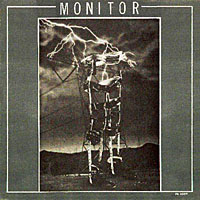
The real wild card is the band’s contribution to the self-titled LP by the L.A. band Monitor. I lucked into an original copy of that album roughly twenty years ago and it’s given me some fine times since. Released on World Imitation, the record finds Monitor wiggling like greased-up eels between something vaguely Residential (very keyboard driven) and a pricklier/wonkier early-‘80s West Coast art-rock impulse. Not far from the gentler side of the L.A.F.M.S, the record’s something like a lost classic of the early-‘80s California underground in all its highfalutin glory.


Throw in the Meat Puppets factor (plus the fact that some backing vocals are provided by future film director Allison Anders [she of BORDER RADIO and GRACE OF MY HEART] and her daughter Tiffany) and I’m stumped as to why the disc isn’t better known. “Hair” finds the Pups wailing along with Monitor member Steve Thomsen’s keyboards and the result is a nice bit of shuddering racket that sticks out on the record like a throbbing appendage. And that was precisely the point.


Now the stage is set for their coming out on SST. It’s immediately striking that MEAT PUPPETS is noticeably heavier than the above detailed material, a fact that can be credited to ace producer Spot. Curt’s vocals are more whacked-out than ever and his guitar sound feels like it could inflict physical harm, Cris’s bass has advanced far beyond punk orthodoxy, filling in spaces and driving forward instead of just deepening the overall sound and Derrick’s  drums are spastically brutal. There is still the whiff of deformed hardcore, but the best way to sum up this record is to call it one of the wildest left-field desert-fried weirdo punk records that the underground ever belched out. There’s a palpable smart-alecky tone to some of the proceedings, particularly the treatment given Doc Watson’s “Walking Boss” and the near destruction of The Sons of the Pioneers’ “Tumblin’ Tumbleweeds”, but this never crosses over into mere gimmickry. They are suitably much more concerned with being noisesome and rocking in a wonderfully sideways fashion. At their less disruptive moments they can conjure a vision of a scaled down violin-less early Camper Van Beethoven that’s default mode was punk grit and anger instead of instrumental adeptness and irony. “Tumbleweeds” and “Meat Puppets” were among the first punk songs I heard around ’87 or so via THE BLASTING CONCEPT, and the unadulterated strangeness of the pair (and the whole of CONCEPT in fact) informed me right quick that all the stories I’d heard about punk being a limp fad was the counterfeit wisdom of old men and squares. MEAT PUPPETS is probably in the end too proudly warped and abrasive to ever really overcome its status as a minor record by a soon to be great band and if this is its fate then sadly that’s the breaks. I feel safe making the prognostication that it’ll be handed down by generations of noise-starved malcontents until the planet finally spins off its axis. Staying power it most assuredly has.


Back in ’99 Rykodisc did an admirable job of rescuing and reissuing the Meat Puppets early catalog from SST’s despairing later environs, and the disc that couples the debut with IN A CAR and a heap of additional tracks is a stone dilly. The HARLEY, LIGHT BULB and Monitor cuts are all here, as is their contribution to ‘82’s AMUCK comp from Arizona’s Placebo Records (home of weird-meat skate punks Jody Foster’s Army, don’t cha know). The rest is all previously unissued, and it’s suitably all over the place. A relatively reserved cover of Fred Neil’s “Everybody’s Talkin’”? Check. A mauling of Iggy & the Stooges “I Got a Right”? Yup. A twisted, harried and rocking run-through of Neil Young’s “I Am a Child”? It’s here. A warped and prescient take of The Grateful Dead’s “Franklin’s Tower”? Oh yes indeed. There’s also three alternate album takes, including a wildly different version of “Milo Sorghum & Maize” and a pair of unreleased originals from the period, both really showing the band itching to get into their next fruitful phase. But more on that at a later time. Rykodisc deserves great praise for collecting all of this important early material and storing it onto one CD, where the totality displays just how successful the Meat Puppets were at using their collective warped imaginations to brutalize the confines of genre. Since I have an easily bended rule about buying physical releases more than twice, I’ve thus far settled for downloads of the Ryko issue. Not to be all upstanding, but I got ‘em through EMusic, so if you use that service and want to hear this stuff go there. Of course there are no liner notes to pore over and the intriguing enhanced video that comes with the compact disc is obviously absent, but a person can’t have everything. Everything? Well a curious footnote of the early Meat Puppets relates pretty damn well to the concept of completism. In 1983 the band sent a snippet of a noise jam titled “Soup” by request to some now anonymous Euro industrial manic for inclusion on a compilation cassette titled BETHEL.


This was very homemade labor, not on a label, with only 500 made, the kind of thing that disappears without a trace, stuffed into closet and forgotten about or tossed into the trash by uncaring parents or hoarded in deafening silence by anti-social collector dudes to become the stuff of legend, spoken of in hushed tones in private conversations: I talked to this guy who knows this girl that used to date a fella from upstate whose brother might have a copy of the tape. No, since he’s on disability and lives in his parents’ basement it’s doubtful he’d sell it but it is likely that for 20 bucks or something he’d tape it for us.  Ah, the information sponge that is the ol’ internet has come to the rescue again. With a little web searching the download is easily findable and Bostrom even put up a link on the Meat Pups’ site to the excellent blog The Thing On The Doorstep that currently hosts the MP3s. What a classy, solid thing to do. As for the BETHEL tape….it’s a fascinating head-scratcher. “Soup” shares two sides of a C60 with a hard to fathom array of names; an appealingly abstract solo cut from Bauhaus Goth-merchant David J; the brutal, squalling power electronics of Pure featuring future Skullflower noise maestro Matthew Bower; the experimental genre unto themselves that is Nurse With Wound delivering some home-spun tape collage; industrial long-servers Coil providing an swell instrumental that’s a readymade for some student film sountrackery; Irish Goths and Tesco Vee faves The Virgin Prunes appear with a bit of piano driven mope; Jim “Foetus” Thirwell doles out two idiosyncratic cuts, one that sounds like crystalline pianistic New York minimalism and another that’s a collusion between a toy keyboard, a randy xylophone, some mournful horns, a siren and assorted vocal sounds; L.A. art-rockers The Romans bring a bit of keyboardy sonic drift; two tracks surface from problematic but undeniable ideological provocateur Boyd Rice in his formative industrial/noise mode; L.A.F.M.S. vets The Doo-Dooettes give some typically well-fleshed out art-screwiness; and there’s a concluding uppity live cut from post-punk rhythm-riders 23 Skidoo. If this lineup has you salivating like a famished guest at a swank banquet then rest assured that in those feelings you’re a lot like me. How do the Meat Puppets fit in to this wild scheme of affairs? They acquit themselves pretty damn nicely and much better than Bostrom’s indifferent assessment. “Soup” might be a toss off, but it’s more than okay for all that, a loose bit of free-rock noodling that won’t give Dead C a run for the money but is worth the time nonetheless. It’s certainly not a life changer but it is testament to the breadth of these guys’ impressive scope. Since it’s available for free any interested party can grab it and decide for themselves without the often intrusive expectations of rarity. And in the bargain absorbing the whole cassette will shed lovely light on one mysterious figure’s intense devotion to the thriving underground and the striking powers of selection that were the result of the effort. That the Meats Puppets are involved is just a truly bonus wrinkle. And in closing, don’t be seduced by the general line on the Pups’ early days, for their ragged beginnings are an important and rewarding nook in the labyrinthine crannies of North American punk’s volatile history.