Friday, February 19, 2010

five films considered


BLAST OF SILENCE (1961, Allen Baron) - The Criterion Collection continues to be a fantastic resource for things cinematic, particularly little orphan films like this one, a cult item from the tail-end of the original noir cycle that’s been talked about so highly and for so long it frankly had a large reputation to uphold, due mostly to my naturally raised expectations (a fate very similar in my personal trail of film discovery to Leonard Kastle’s classic one-shot THE HONEYMOON KILLERS). BLAST OF SILENCE is certainly a quirky film, featuring an interior narration that serves to amplify the solitude and disgust of the main character, a contract killer (played by the director) who goes coldly and deliberately about his business until the hands of noir fate start to gum up the works. But the unusual narration is hardly the only element of the film that stands out; the period flavor of New York City and certain landmarks (Harlem and the Apollo Theatre, the Village Gate nightclub, etc) is so thick that it virtually becomes another character, and the visuals lack the polish of even most B-grade Hollywood noir yet are smartly filmed and edited. Yes Martha, this is surely low budget stuff, and the acting often lacks the professionalism that helps to ground even modest studio filmmaking with a degree of perceived ‘normalcy’. That’s not to say the acting is ‘bad’. Most of the players had obviously acted before, and they are believable in their roles; it seems more likely that the non-polish on display had more to do with tight shooting and lack of retakes. One actor does stand out, though. Larry Tucker plays an obese, bearded hoodlum and achieves a formidable level of weirdness. The movie is worth watching for his performance alone, but it’s even better that Baron was able to integrate the actor’s energy into his mise en scene with such success. There is definitely some impressive raw inventiveness going on in BLAST OF SILENCE, particularly the nastiness of the violence, the anti-social nature of the hit man (and how his one attempt to reestablish contact with someone from his past throws his whole world out of balance), and an ending that uses its blunt inevitability as strength - i.e., you can see it coming a mile a way, but this knowingness of what’s going to happen adds a fine sum to the film’s total equation. Yeah, by the end, I was hooked. This is as fine a piece of left-field, no-sheen filmmaking as I’ve seen in quite a while. Now that I have actually watched it I guess Irving Lerner’s MURDER BY CONTRACT moves to the top of my most salivated over rare films noir list. And that one’s currently available. What an unlikely twist of good fortune.


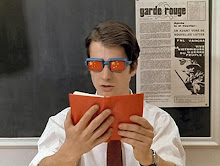
THEY LIVE (1988, John Carpenter) - This one has grown into a solid ‘cult’ item, and deservedly so. It’s hard to think of a better example of a smart movie (in both content and form) lurking in the folds of what so many perceived as just another silly action flick. Carpenter’s work is probably never going to be championed by high-brows (at least not in this country), but that’s their (our) loss. Of course, the director deliberately muddies the waters by working at extremes. On one hand, his ideas about consumerism and societal conditioning are blaringly clear, yet they are delivered through a genre piece that’s usually reserved for popcorn-movie escapism. He rather subversively casts pro-wrestler Roddy Piper as his lead actor, for crying out loud. What’s lastingly great about this movie is how the direction never sells the content short. On the contrary, by using the story device of the truth telling sunglasses, Carpenter is able to utilize formal elements to really push his themes to strong levels without weakening the story’s tight construction. So, he can make a BIG point without the viewer feeling like s/he’s been clubbed over the head. The sharp contrast between the rather conventional progression (in the Hawksian sense) of the film up to the moment where Piper puts on the sunglasses and how the narrative momentum is momentarily derailed while our protagonist gets smacked with the blunt black and white reality of subliminal mind control just screams to be experienced in a darkened movie theatre. From the point of this all important discovery the movie delves into some darkly comic playing around with genre tropes (particularly a fight scene that expertly flirts with parody and one of the hammiest lines of dialogue ever delivered) before boiling down to a fine riff/update on 50s-style sci-fi belief stretching and concluding in a rather abrupt, oddball ending. Yeah, it’s a humdinger. But again, the real strength in Carpenter’s work lies in its economical, concise construction: the image of a piece of cash currency holding the words ‘THIS IS YOUR GOD’ is just a visual grand-slam, for it says in a few seconds what Oliver Stone’s ‘Wall Street’ spent over two hours agonizing over (and paradoxically unwittingly glamorizing). Within Carpenter’s razor sharp oeuvre (up to around the end of the ‘80s, anyway), this is top four, easily.


NASHVILLE (1975, Robert Altman) - I’ll cop to not having watched all of this film until something like my fifth attempt, even though I really like many of Altman’s films quite a bit. This is over two and one half hours set in the city of the movie’s title that concerns characters that have some sort of relationship (either entrenched or peripheral) to the city’s country music scene. There is also a ‘third-party’ political campaign that features in the story, and the way this connects to the city’s music business and the characters that populate and surround it is a basic canvas that ends up growing into a wall sized mural by the film’s end. Altman can be smug and condescending at times, and the population of his ensemble cast unfortunately doesn’t hold anything resembling equal importance in the story. Unfortunately, much of the short shrift goes to women. Shelly Duvall’s character, an anorexic interloper from California, is essentially a mean-spirited joke that basically just requires her to walk around either in ‘wacky’ clothes or her underwear, and Geraldine Chaplin’s BBC reporter becomes increasingly hard on the nerves as she alternately stereotypes what she perceives as clueless simple folk and amateurishly philosophizes about what they ‘really’ signify. But the cynical 70’s Altman is never without bountiful rewards. The film doesn’t really have a plot; instead, it uses a gradual accumulation of group activity to impart essential information as to where the film is going and to explain the motivations and personalities of the characters. Along the way, actors who play the part of performers sing songs that they often wrote themselves (Karen Black’s being the most interesting/successful), and the rather strange vibe of the whole Hal Phillip Walker political campaign really settles into the general fabric of the film. How the presidential candidate is represented in the movie is a shrewd formal device. We never actually see him, but we sure as hell hear him, due to a megaphone wielding van that travels the city blaring out the man’s calm screeds of ‘populist’ dissatisfaction (that seems to obscure the ogre of grassroots fascism). Michael Murphy’s campaign manager does appear however, giving the lie to Walker’s platform, and in doing so balancing the sense of political apathy and resignation that is best represented by NASHVILLE’S gospel tinged denouement song ‘It Don’t Worry Me’. In the context of the movie, the song represents a snide commentary on the post-60s feel-good political defeatism that’s being propagated in the film by a folksy trio seemingly based (loosely) on Peter, Paul & Mary. As the true nature and motivation of Murphy’s character comes into focus, so does the thrust of Altman’s film. The idea that corruption infects everything it comes in contact with, causing either more corruption or deflated acceptance/lack of resistance is certainly representative of the 1970s mindset, both artistically and culturally. By the ending (which I won’t spoil if you haven’t seen it), Barbara Harris’ success-crazed character is on Nashville’s Parthenon steps (the concept of the city as ‘Little Athens’ is tellingly mentioned by a character) belting out the aforementioned tune, and every time she wails the song’s title what she’s really saying can be summed up as follows: “EVERYTHING (AND EVERYBODY) IS FUCKED. We might as well just sing about it (READ: sing ‘around’ it.)” Probably not the best movie to watch during an election year (particularly on those occasions where you’re faced with the lesser of something or other), it still rates as a flawed and sprawling masterpiece. Altman definitely bit off more than he could comfortably chew (at the Big Banquet of Cynicism), but I’ll take that over the work of filmmaker’s who seem reluctant to even nibble at the hors d’oeuvres table (at whatever ideological feast they find themselves attending), and in turn leave me famished for something in which to sink my teeth.


THE BAD NEWS BEARS (1976, Michael Ritchie) - So sports movies almost always suck. Bio-pics are about the only type of film that has a lower success rate in my personal estimation, and when bio-pics are done on sports figures, you can almost guarantee that the result will stink up the room (an exception would be Scorsese’s RAGING BULL, though it’s arguable if bio-pic is really the appropriate descriptor for that discomforting masterpiece). This movie isn’t a bio-pic, natch, but it does concern a little league baseball team, and it’s one of the first films that I can recall watching as a kid. I hadn’t thought much about it until recently, when I caught some of it on cable, and found myself pretty wrapped up in it, party due to sentimentality, but also because it’s sort of an aberration. The movie is not so much about sports. It’s really about the desire for winning growing into a disease, and also about the emotional and physical damage that kids and adults inflict on each other (and themselves). I found a cheap DVD of this for sale and impulsively bought it, curious as to how the whole film held up. I don’t regret spending those six bucks for a second. Now I must confess ignorance regarding the other films by this director, but reading about his 70’s work brought up a recurring theme: competition. Previous to this movie, he’d directed a duo of films with Robert Redford, one about skiing (DOWNHILL RACER) and one about presidential politics (THE CANDIDATE), then followed that up with a commercially unsuccessful feature about beauty pageants (SMILE) that has some critical admirers. I’d really like to see that one. But what does BEARS have other than nostalgia for my younger days? Quite a lot, actually: the movie is visually assured but modest, which fits the story. The outdoor scenes often have a sun drenched dustiness that’s appropriate. The vast majority of the movie takes place during the daytime and while my observation about that is rather blunt, I’ll make it anyway: Ritchie is determined to shed light on both the nature of his cast of characters and the environment they find themselves in. It makes perfect sense to place nearly all of the narrative in the sharp brightness of daylight, where the actions of the people and the harsh reality of the situation are on full display. There are also some very effective shots, successions of shots to put a fine point on it, of character’s observing, listening, and reacting to the words and actions of others. Walter Matthau’s alcoholic team manager is fascinating: in a less complex film he would be a flawed yet angelic character who takes a group of inept misfits under his wing and in the process warms the hearts of the audience while becoming a better person. Not here. Morris Buttermaker only takes the job because he’s getting paid (bottom-feeding opportunist) and proceeds to drive the hapless group of kids around while drunk, at one point passing out from sheer inebriation on the field during a practice. His dugout rants are the antithesis of feel-good audience manipulation, and again, the reaction shots of the kids are infused with a sharp passivity. They’ve heard it before, but now it’s coming from someone who’s supposed to be on their side. Due to the inclusion of two talented players, the Bears slowly improve and improbably but inevitably end up in the championship game, where Ritchie gets the opportunity to integrate his thematic and visual ideas with real success. The game unwinds slowly, giving the illusion of real time. This helps adequately situate the actions of the characters, particularly the two adults, Buttermaker and the opposing manager played by Vic Morrow. Morrow is surely the ‘bad guy’ in the film, but his success at winning is the only thing that really allows him to play that role effectively. Buttermaker is a loser, but he’s also a lout, and at one point he angrily showers the Bears’ female pitcher (played by Tatum O’Neal) with beer when she won’t stop trying to orchestrate some off-season activities between her and him and her mom (who happens to be Buttermaker’s ex-girlfriend). All she wants is some adult stability (some normalcy) in her life, and for her troubles she ends up with a noggin soaked with suds. Ritchie’s world isn’t one of heroes and villains. Instead, it’s loaded with winners and losers. Often they do the same things, but the blatant objectification of success (and how that bleeds over into how people treat others) gives the actions of the winners a distasteful effectiveness. His losers aren’t noble as much as they are lucky. They get the opportunity to learn some important things before the druggy rush of success somehow finds them and dulls the chance that they will navigate the progression to adulthood with some semblance of human decency intact. In THE BAD NEWS BEARS, the grown-ups are pretty much a lost cause. The hope for the future lies with the kids.


MY BLUEBERRY NIGHTS (2007, Wong Kar Wai) - critical reaction to this one was generally not good. Wong Kar Wai is a Chinese director based out of Hong Kong who had a boost of notoriety a few years back due to the fandom/advocacy of Tarantino, who released Wong’s CHUNGKING EXPRESS under his ‘QT Presents’ series. This is Wong’s first film based in the US, and it seems that most of the movie’s detractors have a problem with the application of the director’s slow, lush style to the American setting. For me however, this reality is what makes the film so interesting. The story: A woman (Norah Jones) has been dumped by her boyfriend. She meets a café owner in New York (Jude Law) and drowns her sorrows in his menu. Then she lights out for the road, ending up in Memphis where she works two jobs, diner work and bartending, in an attempt to save money. She meets an alcoholic cop and his estranged wife and is witness to their problems. She writes postcards to the café owner back in New York. Then she ends up out west, working in a casino, where she meets a callous gambling woman (Natalie Portman) who asks her for money. They end up traveling together for a while before parting, and the story concludes back at the café in New York. Wong tackles the American road movie genre without sacrificing what makes his films intrinsically his. He never ratchets up the momentum, elects to avoid the detailing of traveling to instead spend more time focusing on the atmosphere of her destinations, and gives meaning to objects (keys, food, plastic chips) that flies in the face of the more conventional ‘road movie’ signifiers (cars, pavement, radio). Most people seem to view the disjointed nature of the movie as a failure, probably due to the lack of any great insights on Wong’s part. Yes, he plays around with road movie tropes, but ultimately this is a love story. Love stories in the movies were old hat before talking films were perfected. But again, Wong screws around with the convention of the love story. For Jones’ character to actually, legitimately fall in love with Law’s character, she has to end up on the other side of the goddamned country. When they first meet, she’s hurt and preoccupied with the guy who’s just told her to get lost, and instead of filming a story about two nice people who eventually fall in love due to their proximity to each other (with misunderstandings, emotional pyrotechnics, and other hijinks in evidence), Wong instead wisely separates the two. Law’s character stays stationary in his café, which is just how it should be. He knows what he wants, but was smart enough to know better than to pursue any sort of deeper emotional interaction with her at the beginning of the film. She’s deep in the messiness of ‘On The Rebound’, and she quickly spirals out of New York and under the pretext of ‘working excessively to avoid thinking about her situation’ (which happens to be the exact opposite of ‘checking in to see what condition your condition is in’, har-dee-har-har), she actually absorbs clarity and emotional stability from the difficulties of others. All of this is filmed with a non-judgmental distance that I find refreshing. That might be the final blow that has heaped this film with such disfavor. One thing American movies do far to fucking much is present situations where the audience is intended to root for certain characters and disdain others, and in the process judging the former as worthy of admiration and praise and the later as deserving disdain or opprobrium (Where does Wong get off coming to this country and making some weird riff on road movies that instead reveals itself to be actually a love story but we actually don’t know that until the end and where’s the fun in that, especially when he doesn’t even have any bad guys?). This is not to say that his characters don’t change. Wong expertly shifts sympathy on the Memphis couple without ever sacrificing the film’s tone. And the gradual layering of Portman’s character is also well done. In conclusion, many have said that with this picture Wong had ‘lost it’, but I just can’t agree. What he did by making a movie in the USA wasn’t doling out more of the same. This film is unique in Wong’s oeuvre, and it’s also unique in the landscape of recent English language film. It’s not as great as Wong in full Asian mode, but I don’t think it’s intended to be. In its low-key aspiration, I think it succeeds mightily.

Thursday, February 11, 2010

The Auteur Files #4: Robert Siodmak's THE FILE ON THELMA JORDON

I typed this up a few years ago and was inspired to retool it a bit for posting since director Robert Siodmak has been getting some blog comment section action over the past week at Dave Kehr's site, and also a post devoted to him at Glenn Kenny's excellent blog SOME CAME RUNNING. This'll be just the tiniest squeak next to their collective roar, but I'm cool with a wide and varied sonic spectrum. Aren't you?


Robert Siodmak (pronounce it See Odd Mack) directed some truly classic films. THE KILLERS and CRISS CROSS both starred a young Burt Lancaster, and those two movies sit at the top of the heap of late 40’s noir, the former based on an Ernest Hemingway story. Siodmak had a relatively short period of prime productivity, about ten years (1943-53), and he’s considered a director who never excelled at another genre beside the mid-century’s quintessential American staple of gloomy, fatalistic black and white pessimism. This might be why the guy’s essentially forgotten. Unlike some noir filmmakers, Siodmak didn’t work on Poverty Row pictures with no-name or has-been actors: he made films with studio budget and muscle behind him, and in the late’40s the types of movies he directed could be compared in terms of contemporaneous significance to the work of guys like Billy Wilder and John Huston. In 1946 he directed three films, which is striking by today’s standards of productivity, but I bring it up because all three of them were nominated for Academy Awards. That doesn’t mean the films are any good of course, but it does make it seem even odder that his name isn’t better known. In contrast to Siodmak’s truncated career, Wilder and Huston both directed into the 70’s and 80s, making movies that ranged from comedies to literary adaptations. THE KILLERS is in the Criterion Collection in a nifty two disc edition with the 1964 (also classic) Don Siegel version, however, and currently Siodmak’s output can be accurately assessed as an ‘underground’ taste awaiting an overdue reemergence.
THE FILE ON THELMA JORDON is one of the more difficult Siodmak films to see, due to the fact that it has apparently never been released on VHS or DVD, at least in this country. Again, this is weird, due to Barbara Stanwyck playing the lead, and the plot’s rough similarity to Wilder’s DOUBLE INDEMNITY, where Stanwyck also starred. I sat down for a TCM showing and found that while the film isn’t as strong as either THE KILLERS or CRISS CROSS, it is a fine work that holds complexity, nuance, and quiet, assured visual flair.


This is early noir, so it doesn’t quite reach for the bleak inky blacks and doom laden scenarios that are attributed to many famous films of this style/cycle as it reached its conclusion at the close of the 1950s. Wendell Corey plays a district attorney who’s disillusioned with his marriage. He goes on a bit of a bender on his anniversary and finds himself involved with Stanwyck. She’s a woman with a shady past who is possibly using him as a dupe. There’s an aunt, some jewelry, a recently changed will, a dead aunt, an arrest, a trail where Corey presides as prosecuting attorney and clandestinely sabotages the whole proceeding, and a dude in a fedora lurking around in the shadows. What’s unusual is the film’s intersecting currents of familial breakdown. The DA’s marriage is, on the surface, being plagued by his wife’s intruding parents. This would seem to be an easy enough hurdle to cross. But it isn’t. Underneath is something deeper, something that avoids being made explicit. This failure of communication isn’t given large prominence in the story. No mention is made of the marital problems beyond the overbearing/meddlesome parents. Instead it’s allowed to lurk under the surface where it combines with another crisis of family on Stanwyck’s side of the story. Basically, the narrative hook of the film is the question of her involvement in her aunt’s murder. The very possibility of matricide, when in combination with Corey’s marital logjam, emphasizes the concept of family, and specifically betrayal within its boundaries, as the film’s underlying motif.This may not seem startling, but few films I’ve encountered in this genre are concerned with such a theme. That said the overt thrust of the story does revolve around the question of Stanwyck’s guilt and the drain that Corey’s life finds itself moving down as he surreptitiously aids her case from the side of the prosecution. Corey is nobody’s idea of a great actor (okay, maybe his mother’s), but his ‘adequate’ performance really does something to enhance his effectiveness as a patsy. As he pulls strings and gets deeper and deeper in the shit, his small town schmuckiness (L Fucking 7, man) just grows like a weed and feels pitch-perfect due to the absence of any large, brassy thespian gestures. What a poor sap.


Oh, you poor sucker


-
Stanwyck is great in the lead, which is to be expected. The first half of the movie moves at a more deliberate pace than most noir, and without her skill this could have posed a real problem. But her presence and ability assures that the story is never bland, and when combined with the tight yet expressive direction, the narrative arrives at an expertly filmed sequence where we discover that Thelma’s aunt is no longer among the living. Corey ends up there after the fact (splitting the scene just before others discover him), Stanwyck gets arrested for the murder, and from that point it’s inevitable: human carnage will pile up.
For me, the big payoff of watching this movie is the above sequence, specifically its complexity, the suspense it gathers, and the smoothness with which it’s delivered. There is so much happening in so many different directions, and yet it has such a seamless, easy quality that allows the mounting tension of the story to be the focal point rather than the difficulty of effectively and efficiently depicting the scenario. I really wish that THE FILE ON THELMA JORDON was readily available for plucking from video store shelves or through the mail via Netflix, so that the scenes I’m referring to could be easily accessed and the source of my pleasure better communicated. But alas, this is not the case. Siodmak’s work is perfect fodder for reissue though, and hopefully some company will grab this film (and other hard to see work by him from this period) and give it the release it deserves.
The rest of the film is also well done, holding steady to a suitably downbeat conclusion (I will give away nothing more). Siodmak is accomplished yet restrained, from a visual standpoint. Having strong material such as a complex and solid story/script, a star actress, an experienced supporting cast, and a big studio budget to work with can allow for a polished subtlety that might contribute to why Siodmak continues to be so underrated. Having so many tools at yr disposal helps to erase any desperation on the part of the director to really get the whole thing across and the invisibility of perceived ‘craftsmanship’ can result. If this is the case, that’s too bad, because I feel that Siodmak displays real artistry in this film. Noir is often defined by its extremes; the fringy gut-punches of anonymous conjurers who captured the subterranean malaise that crept up after WWII and spat it back out through movie projectors with strange, doomy darkness and contagious helplessness which makes abundantly clear that these movies were authored by unique, artistic personalities (Edgar G. Ulmer’s DETOUR and Joseph H. Lewis’s THE BIG COMBO spring immediately to mind). THE FILE ON THEMA JORDON isn’t infused with that type of urgency, its artfulness never grabbing the viewer by the collar and demanding significance. It’s never as dark or as bleakly futile as it could have been in some other director’s hands. But that’s what could have been. It’s much more satisfying to deal with the film that actually is. I just wish more people could see it, since it’s a fine piece of work. It is available for internet streaming or download from the Internet Archive, but I mention that hesitantly, since very often films found via that source are in shoddy condition or worse. Again, my viewing was courtesy of the TCM cable channel, so if you are interested in seeing this and forming yr own opinion, I say check yr local listings. Increased familiarity can only help to boost Siodmak’s reputation, and that would be a nice, much needed corrective. And, who knows, the established noir canon could deepen, as well. Wouldn’t that be a kick in the head?


Robert Siodmak

Sunday, January 31, 2010

more late night listening


Kraftwerk’s debut record finds the core duo of Ralf and Florian deep in the heart of Krautrock experimentation. Four extended cuts feature the brittle coldness and abrupt sonic detours which were part of that still fascinating ‘70s German art-rock movement’s aural palate. For those that love that Motorik beat as exemplified by Neu! and Kraftwerk’s later AUTOBAHN (and also absorbed rather smartly into the Stereolab sound), well you can find some of that here. The total sum of the record’s duration is a far more abstract proposition, however. I’d be okay with Radiohead playing some future Super Bowl Halftime show if only for the miniscule chance that they’d decide to pull a cultural fast one and cover this record’s “Ruckzuck”: it’s got a great beat and you can dance to it.


THE LIFE OF THE WORLD TO COME continues The Mountain Goats’ progression into the large, warm, unashamedly polished territory that is coming to define the 2nd or maybe 3rd “era” of John Darnielle’s work. As raw and startling as the early boombox stuff was (is), it’s really starting to feel that his more recent, more “pro” (sorry) albums are going to define this dude’s legacy for subsequent generations. But hell, he’s still got a long way to go. And the mutually beneficial relationship between the sound of Darnielle’s voice and the sturdy beauty of his lyrics continues: when he utters the line “I will do what you ask me to do/because of how I feel about you” in “Genesis 30:3” it gets me every time. As great a record about faith and humanity as I can think of right now.

Lowell Davidson’s sole recording, a 1965 trio date for ESP Disk featuring Gary Peacock on bass and the mighty Milford Graves on drums, is a major work in advanced piano studies. Davidson’s style is comparable to early ‘60s Cecil Taylor in its spikey determination to forge new paths, but his playing also rubs up against the great harmonists Monk and Herbie Nichols. There is higher density and moments of increased momentum on display in Davidson’s sound that when coupled with Peacock and Graves’s righteous refusal to even momentarily entertain the idea of falling into a trad piano trio accompanist role basically insures Davidson will never leave the margins of outsider jazz lore. Only recording one album doesn’t help matters either. Oh well. It’s there if you want it.

Can’t say that I’ve ever really been seduced by the sound of Sinatra. Sure, the stuff with Riddle is a major achievement, particularly when heard on a sweet hi-fi setup, but so much of the guy’s output inspires little else in me than the desire to chain smoke cigarettes and regress into outmoded social mores. Sorry. I kept hearing people speak highly of WATERTOWN however, often making comparisons to Scott Walker. And I’ve only listened to this a few times, but I feel it’s a good one. It may grow into a great one. It definitely has an open desire to engage a rock-era audience, though it never trips up and falls prey to ham-fisted attempts at being hep. There is a lushness and grandiosity that’ll certainly make fans of Walker and Serge Gainsbourg stand up stiff and salute. Did I mention it’s a concept album? No? Well, it is. An ambitious and, dare I say it, classy piece of work.


James Carr has been described at least once as the Syd Barrett of soul. “The Dark End of the Street” is his most famous tune, and while he was never considered a hit maker (seven of his singles made the R&B top 40, though), he’s justifiably legendary for the depth and range of his emotive abilities and for the focused uniqueness that defines his work for the Goldwax label. Carr excels in my ears at mid tempos, where he recalls the sturdiness of Otis Redding while never sounding even remotely like a rote copyist. The bands backing up Carr on THE COMPLETE GOLDWAX SINGLES are simply shit hot, landing in classic southern soul territory defined by Stax and Muscle Shoals, but with more modest recording circumstances lending the music a tougher, more garage-like feel. And frankly, there’s not a bad song in the bunch. Even a dangerous endeavor like covering the Bee Gee’s twee-pop nugget “To Love Somebody” succeeds. Every bit of James Carr’s retroactive status as a deep soul superstar is deserved.

Thursday, January 28, 2010

Late night listening


Pere Ubu’s THE MODERN DANCE is one of the strongest and strangest debut records to ever lose record company money, a wild, weird, and tough as nails mixture of punk and experimentalism that could only have been birthed in the dark days of 1970s Cleveland: a little chugging, some misshapen dub, blown out tire rubber on the side of the highway, broken glass and synthesizer shrapnel, and frontman David Thomas as Dadaist ringleader. As intellectual and idiosyncratic a piece of punk rock that ever was, yet fiercely proletarian. Ground level stuff, dig?


And THIS IS DESMOND DEKKAR is as soulful a slab of island ska as you are likely to find. Slinky grooving with just the right amount of backbone, this stuff (at least for me) sounds best on warm and breezy summer days while lounging half crocked (or half baked) in a lawn chair imagining those big fluffy clouds are really smoke signals from giant invisible Indians. They’re trying to tell us something.


Certain recordings possess a greatness that resists being adequately expressed with brevity of language. They really must be heard, soaked up in real time, allowed to impact the mind and body with the totality of the sound, the inexhaustible and irresistible nature of the creative impulse, and THEN if you write 50,000 words on the workaday brilliance, the genuine offhand mastery of Sam Cooke tearing down the house LIVE AT THE HARLEM SQUARE CLUB (just one night among many), you might get lucky and land somewhere close to the ballpark of doing the record some serious justice. Two figures tower behemoth-like over the creation of soul music: Ray Charles and Sam Cooke. If you need a primer in the genius of Soul Stirrer #1, this will hand yr ass to you but good.


SCORPIO is a vital document of free-jazz in the late-1960s expatriates in France style (BYG/Actuel division), featuring three horribly under-recorded guys: session leader Arthur Jones on fiery post-Shepp-ian sax, Bob Guerin doing a sweet and loose variation on Jimmy Garrison stylistics on bass and Claude Delcloo splashing and slapping and skittering in a slightly (Sunny) Murray-like manner on drums. The trio mingles and melds minds in a very attractive fashion, setting the search-mode to simmer instead of full boil. Small group free-jazz is most often still about communication (in contrast to large group excursions where the objective is collective catharsis and wall pinning mania). SCORPIO holds much warmth and thorny beauty in its two grooves.


Bert Jansch was one of the prime UK folkies of the 1960s. His playing and singing deftly mixed toughness and prettiness, weariness and smoothness, and it’s no wonder the guy remains so revered by those turned on by the starkness of acoustic guitar and a nude voice. These are the assured initial efforts of a major artist. If you dig pre-psyche Donovan and don’t know Jansch, then you’re missing a big piece of the puzzle.

Thursday, January 21, 2010

Some films watched and reflected upon (the nature of how this place works....)


TRIAD ELECTION is a fine piece of artful modern gangsterism from the Hong Kong auteur Johnnie To. A sequel to a film I’ve not watched, it holds up well as a stand alone work, though I look forward to re-watching this after acquainting myself with the original ELECTION. To’s style is tough, vivid, compositionally precise and focused on momentum: He’s an action director par excellence. I look forward to delving deeper into his work, the better to examine the recurring themes that are noted regarding his oeuvre.


Lucrecia Martel’s THE HEADLESS WOMAN is a prolonged meditation on class, allegorical in nature and perhaps difficult in its unconventional (lack of?) structure. The story presented here could work as a big-budgeted Hollywood suspense film, but in Martel’s hands it’s profoundly post-modern, a bit like Akerman and a touch like ‘80s Godard, but also with flashes of an almost Bunuelian sensibility. Yeah, this baby crawls to its conclusion, but it does so like a budding young genius in a colorful cloth diaper. Uncompromisingly major, it would work well in a double bill with Todd Haynes’ underrated and misunderstood SAFE.

Jim Jarmusch is one of my faves, maybe my personal tip-top American director post 1980 (his only real competition being Wes Anderson and Dave Lynch). THE LIMITS OF CONTROL continues his unabated string of mastery, and I found it to be a sweet little accidental bookend to Martel’s WOMAN, in that CONTROL feels sorta like a movie about a hit-man made in 2009 by Antonioni circa 1962, all the suspense beaten flat and replaced with studied deliberateness, ennui, and a predilection for the integrity and beauty of small gestures. All shot wonderfully by Christopher Doyle. Along the way, observations are made, characters arrive and fade out, and an agent of imperialism comes to the end of his foul journey. I love happy endings.


I think the strength of Jason Reitman’s UP IN THE AIR actually rests on the strong abilities of its cast, since the directorial style at work just largely looks (to me) like television. That look isn’t really a bad thing, since these days TV doesn’t really “look” “bad”, but I guess my point is that it seems “undistinguished”. Maybe I just need to see more Reitman. The bigger picture Re: AIR is how well acted and powerful its story is, how that story is complex and ambiguous in the way it tackles the subject of the alienating effects of life in late-Capitalism, and by extension how that alienation bleeds into every aspect of our personal lives. And, y’know, I’m not even sure if that’s what the filmmaker’s intended. With a stronger visual approach it could’ve been a flat-out masterpiece. As it stands, it’s merely great.


THE BOOK OF ELI, on the other hand, is drenched in visual stylization, with varying degrees of substantive achievement. As far as post-apocalyptic westerns go, it’s got some good things going on, but it also has some big plot holes, or maybe more specifically gaps. There are some fine shots courtesy of the digital Red camera, Denzel and Oldman are both very strong (Jennifer Beals, also), but overall it can’t shake being just slightly above average. The Hughes Brothers are capable of so much more…

Monday, January 18, 2010

Listening to the sounds of the recently departed: Chesnutt, Mitchell, Reatard, Howard, Pendergrass


One of Vic Chesnutt’s strongest attributes was his desire and ability at collaboration. And he seemed to have an unerring sense of just the right people to partner with in adapting his songs and shaping them into complete works that make his discography such a thick and hairy joy to absorb. AT THE CUT is the second of Vic’s team ups with Thee Silver Mt. Zion/Constellation records crew/Guy Picciotto, and it’s just as darkly folkish and moodily transcendent as NORTH STAR DESERTER. Sadly, there will be no more collabs, but the man’s music will provide endless rewards.


In addition to being a fine musician in his own right, Willie Mitchell sat in the producer’s chair at Hi Records and helped to craft some of the finest soul expression to ever hit vinyl: Syl Johnson, Ann Peebles, O.V. Wright and of course the great Al Green, whose GETS NEXT TO YOU is not only a near perfect example of the Reverend’s soul testifying, but is also a major spotlight on how Mitchell worked at harnessing and directing the energies and artistry of such a galvanizing and uplifting vocal force as Green’s.


From one Memphis great to another, the soon to be deservedly legendary Jay Reatard, doing what he did best (IMHO), on SINGLES 06-07. The guy’s short and direct bashing was surely and unapologetically in the garage-punk tradition, but his sound also encompassed such wide ranging elements as bent pop ditties and synth-punk wig-outs. He had heaviness in abundance and more hooks than a goddamned bait shop. That a compilation of his singles could solidify and flaunt the feel of a fully realized album seems like a strong and fitting tribute to a guy who left us far too soon.
I tend to think that The Birthday Party get something a bit like short shrift in the histories of the whole global post-punk scramble, and when they are discussed it’s often to just spotlight the early career of Nick Cave. Yeah, Cave was of course a huge part of what made The BP such a zonked and brutal concern, but the truth is that Nick has always been beholden to the players that surrounded him, the late Rowland S. Howard in particular. PRAYERS ON FIRE may not be the best example of Howard’s dense and damaged guitar style, but it’s surely not far from the top. Raw and thrilling sounds.


Harold Melvin & the Blue Notes were fronted on their classic early ‘70s recordings by Teddy Pendergrass, a singer so emotive and simultaneously sure footed in his range that he spent a significant amount of time as certain discerning soul aficionado’s make-out maestro of choice. This is the group’s first LP from ’72, featuring the smash classic “If You Don’t Know Me by Now”, and the grooves in total are a fine testament to the sound of soulful Philly, and to the power of Pendergrass.

Monday, October 26, 2009

A flighty fragment concerning Ralph and Jilly and Dr. J


Ralph had one eye on the digital clock that sat under the smudged mirror and the other on Jilly’s vintage Julius Erving poster, this one recording and preserving for all eternity a certain seemingly illogical yet perfectly controlled “tomahawk” style jam, and as he noticed the large red numbers abruptly change to display the numeral one followed by three zeros, the quartet halved by a colon, the time silently taunting him that he was now a full hour tardy for work, his gaze shifted from the clock on the cluttered dresser and the room’s choice of décor to his companion of the hours previous, his focus now fully on the owner and designer of this room, and as he watched Jilly drowsily pull up her socks so that they met the bottom of her kneecaps, he inquired over her possible even probable interest in the game of basketball and stood looking with hidden desire reignited as she cocked her head sideways, shrugged her shoulders laconically and while fumbling for her first morning cigarette and the accompanying primer grey ceramic ashtray she replied that basketball was okay, but the reason for the poster concerned cherished memories of her father, memories of sitting in the cheap seats at Seventy-Sixer’s games all through elementary school and well into her teenaged years, until their shared experience shifted to the sofa in front of the television and eventually culminated in her sitting in a hard backed chair holding his bony chilly hand as they watched from his hospital room, and as these words came tumbling out into the air and mingled with the first exhalations from the freshly lit tobacco, he leaned forward and first kissed her forehead, then kissed her lips, and last exhorted her to call him, reminding Jilly that his number was stored in her phone, and while slowly backing to the door that sat diagonal from Dr. J’s imposing physical presence and announcing with distaste that he was late for work, he said a last goodbye and demanded with what he felt was just the exact amount of urgent sincerity for her to call him, waiting for her to smile and nod, cigarette dangling, and then darted for her front door to engage in a jog that slowly developed into a full sprint down the sidewalks of his hometown to his unpleasant destination, his employment, his desk, the place where he could sit for just a bit and not be bothered while collecting his thoughts, thoughts that were already shifting away from the idea of an impulsive one-night stand and heading toward the possibility of something vague but certainly more substantial, and as he second-guessed himself and obsessed over just what was causing him to change his mind, he gave up looking for specifics and instead just settled on and slowly drank in the image of her socks stretched up to the knees.

Thursday, September 10, 2009

"It's almost dawn and the cops are gone, let's all get Dixie Fried" - Thoughts on the life and art of Jim Dickinson (and Sylvester Weaver)


Jim Dickinson in 1966: Backwoods hipster (photo by William Eggleston. I think)


As I type this I’m listening to the brilliant blues guitarist Sylvester Weaver and considering the mind-blowing life and art of Jim Dickinson. Weaver was the first person to be captured on record performing acoustic “country” blues in 1923, and also the first person documented playing slide guitar: simply put, he’s a versatile, legendary figure whose music still sounds vital today. Dickinson was a musician, record producer and byproduct of the cultural and artistic melting pot that was mid-20th Century Memphis Tennessee. He died just recently, less than a month ago at the point of this writing, but it seems safe to conjecture that Dickinson is still predominantly an underground figure, though one that millions of people have heard play piano on “Wild Horses” by The Rolling Stones. He was a member of The Dixie Flyers, an Atlantic Records’ house band that helped make, amongst others, Aretha Franklin’s severely underrated 1970 LP Spirit in the Dark such a long-standing mover, and he was able to mold the madness at the core of Big Star’s incendiary and claustrophobic 1978 bombshell Third/Sister Lovers into the masterpiece that many of us continue to clutch to our chests on chilly, lonely late nights. Dickinson also released his own lovingly off-kilter recordings (under the name James Luther Dickinson and in the group Mud Boy and the Neutrons), classics of a life-affirming sensibility possessed of depth and sincere no-bullshit erudition, albums drenched in a personality so rare and valuable that hepcats like Bob Dylan went to visit him. Weaver and Dickinson are both very significant artists, but their legacies aren’t overtly linked. However, thinking of them in tandem has solid benefits when trying to gather a handle on the heaving heft that’s been the last 100 years of this country’s (that would be the US of A) musical progression.


Nice lid.


Weaver was born in 1897. He began recording in the 1920s, a young man in the middle of some massive cultural upheaval, just one guy who had the good fortune to not only be a strong solo performer but also a sympathetic collaborator. By the end of 1927 his recording career was over and 1960 marked the final year of his life, an existence that ended without fanfare or the accolades of rediscovery that were then being bestowed upon other bluesmen both living or dead. The year Weaver died institutional segregation was still in full effect, William S. Burroughs’ The Naked Lunch was published, John F Kennedy was elected President of the United States, and the appearance in record stores of the Robert Johnson compilation The King of the Delta Blues Singers was still a year away. Jim Dickinson was 19 years old.


Dickinson in the studio
.
To be 19 years old in 1960 means being the perfect age to really soak up some of the era’s prime social upheaval. Living in Memphis must have just made it that much more intense. To read or hear Dickinson speak about his youth is to gain clear and rich insight into the circumstances the gave birth to rock ‘n’ roll. In his account, the pressure cooker of artistic magnetism of the ‘other’ that ran roughshod over certain young people during the 1950s isn’t laid at the feet of Elvis Presley but instead is awarded to a pill-headed disc jockey named Dewey Phillips, the kind of ‘crazy whitey’ who engaged in subversive behavior like playing Hank Williams tunes between the gutbucket gospel of Sister Rosetta Tharpe and the feral madness of The Howlin’ Wolf: A type of accidental cultural disruptor, simply getting his kicks and changing history in the bargain. Dickinson makes the bold and rock-solid claim that without Dewey Phillips there would’ve been no Elvis, or specifically those first ten songs recorded in Sun Studios that caused so much sweet shit to hit the fan before Elvis sold out to Hollywood a year or so later. The play-list integration of Dewey Phillips made Presley possible.


Sylvester Weaver’s blues has nothing significant in common stylistically with rock ‘n’ roll, and his seductively loping, at times slightly Hawaiian-ish style has almost no ties to the blues-rock boom of the ‘60s. Weaver was from Kentucky, not the Delta, and his warm style lacks the doomy, desolate qualities of Charley Patton, Son House or Robert Johnson. Instead, he shares the accessible feel of musicians like John Hurt or even Willie McTell, a folky sensibility that’s casual and inviting. His style of blues features qualities of refinement (a certain studied smoothness), but it’s still undeniably rooted in the country. Weaver’s music is quite at home rubbing shoulders with the hokum and jug bands that proliferated in this era.


.
LP art by R. Crumb


This isn’t any major revelation, but I find it worthy of mention since one of Jim Dickinson’s early musical epiphanies was hearing The Memphis Jug Band, a group with roots in the 1920s, the decade that holds the entirety of Sylvester Weaver’s recording career, 1923- 27, just five years that fits on two archival compact discs. Like Will Shade’s Memphis Jug Band and their contemporaries The Beale Street Sheiks, Weaver was a pro musician. He had a personal solo style but also excelled at duo playing, backing both prolific gospel blues singer Sara Martin and his young discovery Helen Humes. In the same period Martin recorded with Fats Waller and Humes later became a member of Count Basie’s Band. Weaver’s milieu prized adaptability and the desire if not the consistent ability (though his music was popular in its day) to reach a wide audience while retaining a distinct personality, the stamp of individuality.


Sylvester Weaver and Sara Martin
.
For many, this sort of ‘pro’ mentality is less appealing than the raw quality of specific records, most from the Delta, that seem almost accidental in their existence, their reality owing mostly to a very young recording industry having no solid idea what was sellable or commercial. The strung out, eerie sound of Skip James, the tough, ragged style of Charley Patton, the otherworldly croak and moan of Blind Willie Johnson; this was ‘hard’ music that remains impenetrable for many listeners to this day. It’s worth noting that in the rediscovery 1960s Skip James and John Hurt often played the same festival circuit. James felt his style of blues to be superior to the deceptively mellow playing of Hurt. The sound of Hurt’s voice mingling with his sweet finger picking seems perfect for relaxation and might even effectively lull babies to sleep, in spite of the fact that Hurt’s lyrical content often concerned death and strife. But James’ oeuvre is murder music of a blatant sort, the sound of malice and slaughter and suicide pure and simple, and he looked down his nose at Hurt’s accessible style. Folklorist and American Primitive guitar giant John Fahey considered Skip James to be a monumental asshole, but in this case that’s sort of beside the point. If we must get to the point the point will be that not all old-timey music is stylistically congruent. The jug bands are often the middle ground between polished professionalism and the uncompromisingly raw. Sylvester Weaver seems, at least from this distance to be a fellow traveler of the jug band aesthetic, and it was the sound of what many consider the greatest jug band ever recorded that helped to impact the consciousness of Jim Dickinson.


.
Where'd these guys come from?


Again, adaptability. The constant risk in being a pro musician is losing the root of it all, the danger of watering down or distorting the vitality of the sound/style in the desire to reach the ears and pocket books of some sort of hypothetical audience. The opposite extreme is often embodied by the suffocating demands made by purists, people that get so caught up on a concept of authenticity that they often miss the forest for the trees. The forest (or the trees, take yr pick) can be how distinct musicians with unique sounds and directions are often lumped together simply because the music has the surface similarity of sounding ‘old’. Jim Dickinson’s era is that of early rock ‘n’ roll, and if there is a period that is inherently opposed to the concept of purity, this is the one. Once white kids and black kids started getting turned on by each other’s sounds and styles and cultural signifiers (and simply turned on by each other) it was a ball that couldn’t quit rolling, and it was only a matter of a few years before the rest of the world, either willingly or grudgingly, followed suit. This is what the Rockabilly purists and R&B snobs often refuse to understand: that Bill Haley and Gene Vincent were the respective Beastie Boys and Justin Timberlake of their day. And on the other side of the fence, a phenomenon like Bad Brains can be traced back to Chuck Berry. Which is to say, can’t you hear the Hank Williams in Berry’s “Rock and Roll Music”? I sure can. And yes, the risk is Pat (or Debbie) Boone or Vanilla Ice or Milli Vanilli. But ya’ know, I think that’s a chance worth taking. And I don’t think Jim Dickinson ever felt he had a choice.


So get this old news: rock ‘n’ roll is the beautiful multi-racial child that resulted from the mixing/blurring of class, ideology and simple skin color. This is of course no startling revelation. A few huge forests have certainly been chopped to the ground to provide the pulp to make this point for both true believers in the cathartic gush of the R&R whatsis (that’s me) and for those whose interest in the music/movement is historical (that’s me, too). But it’s a truth that’s often forgotten partly because the give and take wasn’t a smooth 50/50 split, white music being influenced by/borrowing/stealing from black music with much greater frequency than the opposite, and also because the USA seems to love deliberately not thinking about race and class (read the current headlines to see how people act/react when confronted with an issue that's intrinsically linked to race and class). But I think to play truly vital rock ‘n’ roll (and this is the only form of music where the following statement really matters, in my opinion), an acknowledgement or at least sub-conscious acceptance of the cultural/racial/class based back and forth is essential. When the Rolling Stones lost interest in this underlying conversation in their music, they started to suck. Before they started to suck, back when they were a thriving band, they would get Jim Dickinson to play on their records.


The wonderfully warped reality of James Luther Dickinson wasn’t possible anywhere other than Memphis. This was the birthplace of not only Sun Studios (where Jim released a single with The Jesters) and its wildest success Mr. Presley, but also the studio and record label known as Stax/Volt, a building/company/state of mind that put into everyday practice the righteous intentions of integration and racial equality. Dickinson loved music and was in it for the long haul. Memphis made his journey possible. His ability to genuinely contribute to such a wide variety of southern music (both geographically and in spirit) is a mind-bending thing. Not just Aretha and Alex Chilton, but also Primal Scream and Panther Burns, The Replacements and Ry Cooder, The Cramps and Furry Lewis, Dee Dee Warwick and Mudhoney, Doug Sahm and Sam and Dave. One of Dickinson’s earliest musical exploits was a group called The New Beale Street Sheiks, a shrewd idea that seems to simultaneously reference the name of (also recently deceased) Mike Seeger’s then contemporary folk group The New Lost City Ramblers while giving props to Frank Stokes’ and Dan Sane’s late ‘20s answer to those other Sheiks of Mississippi, the Chatmon Brothers.


So here we are back in the era of Sylvester Weaver’s fleeting bout of recording. And getting up close to the sound of Mr. Weaver is just a fine place to be, his playing at moments refined yet appealingly weird, while at other times being direct and spare. At his best when playing sly instrumentals, he’s responsible for a handful of succinct masterpieces of early blues, three from his last year of recording, where he seemed to be really getting a grasp on the slippery tension in his work.


Sylvester Weaver was born in the 19th Century and was sadly long forgotten by the birth year (1941) of Jim Dickinson, a man who almost managed to get a full decade of his too short life into the annals of this fresh and fucked millennium. Dickinson played piano on Dylan’s Time Out of Mind album, a record that seemed to jumpstart Bob’s creative fire and landed him a Grammy Award for Best Album. From the stage Dylan gave props to Jim, calling him a brother, but this was in reality a reciprocal gesture, since Dickinson had covered Bob’s early song "John Brown" on his 1972 underground classic Dixie Fried (featuring Dr. John and an uncredited Eric Clapton). Indeed, I can easily see these two kicking back in Jim’s Memphis trailer home, discussing how to get Dylan backstage at an upcoming Mud Boy and the Neutrons’ gig, while taking sips from a jar of high quality hooch and listening to some sounds of equally fine vintage, perhaps even Sylvester Weaver’s “St. Louis Blues” or “Soft Steel Piston”. Oooohhhh mama, can this really be the end…………..


Mr. Dickinson, you’re already missed.


Friday, August 21, 2009

You can leave now if ya don't like what's happenin' - Van Morrison's first four (with a few asides)


Outside of the expected radio fragments, the music of Van Morrison never really entered my consciousness until I was well into adulthood, and even then it was initially in less than optimal circumstances – crowded parties or noisy bars or an acquaintance endeavoring to familiarize me with the man’s greatness and then proceeding to talk over the entire first side of whatever record they’d felt was so necessary to impact upon my consciousness at that very instant. I don’t think this hit and miss fragmentation is particularly unusual; Morrison is just one example of a popular musician who is often elusive in the mainstream, known and casually categorized more than they are actually listened to, suffering a friction between a surface notoriety and the lack of deep recognition that also shrouds names like Joni Mitchell and Tom Waits. But Morrison is a curious case, being extremely busy in his first five/six years as a recording musician in a variety of contexts.


.
Them


He started out as the front man for Them, a very worthy example of gritty Brit Invasion R&B that scored a few hits, among them one classic that often gets confused as a Rolling Stones tune (“Here Comes the Night”), and one canonical non-hit (“Gloria”) that will eternally serve as a cornerstone for the garage-rock explosion that followed shortly after the band’s demise, an explosion that seems to regenerate momentum every decade or so.


A catastrophe of cover design
.
He then broke out solo, managing to get almost immediately screwed over by his label Bang while simultaneously scoring a smash hit, the biggest of his career, with “Brown Eyed Girl”, a song I feel safe in conjecturing every human being over 25 years of age that resides in the US/UK has heard at least a dozen times. Easy. But the other initial examples of Van by his lonesome are considerably more complex than the jukebox euphoria of “Girl”, and it’s a head-scratcher why some of the songs collected on his 1st LP Blowin’ Your Mind (no false modesty from this Irishman, or to be truthful, from the label that apparently released the record without Van’s knowledge) weren’t more ensconced into the “classic” rock mainstream during my formative years. Tunes like “TB Sheets” and “He Ain’t Give You None” are grand examples of exquisite stretching out, the later drifting into some impromptu vocal loopiness that these days is as rare as a tooth on a chicken. And “Goodbye Baby (Baby Goodbye)” (the B-side to “Brown Eyed Girl”) is maybe the tune that should’ve been his follow up hit, with its blue-eyed guitar based funkiness, it’s sweetly idiosyncratic backup singers, and an expert slow build to a manic soul testifying that carries not an ounce of fat on its frame. Jeepers. I guess a big part of the problem is that the album seemed to be scarce for a long time; at least I never saw it anywhere during the long hours of music shopping I chalked up from age 13 to 30. Its available now with bonus tracks, however, and for folks that are generally inclined to look at the cut of Van’s jib with a warm smile and an approving nod, I’d say give it a shot if you haven’t already. It has a clued in sensibility that I imagine pleased the punch out of that era’s burgeoning rock elite (those growing out of garage and in need of something a bit heavier but not necessarily louder) while also ruffling up the feathers of the more Modish Disco-Tek inclined movers and shakers. Or perhaps I’m woofing up the wrong eucalyptus. After all, I wasn’t there.


The debut was followed up with a recording for a new label (Warner Brothers) that is generally considered to be his enduring masterpiece. Astral Weeks continues to be a challenging work that yielded no hit singles and wasn’t initially a strong seller. Plus, reports conflict as to how immediate and fervent was the record’s critical reaction. I’ll state right now that I’m just getting reacquainted with the album after a long period of non-ownership. To elaborate, I first bought Weeks on cassette from a gas station tape rack when I was roughly 23, taking it on a test drive with a friend into the guts of Virginia and being suitably smacked upside the head with its lushness, its slightly stressed emotionalism, and its moments of caustic beauty, an overall thrust that falls somewhere between toughness and melancholy. That cassette lasted a few years before shredding and necessitating a replacement, also a tape (second hand, because I’m a cheap-skate) which lasted until it inexplicably vanished as tapes often do. So here’s the rundown: The very first time I heard the damn thing I simply KNEW it was a classic, particularly by the moment the slow burning aching prettiness of “Cypress Avenue” started bleeding out of the speakers, closing out the recording’s first side in exemplary fashion (the kind of song that potentially makes a listener wait for an unspecified period before flipping or continuing with the rest of the music, an effect that’s mostly lost in this post-compact disc era, though Weeks has recently been reissued on high quality vinyl for those with the sexy chutzpah to own a working turntable), or the scrambling up-tempo shrewdness of Side Two’s opener “The Way Young Lovers Do”, with its onion-like sound layers, horns vibes and acoustic bass too expertly delivered to simply appear as a nod to jazz influenced validation (a.k.a. “my, aren’t we hip?”), instead existing as an injection of adrenalin that gallops along avoiding clichés and gathering strength until abruptly it’s over, and the gears are slyly shifted onto what is for me the record’s centerpiece, the slowly pummeling “Madame George”, an exhibit of gradually building string motion and wounded atmospherics that rise and level off and then lunge out one last time like a maddeningly deliberate baroque fever dream before slowly fading away, making me feel like Nico’s goddamned ghost just took over my body for nine minutes: A draining but ultimately rewarding encounter with a psyche that perhaps loved and lived a little too much. Yeah, it’s like that.
And yet I must confess that Astral Weeks is an album that I held at arms length for a long time. I’m not sure why. Perhaps it was a generational thing, the fact that it wasn’t produced by someone that had a birth date in rough proximity to my own. But I doubt it, since I was then championing music from this record’s era both well-known (Blonde on Blonde, Electric Ladyland, Live/Dead) and obscure, at least at that point (Oar, Pink Moon, Chelsea Girl) to anyone who’d suffer my verbiage (like you’re doing right now). As I peck out these words I’m leaning toward the possibility that I just wasn’t….ready….for the record. Lacking in maturity is maybe a self-deprecating spin on it. But whatever, because I’ve listened to it about a dozen times in the last month and it really truly (finally?) feels, through my ear canals and into my bloodstream, like the heavyweight masterpiece that it’s been described as for the last few decades. It’s not a flawless record; part of its greatness stems from the fact that it’s imperfect and rough in spots—“Slim Slow Slider”, the album’s relatively brief closing song apparently stretched out for a couple years and needed an edit that makes the tune feel a bit anti-climactic, though maybe a dozen more listens will change my mind. Another aspect of the LP is how the intensity of the songs, a quality that at times borders on abstraction is totally matched and elevated by the musicians playing it, which in turn seems to send Morrison almost to the brink of his talent. There are spots where it sounds like his outward-pushing to embrace and match the music forming and building around his songs flirts with oblivion, or to put a finer point on it: this was a higher class of musician than Van was accustomed to interacting with, veterans from the take no prisoners American jazz scene that Morrison has since admitted he knew almost nothing about at the time. But to be clear, these aren’t faults. The details in the last three sentences all clearly work in the album’s favor, heightening its greatness and making it one of the most singular musical experiences ever committed to tape. I really don’t think I’m being hyperbolic.

.
So. Those knowledgeable in the specifics of Morrison’s output know what’s next. It’s Moondance, which pales in comparison to the majesty of its predecessor, but still has much to offer, even if I feel it’s a flawed record. It’s flawed foremost because its title-track can’t withstand the repeated play it’s received over the decades (it was finally released as a single seven years after the album). Frankly, it’s just not a very good tune, being a pastiche of phonus jazz-isms that reek of a guy who discovered Dave Brubeck ten years too late. Dude, you’ve been hangin’ with the wrong crowd. The rest of the album is far tighter, and much more polished than anything from Weeks, though this isn’t really a negative. Unlike the previous record, Moondance is primarily a pop album (singer-songwriter division), though it mines R&B/soul territory so successfully that many people might be given pause if asked to place it in a genre. This is partly because Morrison, like John Fogerty, is quite unique and expressive, though always tasteful in his soul music borrowings. “And It Stoned Me” sounds a bit like The Band augmented with a sweet horn section (nothing too tight or clumsy), and “Crazy Love” comes off like some lost early Aaron Neville single that’s gathering value in the back of a New Orleans junk shop. “Into the Mystic” glides along on pretty acoustics, the rhythms subtly building in intensity to a crescendo that culminates with a majestically delivered (so well controlled) horn section vamp that can stick in the memory for freaking days. Maybe the best track on the album, it deserves to be as well known as this record’s “Everyone”, which plays over the credit sequence of Wes Anderson’s film The Royal Tenenbaums and has a cadre of fans who don’t know Van Morrison from Van Gogh or Van Halen. The song following “…Mystic” feels like a misstep to these ears, however. “Come Running” isn’t terrible, but its upbeat motions to a gospel-tinged joyousness never really succeed in their intentions. That’s okay though, for the rest of the record registers as varying degrees of rich bullion. Overall, the tidy professionalism and studio polish of Moondance lacks the power of Astral Weeks’ nude rawness, its feeling of artistic exhaustion, the rich gamble that’s still paying confounding dividends. They are both certainly different animals, one a stunning soul-purge the other a (mostly) savvy piece of construction. I can clearly recall the first time I drunkenly swayed along to the sounds of Moondance at a field party with a plastic cup full of foamy lukewarm keg beer. I’d heard the record maybe twice in it’s entirety previous to that point, and I didn’t consider myself a fan. In those days I was much stronger in my vocal advocacy of the enduringly tough formalism of Them, a band I still love like a brilliant and vivacious sibling. On that night my intoxication helped to loosen the bolts of resistance. And so I danced under the moon, oblivious to the irony at the time. What I remember thinking in the moment concerned how I never felt so “adult”. ‘Twas a bittersweet and paradoxical experience.


There is no electric sitar on this record
.
But, hey! How about one more? Van’s next record, released the same damn year (1970) as Moondance, titled His Band and the Street Choir, still sounds quite worthwhile to these increasingly weathered ears and noticeably scales back the smoothness of the previous release while retaining Van’s concise examination of largely R&B-based songwriting. There’s an urgency here that’s lacking on Moondance, and the hit single “Domino” which opens the album still retains its power through its years of steady rotation on classic rock and oldies stations. Easily Morrison’s most direct homage to the music that helped shape his artistic sensibility, “Domino” is one of that rare breed, a hit single that sits on the album that spawned it and doesn’t feel like a let down. Of course it is the opener, but I’m predicting that if I played the songs in reverse order I’d feel the same way. How about that for bold hypothesis? But the strongest aspect of His Band is the small moments of oddity and warmth that add up to a big whole. The strange soprano sax bleating on “Crazy Face” might’ve made the late great Steve Lacy wince, but to a non-player like me it simply feels like a gutsy beauty move. That it slides into and doesn’t disrupt such an intensely pretty tune shows just how deft these folks were at shaping this stuff on the fly (two albums in a year, remember). Tunes like “Give Me a Kiss” hover on a tightrope between the gulfs of throwbackery and contemporaneousness, chugging along like an extremely highly-regarded local bar band having the greatest, grandest night in their existence, the kind of night that inspires table dancing and marriage proposals. Even that cop in the corner is having a good time. And what’s he doing here, anyway? “Call Me Up in Dreamland” actually succeeds where Moondance’s “Come Running” flounders, managing to pull off a looseness that grows and emits an almost tent-revival feel. When the sax solo starts, any doubts that it would fracture the tune’s fragile grip on a non-polished celebratory gush is laid to rest, for the horn playing is the loving definition of elated amateurism, thick and drenched in pure love. How sweet it is. But I’ll confess that my favorite tune from this record is the fairly well known “Blue Money”, an eccentric little noodle into some gal-guy-greenback nonsense as zonked-out profundity that’s so attractively bent I can listen to it five times consecutively without any lessening of it’s qualities. There are half a dozen more strong tracks (unlike Moondance, no duds), but my personal pick of the bunch is……well. It could be “Gypsy Queen”, the best slow-groove old-school rhythm and buh-lues make-out tune I’ve heard in quite some time. This is to say it really makes me want to make out. Oh-well. Instead I’m sitting in front of this keyboard, which holds its own distinct pleasures and rewards.
In just a smidge over five years, Van Morrison grew from a stern and sharply-suited vessel of the new Caucasian R&B, squeezing off a few spectacular sparks that any true fan of garage punk should recognize and appreciate, and into a young solo artist of raw ambition that was somewhat similar to another Brit Invasion-era figure that had soaked up the sweaty and bottomless influence of the American blues idiom, namely Eric Burdon. From there he kicked out a recording that many consider to be the greatest of the last century, and while I don’t go that far, I do think that it’s not unapt to describe Astral Weeks as being comparable to Gertrude Stein’s novel Three Lives, a book that I’d been thinking about in this context (honest) before oddly stumbling onto a copy in my local used book shop just recently. There exists a concurrent aspiration and approachability in that defining work of modernist literature, a successful commingling of rich language and deep detail that still retains a sincere accessible quality that is very reminiscent of Morrison’s sprawling, demanding yet ultimately inviting masterpiece. In addition Van, like Ms. Stein (at least at the point of her debut) is attracted to conjuring portraits of fictive characters and locales that mark him as similar to Dylan certainly, but also can’t help but bring to my mind the vast expanse of literature’s past. And so, sweet Gertrude, if you will permit me the liberty. But it’s also telling that she and he went in subsequent directions that differed due to their own temperaments and the unique parameters of their chosen art forms. Morrison reigned in the sprawling severity of his vision and developed as a commercial artist in a performance based medium, and Stein did just the opposite, perhaps primarily because literature is a solitary act of creation, where even the appreciation of the finished work is largely on a one-to-one basis (Mr. or Ms. Writer meet Ms. or Mr. Reader), a factor that allows authors to be at least in theory less concerned with the follies and whims of those receiving their work. Again, at least hypothetically. What’s not a theory is their stature as artists. Stein is simply unimpeachable, and if Morrison had stopped after his fourth solo record, he’d still be called a master. But he didn’t, and there is more (much more), but the examination of his later work is for another time, and perhaps for someone other than myself to undertake. But who knows? The more I hear about this Tupelo Honey, the more I’m intrigued, an interest that’s starting to border on the smitten. What can I say; I’m a sucker for a classy lassie…