Wednesday, August 19, 2009

some filmic favorites (with images)

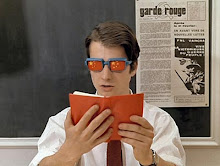
I'm stumped as to why Cahiers du cinema never called about that staff writer's position.


1- Tokyo Story (Ozu) a small story about generations and family with an emotional impact that's just devastating. It possesses a maturity and assurance of vision that elevate it above any other film I've seen. The quiet beauty of the visuals infuses the narrative without ever being manipulative. Nothing is rushed; the characters are developed gradually, through activity and shading, and their dialogue is elevated by the camera's observational approach. This minimal technique increases the emotional content and, by the picture's end, the level of empathy that I feel is greater than that inspired by any other movie. A perfect film.


2- Au Hasard Balthazar (Bresson) an intensely beautiful film by a very complex and unusual director. Bresson's work presents the story (about a donkey and humankind's numerous shortcomings toward the animal and themselves) in a rather striking way: instead of histrionic method-y acting and/or gratuitous visual signifiers, we get performances that gain emotional intensity through their lack of strained dynamics and a mise en scene that is completely devoid of artifice. Much has been written about Balthazar's allegorical significance (Christ, essentially), but this is presented as just one possibility; believers and agnostic alike are invited to feel the profound poignancy of Bresson's film. Couple the transcendent qualities of the visuals with the gracefulness of the storytelling and the non-accusatory tone, and what you get is an amazing work.
-

3- Vertigo (Hitchcock) the greatest film by the greatest of English language filmmakers. I can't think of a movie that better details the destructiveness of human desire and the difficulties of communication and understanding. The cumulative effects of Hitchcock's art are simply overwhelming. The use of color, the photography, the casting, how the actors are placed in the scenes, the use of sound and music are all seamlessly integrated with total mastery. Genius.


4- The Mother and the Whore (Eustache) long, sprawling, often bitter, and sometimes borderline reactionary, it's ultimately a kick in the groin to whatever was left of the Nouvelle Vague. Jean-Pierre Leaud's character is the embodiment of the early '70s pendulum swing away from the good-vibe optimism of the previous decade. He's not a character I look up to; rather, I'm in total awe of his anger, nihilist energy and the torrid momentum that carries him and the rest of his whole sick crew (sorry Thomas P.) to a mind-bending anti-conclusion. To me, the movie's greatest achievement is how it successfully depicts the disillusionment of its characters and their era, without ever being condescending or cynical. The supreme '70s film.


5- Weekend (Godard) a cathartic and caustic protest film from my favorite director. It features the greatest tracking shot in the history of cinema, and an unrelenting depiction of a nightmarish world that just totally unravels by the dénouement. One of Godard's most striking successes is how he deals with class issues in a manner that's all but unheard of in commercial films. Couple this with his deep distaste for society's self-destructive tendencies and the shallowness of humankind, and what you get is the filmic equivalent of a Molotov cocktail. But to be clear, a film that's just an excuse to make some political or social points is never much of anything: Godard's biggest strength is that he believes in the art of cinema, not only as a vessel of commentary and as an instigator of prospective change, but also purely from an aesthetical standpoint.
-

6- Paris, Texas (Wenders) sometimes it takes people from distant countries to make the most profound films about American culture. But like the movies of many great auteur talents from cinema's classic period, Wenders work doesn't bludgeon the viewer with the significance of its message. And actually, whatever message that's here isn't really all that tangible, except for rather obvious things such as the difficulty of communication and the unintentional emotional damage that people cause each other. Ultimately, Wender's restraint is his best tool. Whereas the vast majority of American filmmakers deal with matters of the heart in numerous inappropriate ways, going for bombastic moments or thick sentimentality (or a cool, hip detachment) that rings false, this director instead allows the characters to carry on with dignity that's quite rare.


7- Limelight (Chaplin) his silent films are excellent, of course, but Chaplin's sound pictures are the most meaningful to me, with this being at the top. It's a truly wonderful film, a work that shows that Chaplin was so much more than just a comedian: he was someone that possessed rich understanding of humankind's struggles, and the ability to tell stories about those struggles with subtlety and grace. He was a true man of the world, a quiet, dignified warrior, a champion of the downtrodden, and a consummate artist.


8- Detour (Ulmer) the greatest low-budget noir of them all, from a director that could create significant, meaningful films from the most unlikely resources. No money, blink-of-an-eye shooting schedules, undistinguished or downright banal scripts, whatever actors were on hand: Ulmer just plowed forward and used all of it, coming up with some against the odds artworks that show just how formidable ingenuity and imagination can be. Detour is a study in weird darkness, failure, rotten luck, and a dense hopelessness that is very much of its era. In spite of the above circumstances, or perhaps because of them, the film retains a strange, otherworldly power. One sure way to evaluate the abilities of an artist is to see if they can come up with something worthwhile from almost nothing. In Ulmer's case, this is probably a bit hyperbolic, but the point still stands. Given the type of circumstances that Ulmer routinely navigated, most filmmakers would flounder or produce something of mediocre quality. Detour is absolutely brimming with the spirit of raw creativity.


9- The Discreet Charm of the Bourgeoisie (Bunuel) simply put, the man was a genius, an oftentimes surreal, always interesting master of visual language that, like Hitchcock, made films through six decades without ever losing his relevance. One of the best things about Bunuel's satires, of which this is one, is how they lack the mean-spiritedness that curdles so many satirical films, especially contemporary ones. Instead, the characters are placed in a narrative of increasing outlandishness, with the effect of expert lampoonery and calm commentary that is sometimes gentle, other times biting. Bunuel's cinematic achievements are so unique and assured that there isn't another filmmaker that's comparable (possibly Jean Vigo, but he made so few films that it's not really an appropriate contrast): he stands alone as an iconoclastic visionary whose films continue to gain significance with the passing of time.


10- Touch of Evil (Welles) Kane is a brilliant film of course, but I find myself in thrall to numerous other works by Welles, this one in particular. Its unique ruminations on the concept of sleazy noir have lost none of their power, the opening long take is possibly the greatest I've ever seen (plus the photography overall is flawless), and the quirky casting is wildly effective and quite contemporary (though many recent films tend to overdue this). Welles in particular plays his role with a sweaty, obese power that's just riveting. The restoration is the essential way to see this film, with the opening returned to Welles' original intentions and the masterful balance of visual and aural artistry on display throughout.


11- Rear Window (Hitchcock) what most filmmakers would see as limitations Hitch uses as strengths. A room and the view of a courtyard from a window. Add a small group of expert actors and a story that's full of tension, ambiguity, and questionable ethics, and what you get is a film that proves the old adage of addition by subtraction. Frame after frame, Hitchcock infuses the proceedings with subtlety and sophistication, integrating all his elements within the film with meaning: there are no empty gestures here, as well as no blunt, clumsy visual metaphors. One of Hitchcock's strongest qualities is his assurance of vision. He was able to articulate in visual terms through the medium of the entertainment film recurring motifs that, once those movies shed their contemporaneousness, revealed their true nature as art films par excellence.


12- Faces (Cassavetes) a film that's positively infused with the raw energy of human emotions. It is also thoroughly tied to the changing mores of the 1960s, and is populated with characters that are fighting to overcome a profound unhappiness. A broken marriage is at the center of this narrative, and the two participants drift through a series of events in an attempt to escape disillusionment and fear. Yet at every turn they encounter and interact with other people who are similarly at sea. One of the most heart wrenching aspects of this movie is how deeply it illustrates one of the hardest realities of growing old: coming to terms with who we really are and the lives we've made for ourselves. But there is more, of course. Faces is also one of the nails in the coffin that is one-dimensional, superficial, or downright false female characterization. The middle-aged women who appear in the film's second half are presented warts-and-all, but are also shown as complex and beautiful. The honesty in the content of the film is superlative, but only because its form is just as truthful. It is the antithesis of shallow Hollywood glamour, and strives to depict a reality without falling prey to the often stultifying effects of capital R realism. Its camera is rugged and blunt, a window into consciousness that most films could never manage.


13- Bringing Up Baby (Hawks) Howard Hawks made so many great movies in so many different genres that to examine his work in total is to be awestruck by a master craftsman who constantly elevated his work to the upper echelon of commercial filmmaking. I could easily replace this film on the list with at least a dozen others from his filmography: this one, however, seems a good choice not only because it's given me great pleasure over multiple viewings, but also due to how it seems to stand as representative of a certain type of studio-era filmmaking. That is to say, it relies on economy, momentum, and a certain understated approach to how it transmits its artistic essence. Hawks was so understated, in fact, that until the 1960s, many people (particularly in the USA) felt his films lacked any artistic merit. This is nonsense, of course. But what is not nonsense are the man's movies: they are perfect examples of a direct, intuitive style that is all but vanished from the medium.


14- Night of the Hunter (Laughton) one of the strangest American movies ever made. It is a surreal, noir-like excursion through backwoods USA. Robert Mitchum's murderous phony preacher is like something from a horror film, Shelly Winters' character embodies an emptiness and hurt (that is, before she's killed and dumped in the Potomac river by bad Bob) that seems meant to represent the state of mind which plagued countless women from the pre-feminist era, and Lillian Gish's protagonist radiates with a peculiar energy and pragmatic intelligence that serves as the film's emotional core. And the narrative is heightened by the aforementioned surreal atmosphere, a visual tour de force that is so much more effective at conveying the urgency of the story than the more conventional methods used by most narrative filmmakers. If it sounds a bit like Flannery O'Conner writing a screenplay for Luis Bunuel during his '50s period, well it is a bit like that, but it's mostly its own thing: a strikingly creative film from a one shot director who brought all of the talent manifest in his acting to the helming of this sui generis work.


15- M (Lang) his American films are what I hold in highest esteem, for they are in many cases little movies (at least on the surface) that add up to a formidable sum. But M is a dark, pessimistic, frightening work that is saturated with modernity from beginning to end. Lang was looking at the times in which he lived, and simply didn't like what he saw. But rather than propose a solution or even deliver an upbraiding message, he just lays the story out there to fester in the viewer's consciousness. Here's the world, now deal with it. Part of the attraction for me of Lang's Hollywood period is how he had to navigate the constraints of the studio system and still produce distinctive, original films. With M, he was obviously far less encumbered by meddlesome producers (and also had the uncertainty of a still growing film business at his advantage), so he was able to transmit his vision to celluloid with far less restraint (though this unrestrained manner regarding content never spilled over to the film's form: apropos that, he always possessed a deliberate, masterful sensibility). Lang is in many ways the consummate auteur: taking whatever hand he was dealt and coming up with something worthwhile. In M's case, he dealt the world a flush and signed one of cinema's most enduring and influential masterpieces.


16- The Umbrellas of Cherbourg (Demy) some will say that it's sacrilege to rate this higher than any American musical, but I will only reply that I love this film's unabashed experimentalism, while at the same time being thoroughly caught up in its complete accessibility. It is a celebration of life, ultimately heartbreaking in its honesty, yet it is that honesty which provides hope and acceptance at the movie's end. Demy's use of color is flawless, and the score by Michel Legrand is an essential part of the film's richness. It is a picture made by a believer in the profound artfulness of cinema, populated by performers who believe in the vision of Demy, who in turn help raise its frames to the level of the sublime.


17- Shock Corridor (Fuller) the first time I watched this, I found it hard to believe the strange reality of the movie twisted existence. It's a B-film (by a legendary director, yes, but a B-film none the less) that walks a stressed tightrope between exploitation and human interest, while consistently moving away from the normal operating procedures for low-budget pictures: Shock Corridor is almost overloaded with content, its form assured and brutally direct. Unlike other B-pictures, it is never thin, lacking in continuity, or laughable. Instead, it is often bizarre, uncompromising, and darkly humorous. Sometimes tawdry, while never not being earnest, it's ultimately a tour through and indictment of stereotypes, injustice, and fear that's feverish in intensity and all the more effective for its low-brow quirks and lack of sheen.


18- Band of Outsiders (Godard) I could watch this movie 500 times, and it would never lose its appeal. The direction possesses such swaggering joie de vivre, the actors are perfectly cast and their dialogue is exceptional at capturing the nuances of youth and gender, the story is a perfect execution of the Nouvelle Vague tactic of bending genre conventions (in this case the crime film) into significant new directions, and the cinematography (by Raoul Coutard) is simply expert. For its duration, it exemplifies the qualities that make Godard such an amazing filmmaker: the blending of experimentation and classicism, the knowledge and references to assorted films, the integration of high culture and low, the singular characters and the actors chosen to animate them, the emphasis placed on aesthetic sensibilities. He can move from whimsical to erudite to foreboding in a matter of frames, and knows exactly which and how many conventions to push against or to break for the film's benefit. Some have described Godard's oeuvre as impenetrable, and for some of the films this is fair (yet only from a cursory perspective), but Band of Outsiders is far from difficult viewing.

19- Kiss Me Deadly (Aldrich) one of the defining films of the 1950s. Noir in style, vicious in its tone, populated by characters whose moral compasses are all pointing south to varying degrees, it's a masterpiece of kinetic subversion. It turns Spillaine's Mike Hammer, a cornerstone of the tough-guy private eye novel, into a low-rent jerk who's devoid of any hero qualities. As the story progresses, it becomes apparent that the world we see is overrun by self-interest, distrust, and cruelty. All the while, Aldrich's visual scheme is simply flawless: it appears at times almost instinctive how camera movements, lighting, angles, close ups, cuts, and edits enhance the narrative. Aldrich was one of the prime auteur directors to emerge after World War II, along with such disparate talents as Otto P, Anthony Mann, Nicholas Ray, Budd B, and Don Siegel, and what these men shared (at least in the earlier portions of their careers) was the ability to infuse their pictures with a subtle artistic presence that was implicitly absorbed by the audiences rather than overtly noted. In the case of Kiss Me Deadly this is a real feat, since nearly everything in the film in storyline terms is delivered with an aggressive bluntness that feels at times almost like blows to the head. It's non-self-conscious brilliance at its best.

20- Le Samourai (Melville) a film of calm assuredness and rich detail. Jean-Pierre Melville is often associated with the French New Wave, but more as an influence than as an active member of the movement. Here he is depicting the milieu of French gangsters, women who are drawn to them, and the police who are out to put them in jail. Since it stars Alain Delon, it's obvious that a certain level of cool stylization will be in evidence, but it is always kept in check; never is this film an example of style over substance. And unlike many (so-called) hip crime films that have come since, films that seem determined to throttle the viewer with loudness, hamminess, and empty quirkiness, Le Samourai represents the essence of restraint. Ten minutes of the film go by before a single word is spoken. The story progresses with the confidence and patience of classical cinema. Scenes develop and information is given with a graceful visual presence. Nothing seems at all out of place. Melville's film takes on an elevated reverence in relation to its subject matter and formal approach that rises to the level of sheer profundity.

Sunday, March 15, 2009

Back from vacation with a change of direction


High flying and athletic. What's not to like?


Well, how do you do? Back from a two week sabbatical, and while the posts on this blog don't exactly fly with frequency, they have obviously been appearing more slowly as of late. And hey, it is MY blog, so that's cool. I do want to keep posting, but I'm frankly going to be rather consumed with a large fiction project that will be taking precedence over the far too time consuming project that I had been undertaking here, which was a rundown of my weekly home listening. I had origianlly planned for this little folly to flourish until December of this year, but that doesn't seem like a reality any longer. I was already behind before leaving for vacation, and the ogre of full-time employment (when you are employed full-time you can call it an ogre, if you're not and need it you call it a desire) and the wonderfully time consuming qualities of my main creative outlet basically mean that I'm calling a halt to the endeavor of endulgence that was my weekly (weakly?) posting of my listening habits. Oh sweet hubris. But that doesn't mean that I plan on abstaining from posting peroid. No. I still intend to check in here on a frequent basis for the hypothetical dozen or so that just might care. I just plan on the posts being a little more informal, less exhaustive, and perhaps a bit more pleasing for the reader. I dunno. Music, movies, lit and art of other types will likely be the topics, but I could get a little wild and enthuse about bellydancing, vintage pre video arcade games or the maddening mess that was old school roller derby. I also have some older writing that I might drop into this forum from time to time. I still plan on completing the next two installments in the Early Sam Fuller trifecta, but at this late date should probably rewatch the other two films before setting anything in figurative stone. I also want to do a lengthly chronilogical series of posts on Jean-Luc Godard's early films (early meaning up to about Tout Va Bien, because much of the later stuff is still so hard to see). Plan on a lengthy screed about why Alex English is the most underrated player in NBA history, and a nice appreciation of Wes Unseld. And a polemical text on why Gremlins 2 is a better sequel than The Godfather Part II. Plus a personal reminiscence on the eye-opening inventiveness and sexual equality of the early Rough Trade scene. And a little thing about the Vivian Girls. And poet Lorine Niedecker. I've wanted to shout from the roof tops about my love for Gena Rowlands as well. And Herbie Nichols. I picked up this killer college fiction text book, all short stories called Fiction 101, and I may read the stories in order and post my thoughts about them. Maybe something about Manny Farber, too. So, anyway let me wrap this up with a short list of the high points of the last two days listening, low on quantity high on quality...


Disc One of the Merge Records 3CD 15th Anniversary set (Viva the Indie Rock!)

Lovechild- Okay? LP (someone [Merge?] really needs to reissue this, if for no other reason than my vinyl is beat to shit and back. Maybe the most slept on indie full length from the first half of the '90s)

Ike Turner and his Kings of Rhythm- Rhythm Rockin Blues CD (simply smoking collection of Modern Records material from from one of biggest jerks in the history of American Music)

Roland Kirk- A Jazz Hour with Roland Kirk radio show boot (from around '70 or so and loaded with medleys. Still sweet stuff)


So until next time, don't let the sun catch you crying....

Thursday, February 26, 2009

The Week in Listening 2/2 - 2/8

2/2/09- Souled American- Flubber CD 1989
Stump- A Fierce Pancake CD 1988

2/3/09- Borah Bergman Trio- Luminescence CD 2009
Bengali Bauls- At Big Pink LP 1969

2/4/09- Otis Redding- The Otis Redding Story 3CD

2/5/09- The Cramps- All Tore Up (Ohio Demos 1979) Boot
The Cramps- Songs the Lord Taught Us LP 1980
The Cramps- Drug Train 12” LP 1984
The Cramps- The Crusher 12” LP 1984
Various Artists- Songs the Cramps Taught Us CD

2/6/09- New Klezmer Trio- Melt Zonk Rewire CD 1995
Crystal Stilts- Alight of Night CD 2008
Beau Brummels- Bradley’s Barn LP 1968
Bunky & Jake- L.A.M.F. LP 1969
Nels Cline Wally Shoup Chris Corsano- Immolation Immersion CD 2005

2/7/09- Individuals- Fields/Aquamarine CD
Richard Grossman- Where the Sky Ended CD 2000

2/8/09- Individuals- Fields/Aquamarine CD


Photo by William Eggleston, idea stolen from the Silver Jews.


MONDAY 2/2- There is such an immediate warmth running through Souled American’s Flubber, and along with the power gained through assurance and the album’s graceful but small gestures it all builds up to a grand statement. Occasionally flourishes of instrumental brilliance will rise up from the stream of solid soul-mining, but largely this is a low-key affair that will gain its appreciative fans through familiarity and the durability of the music. It’s one of those records that gets “stuck” in the tape deck (I use that piece of playback machinery due to it’s contemporaneousness to Flubber’s release date, when car CD players were still largely a luxury) with the songs’ impact slowly increasing as the melodies and sharp playing ripen, and (of course) whenever friends hear it they either shrug their shoulders or ask for something else. But YOU know. Because that drive across town that normally feels like nothing took on an odd appeal as the car’s cheap speakers resonated in the vehicle’s interior and the bright sun of the cool autumn afternoon felt brighter and invigorating, making the ever mounting pile-up of personal problems somehow feel less taxing and insurmountable. Flubber is loaded with great moments, many of them anchored by the huge and expressive acoustic bass of Joe Adducci. There are noticeable strides between this record and the debut Fe, with several songs being deceptively unusual in their construction. The tandem vocals of Adducci and guitarist Chris Grigoroff attain a sweet stride on this one and it all stacks up to a beautiful sum. File under Alt-Country (No Affectation).


Stump was briefly a big deal in the late ‘80s before flaming out as bands are wont to do. Deeply entrenched in their sound was a quirk/eccentricity factor that made people stand up and take notice, and they eschewed any traces of guitar heaviness in favor of a malleable, at times even elastic bass-heavy song structure that worked well with Mick Lynch’s unusual but attractive vocal style. They had a few MTV “hits” and became a fleeting sensation with the stations po-mo contingent, but sadly the initial hoopla didn’t translate into longevity. They were quite an interesting group for the profile they achieved, not sounding like much else that was happening at the time, and the lack of reference points led some to describe the band as Beefheartian. They don’t really sound like the Captain, lacking any of the blues base that various Magic Band’s subverted and sometimes pounded into submission. Stump instead seemed intent on undoing pop structures and aligning themselves with an art-spazz sensibility that was unique from Beefheart’s zonked hippie aesthetic. A Fierce Pancake actually feels closer to something Ralph Records might have released for pop chart consideration, as unlikely as that might seem. The album has a proud production veneer (I resist using the term polish) that really sits at odds with most of what was happening on an indie level in the States during its period, so I guess it’s no surprise that this didn’t catch on with that crowd. It has over time built up a deserved cult status that resulted in a 3-CD collection of the band’s discography. This is something, at least. In a better world “Charlton Heston” would have been a big hit and Pancake would’ve kick-started some heavy fireworks instead of serving as the underappreciated final document from a wonderful group of seriously unserious oddballs.


TUESDAY 2/3- The Bengali Bauls LP hasn’t been reissued to my knowledge, which is strange considering the big time connections it has. Recorded by The Band’s Garth Hudson at the titular location of what’s probably that group’s best record, it’s also quite noteworthy that two of the Bauls are found in the cover photo of Dylan’s excellent John Wesley Harding album. So it would seem that this cool slab of druggy Indian jamming would be a prime candidate for some label’s licensing department. But it hasn’t, so if you’re interested, happy hunting. Released on Buddha Records right at the end of its decade, the disc is a fine addition to the discography of a wide open era. So much stuff was on the shelves at the time that it’s not surprising this didn’t make a bigger splash. Plus the music lacks any overt rock elements that many people to this day seem to require. But Big Pink’s lack of retrospective stature is more than a bit quizzical. It’s a fine listen, full of prime smoky drifting, and it would’ve been a stone(d) treat to be seated on the floor, cross-legged and heavy-lidded, while this baby was recorded. I’d love to “score” an LP copy of this because here’s a perfect case where the download experience just isn’t the same. There NEEDS to be a record sleeve on the mantle when this one plays. Lie back on a big-assed pillow, inhale deeply and enjoy. Shit. Gotta turn the record over.


Mr. Pitiful

WEDNESDAY 2/4- Otis Redding is well served by assorted reissues, but I can’t think of a better one than the 3-disc set above, which chronologically presents twenty songs per disc in the too short career of one of the greatest artists/showmen that R&B/soul music ever had. Redding possessed a striking ability to work with his bands and stir up a massive series of both rousing party belters and slow grooves through a wounded psyche. He could filter a touch of uptown blues into his cagey country thrust, or extend the gorgeous template of Sam Cooke. He could riff on and vamp up chart material from invading Britons, and could tangle in a good-natured snap contest with Carla Thomas. He could simultaneously pay homage to and challenge one of his strongest peers by simply nailing “Papa’s Got a Brand New Bag”. He could send crowds of Brit mods and rockers into a wigged-out frenzy and captivate the “love crowd” at Monterey. The guy appeared to be in complete control of his creative impulses. He could elevate average material to the realm of classic, knew exactly how to navigate chancier terrain and make it sound timeless, and seemed to have a nearly faultless ability to know what boundaries to push and what wouldn’t work. Redding was certainly versatile, but his artistic personality never lost focus. He always sounded like Otis Redding. His bands were often the star of the show, particularly live (some of the live tapes just BURN with soul grease), and his generous relationship with the musicians who played with him seemed to add a spark to the proceedings and also helped promote racial goodwill, since one of the most inspiring extra-musical aspects of the Stax/Volt story involves how it was an integrated scene, where black and white denizens of Memphis came together to create brilliant, lasting art. And all of the above was just fucking NATURAL. What’s amazing is the utter lack of self-consciousness, while also appearing in no way naïve. It’s clear whenever I play this collection that Redding’s work is one of 20th Century music’s great pleasures. I think this specific release is out of print, but it shouldn’t be too hard to find an inexpensive copy. Sure, the mastering is a bit crappy like most CDs from the ‘80s, but this stuff will always sound best spilling from one speaker on a battered transistor radio while baking in the summer sun and guzzling bug-juice from a mason jar. Who wants a sno-cone?


And this was an off-night.

THURSDAY 2/5- Lux Interior has checked out of this astral plane, and his status as the original roots-punk trash culture maniac-as-deity is eternally secure. Along with his wildly coiffed mate Poison Ivy and a revolving door of third (and occasionally fourth) members, including such worthy characters as ex-Electric Eel Nick Knox and ex-Gun Clubber Kid Congo Powers, Lux basically invented the raw and simple punk tinged celebration of youth junk ephemera that included everything from hot rod worship, dinkus surf instrumentals, cheesecake mags, wildly harroomphing horn-laden R&B singles, z-grade horror movies, hopped-up hillbillies going bonkers, forgotten dance craze non-hits, and assorted other societal fragments that for many are still little more than kitschy detritus.
Since its 2009, it’s maybe possible that a well adjusted, right minded person might not be familiar with The Cramps. If this is the case, can I suggest checking out at least one of the Songs The Cramps Taught Us compilations discs? All three of these highly educational volumes are just stuffed to the latex gills with the source of Lux and Company’s lovely mayhem. And the compilers make a couple of judicious decisions in the programming: instead of grouping the songs by genre or roughly similar styles they choose to just splatter the contents haphazardly onto the discs and therefore present the sounds as some mythical lower-class nogoodnik might’ve actually heard them. In addition, there is a smattering of names that will actually resonate with the culture at large. Link Wray, The Sonics, Bo Diddley, The Trashmen and Andre Williams are all included on the first installment, and they sit like ringers in a mass of lesser known obscurities. As it plays it forms a mind-flaying soundtrack to wildly nowhere forms of youthful suburbanite obsession that flourished in the prosperity of the ‘50s and didn’t really stall out until rock music (the main locus of the generation gap during this period) truly assimilated into the culture at large. Sitting in a clubhouse leafing through beat-to-shit copies of Mad Magazine and Famous Monsters of Filmland and listening to a jive-talking pill addicted disc jockey spin whatever he damn well pleased with a temporary freedom that everyone that was really receiving it took for granted. There’s a car show in the dollar store parking lot Saturday. I heard a band’s going to play…..Who?......I dunno who, but Crazy Carlton is going to be there too, giving away stuff…..Hey, we can go to see Eegah afterwards, I saw that poster in front of the theatre…...You guys know Bettie Page?.....Yeah, man who doesn’t…..My brother has some postcards of her under his mattress…..And the clubhouse is suddenly, eerily vacant in a manner that would make Rod Serling almost crack a smile.
One of the most attractive elements of The Cramps was their blunt refusal to change their sound over the years. They did flirt around with bass and bigger, more pro production, but the essential message of Lux and Ivy remained constant until the very end. This means that pretty much everybody that’s into them will have a quite personal cutting off point in relation to the band’s discography. How much of a good thing do you want? How many bootlegs do you own? I personally run up to A Date with Elvis, but there’s certainly no defined reason why I haven’t bought into the records released since, other than shelf space and a mild non-judgmental feeling that their oomph had codified somewhat. But that’s a contradictory assessment, isn’t it? The Cramps were always about code. They dumped any aims toward originality into their visual/live presentation, and let the record’s serve as wonderfully bent party din that was also a conduit to how kids survived before The Man stole their music (not really rescued back briefly until punk rock bubbled up, with The Cramps securing themselves on the fringes of that scene). Anybody who denies that Lux and Ivy were shrewd calculators under the surface of their reckless abandon is either not getting it (hard to imagine) or they’re just being contrary. They were the band equivalent to record labels like Crypt and Norton, teaching as they gave stuffed clubs countless nights to remember. I feel like a dumbass for not ever paying to see them throw down. You don’t know what you got ‘till it’s gone. Thanks, Lux.


FRIDAY 2/6- The new in New Klezmer Trio is no general descriptor. The music found on Melt Zonk Rewire, which is the middle disc in a three release discography and the only CD that I’ve heard by this group, is quite strident in its groundbreaking. They make this clear immediately by reworking a traditional piece into a serious hunk of avant roots-plumbing that’s quite blunt in its appreciative nods toward rock progressions. Then they shift gears and examine the source of their inspiration on original compositions that start from a more tangibly trad base. I wouldn’t recommend this disc as a gift idea for that classic klezmer loving uncle. The focus here is squarely on grabbing avant-garde music fans that are open to the finely woven fabric of the past instead of sating those who are specifically spoken to by the undying beauty of the diverse threads of said fabric. But don’t think for an instant that these guys are in any way disrespectful of their muse. Unlike some releases from the avant-garde and a few on Tzadik (who released this), there isn’t a trace of the will to provoke. Instead it is drenched in a desire to keep this amazing style vital and moving toward the future. Ben Goldberg’s clarinet playing is tough but spry, and his bass clarinet is certainly raw but with the necessary ability to constantly express ideas emotionally (artistically) instead of just huffing and puffing. This is a group loaded with chops. Dan Seamans’ bass and Kenny Wollesen’s drums are continuously climbing around the tunes while also propelling them forward. Rewire is a beautiful work and I’m anticipating becoming acquainted with the other two records by the trio.


The Beau Brummells are best remembered for a two hit combo of Brit Invasion inspired pop-rock that still stands rather tall to this day: “Laugh Laugh” and “Cry Just a Little”. In a somewhat similar vein to The Turtles, but with more Everly Brothers influence, the band’s early stuff remains solid listening and is a great example of how chart inclined US bands were adapting the non-blues based UK sound to their own ends. Triangle was a departure into conceptual territory, though folkier and less psyche than many similar efforts, and therefore less dated. But Bradley’s Barn is a whole different kettle of trout. By this point the group was down to two original members, and Reprise sugar daddy Lenny Waronker took them to Nashville to record with producer Owen Bradley and a bunch of smoking session musicians (including the late Jerry Reed), with the results being one of the best slabs of country-rock I’ve ever heard. Situations like this one often find the playing surpassing the songwriting, but that’s not the case here. The original tunes are choice from top to bottom, with “An Added Attraction (Come and See Me)” being my favorite of the bunch: it actually reminds me a bit of the deep melancholia of the following year’s brilliant Oar LP by ex-Moby Grape Skip Spence, though it lacks the edgy stress of that record and instead feels wise and in control. The entirety of this baby is a pill sweet and wonderful, capped off with the record’s solitary cover, Randy Newman’s “Bless You California”. If you need another Nashville Skyline in your life then pucker up to this one.


SATURDAY 2/7- The late Richard Grossman is maybe the most underappreciated jazz pianist of the last thirty years. Playing free jazz in earnest is a sure fire path to neglect and occasional scorn, and Grossman’s non-prolific discography and his residences away from free-music friendly media centers surely added to the fact that almost nobody but the jazz obsessed know him, and even then it’s a coin flip. The West Coast’s free scene has always been small, including a batch of major names (Sonny Simmons, Smiley Winters, Horace Tapscott, John Carter, Bobby Bradford, Barbara Donald, James Zitro and the later Nine Winds Records group led by Vinnie Golia that Grossman was a part of) but never fostering enough closely knit activity to build momentum and help many of the musicians associated with it become more than just personalities recognizable to partisans of the movement. This is where Grossman spent most of his recording career, but a large portion of his playing life was based in Philadelphia, where he played post-bop in a scene that found him crossing paths with names such as Lee Morgan and Jimmy Garrison. Seduction by Ornette found him moving away from the accepted post-bop forms, and his move to California gave him the opportunity to record his work. This 2000 CD on the Hat Hut label reissues a very obscure 1994 release that hit the stores roughly two years after his death from lung cancer. It’s a challenging beauty. Made up of trio pieces featuring percussionist Alex Cline (bro of Nels if you’re wondering) and bassist Ken Filiano, the music starts at a very spacious and considered pace, reflecting Grossman’s interest in modern classical composition. Slowly the pieces move into a more established avant-jazz territory, with the piano rubbing up against Taylor-esque sounds (while never losing the vital thrust that makes this music Grossman’s own) and the trio conjuring an energetic back and forth that should appeal to anybody with an interest in small group free interplay. This is my first taste of the man’s music and it should be obvious that I’m still basically unsure of how to do him justice beyond stacking up his bio and then slobbering some unexceptional praise all over it. That’s okay, because I’m going to continue listening, and as the music gets under my skin and grows so that I can start to get a really worthwhile handle on it, I’ll return to the keyboard (as he so often did to his) and retool and expand upon the ideas touched on in this paragraph so that I can actually do the man some justice. It seems the least I can do.


SUNDAY 2/8- I remember buying Individuals’ Aquamarine LP used back in ’88 or so on a tip that I’d dig it and being nonplussed. I traded it back in on my next visit to the store. At the time the band’s guitar-pop sound was far too clean and sophisto for me. I basically shelved them in my memory as a New Jersey band with an ironically collegiate sensibility that didn’t appeal to me. Well, revisiting some of these previously dismissed groups has proved to be interesting. Individuals can still seem a bit forced at times, and at others moments appear intent on making covertly dancey music for bookworms (I can just picture a tightly packed club of lit-majors totally forgetting themselves and flailing into a frenzy as a DJ spins “My Three Sons”), but I can’t deny that this stuff goes down better with me now than it did back then. Individuals will never be my favorite Jersey band, but damn if the guitar in “Walk by Your House” didn’t make me smile. This disc is basically a complete discography, and while I don’t consider it essential listening, there are some moments in the mannerisms.


Individuals, don'tcha know....

Wednesday, February 18, 2009

The Week in Listening 1/26 - 2/1

1/26/09- The Chris McGregor Septet- Up to Earth CD 1969
The Left Banke- The Complete Recordings 1966-1969 CD

1/27/09- Sam Rivers- Fuchsia Swing Song CD 1964
Bon Iver- Blood Bank CDEP 2009

1/28/09- Elizabeth Cotton- Freight Train and Other North Carolina Songs and Tunes CD 1958
Bon Iver- Blood Bank CDEP 2009

1/29/09- Bon Iver- Blood Bank CDEP 2009
Hamilton Streetcar- self titled LP 1969
Phantom Orchard- Orra CD 2008
Loose Fur- Born Again in the USA CD 2006
Archie Shepp- Live at the Pan-African Festival LP 1969
The Go-Betweens- Lee Remick b/w Karen 7” 1978
The Mekons- Where Were You b/w I’ll Have to Dance Then (On My Own) 7” 1978
Stiff Little Fingers- Suspect Device b/w Wasted Life 7” 1977
Weirdos- We Got the Neutron Bomb b/w Solitary Confinement 7” 1977

1/30/09- Bettie Serveert- Palomine CD 1992
Yo La Tengo- And Then Nothing Turned Itself Inside Out CD 2000
Various Artists- Africa Cameroon- Musiques du Cameroon- Bakweri Bamileke Bamoun Beti LP 1965
Various Artists- Africa Burundi- Musiques Traditionelles LP 1967
Band of Horses- self titled tour CDEP 2005
Band of Horses- Everything All the Time CD 2006
Souled American- Flubber CD 1989
Various Artists- Free Improvisation: New Phonic Art 1973, Iskra 1903, Wired 3LP 1974

1/31/09- Trevor Dunn’s Trio Convulsant- Sister Phantom Owl Fish CD 2004
Mary Halvorson Trio- Dragon’s Head CD 2008

2/1/09- Free Music Quintet- Free Music 1 and 2 LP 1968
Yo La Tengo- And Then Nothing Turned Itself Inside Out CD 2000
Sharply dressed young men standing idly by the water

MONDAY 1/26- Left Banke were more than one hit wonders, but not really by much. And they can’t be described as an album band either, since they only released two slabs before breaking up the first time, and the second LP was just a collection of singles. “Walk Away Renee” and “Pretty Ballerina” are unmitigated classics of baroque pop, the former a very strange mix of thick strings, fragile vocals, steady rhythms and a proudly foofy horn bit. A #5 chart hit and a staple on oldies radio, it’s sneaky in its weirdness but incredibly confident in its ability to sound like one big teardrop. The second single is also very worthy, if a bit less sure if itself. The rest of the first eleven tracks make up the contents of the first LP, and they total a sum of fine whimsy. The remainder of the disc feels a bit lesser, but they just might turn out to be growers. It’s also possible to OD on the sheer fragility of this sort of sound, so isolating the later portion of this OOP release could prove revelatory. One thing is pretty certain: if you’ve ever thought the sight of a skinny downtrodden girl moping down a sidewalk in a raincoat was the most beautiful and bittersweet image on earth (and hey, who hasn’t?), then this stuff should warm some considerable cockles.

TUESDAY 1/27- The title track opener to this too short follow up to the very impressive debut For Emma, Forever Ago does a good job of calming any worries over Justin Vernon’s consistency. “Blood Bank” is moody folk-inclined strumming with building distorted touches, and while a long list of comparisons can be rolled out to indicate what’s going on here, that’s not really a bad thing at all. This track feels a bit like a less rustic M. Ward, more college town coffee shop and less party in a pumpkin patch. Dig? “Beach Baby” increases the pass the hat feel of the proceedings, possessing the kind of “SHHH!!! be quiet!” aura of one dude playing for a dozen cats on a nowhere Monday night while just enough snow falls outside to cover the sidewalks and the dude makes barely enough cash to buy a decent but cheap bottle of wine to take with him to see his girlfriend and to let her know it was okay that she couldn’t get off work to come see him play. There will be other chances. Maybe he’ll go through his set again in the living room while she rests her head in his lap, the dude sitting on the hard wood floor, the beautiful couple sharing the wine as candles burn and homework goes undone. It’s that kind of song. When the steel guitar comes in it provides a hint of the sort of boho-country tendencies that were common at the ‘60s tail-end. Then it fades out like the B-side of a single bought for a buck in a store on Bleecker St. while Fred Neil stood at the counter jawing with the cashier. Good stuff, in a nutshell. “Babys” takes a sharp but non-disruptive change of direction, returning to a bit of the Sufjan-ist feel that oozed from For Emma. And “Woods” tackles some vocoder terrain without feeling tossed off or like a deliberate attempt at being eclectic. It stands out yet seems right. The only thing that doesn’t feel right is the length of this EP. It’s just too goddamned short. It’s like only getting to make out for five minutes. Give us some tongue, Justin!


Ms. Elizabeth Cotten
WEDNESDAY 1/28- Elizabeth Cotten’s greatness was loose and slippery, yet still had the all-encompassing warmth to tug on the emotions of hipsters and squares, drunks and abstainers, and wrinkled and wiry great-grand moms and ADD addled cretins in short-pants. This combination of an eclectic, very personal style and the ability to retain a direct wide appeal (Harry Smith’s “Social Music”) has contributed to her lasting relevance. In some ways she reminds me of a gal Leadbelly, with some of the smooth string dexterity of John Hurt. But when she sings it’s impossible to compare her to anybody. Possessing an off-center delivery that unkind souls might call amateurish, its beauty is specifically related to the joyous non-pro aura that rides with her nimble, complex yet sweetly melodic guitar picking style. Cotten’s approach to the banjo is tough, forceful and non-polished, and her vocals shift when she switches her instrument, sounding deeper, less raspy and more androgynous. This distinct adjustment in style drives home just how thoughtful an artist she was, finding a specific voice in each situation. And her guitar playing really is spectacular, able to summon enough sharp, sweet tension and melodiousness to carry non-vocal numbers and make any additional musicians unnecessary. Her work seems likely to connect with both folk audiences and those more solitary mavens of American Primitive guitar expression. So it’s great for gatherings AND those times when the foul images of one-too-many hollowed out strip malls makes you want to be nothing but alone and connected to sounds made in an era before the rot took over. Cotten’s a sure-fire cure for cultural cancer.

THURSDAY 1/29- Based on one listen, Hamilton Streetcar positively screams “studio-project”, and is about as dated as high-healed sneakers. Apparently there are Lee Hazelwood connections, which are some great hooks to have, but this stuff is not that stuff, being cut for the Dot label after they left Lee’s custom LHI imprint. Less than a minute in I began wondering if I’d made some kind of mistake. Over the top vocals and a blitz of “hep” strings floated around me, and while the kitsch aura never really subsided, there were some interesting moments. The songs are all connected into two side-long suites, and it’s impossible for me to not imagine some “enlightened” (i.e. he dropped some low-grade acid once) character in a badly colored suit and turtleneck combo thinking this was really going to “make it” with the “kids”. Guess we all know how that one turned out. At the same time, lack of authenticity doesn’t equal illegitimacy (except when it does), and there are spots where there’s smoke if not fire, particularly in the rhythmic department. I did listen to the whole thing. And I didn’t laugh all that much. That said I don’t know when I’ll get around to spending time with this again. But since I currently have fifty miles of hard drive, I think I’ll keep it around.

Loose Fur's Born Again in the USA
-
Those who love Wilco and don’t know Loose Fur are missing a big part of the picture. Though ironically Born Again, the second album from the trio of Jeff Tweedy, Glen Kotche and Jim O’Rourke is less boundary fucking than Yankee Hotel Foxtrot. Side bands/projects often find an artist tapping into the urge to swim in choppier, less charted waters, but this record feels less like an opportunity to get loose and let some or all of an intangible “it” hang out and more like public woodshedding or an attempt at reinvigoration. It’s been well documented that Tweedy followed his artistic ideals instead of $$$ in the transformation of Wilco into a progressive and at times experimental (though still primarily rock inclined) group from their distinctive perch as high-toned graduates of alt-country. Loose Fur played a big part in this and the music included here is loaded with tough, smart hard rock numbers, plus detours into things folky, some crisp keyboard based jaunting, and even a little bit of mild stretching out. The whole thing radiates the feel of some left field early ‘70s LP that’s acquired cult status, though it’s not really comparable to anything specific. That’s nice. There is much to absorb here, and it never feels like a side project.
-

Mr. Archie Shepp
-
Live at the Pan-African Festival is a brain-blasting sustained interaction between the mainline of jazz freedom at the end of the 1960s and the deep heritage of Algeria’s native musicians. This essentially means that some burning and complex rhythmic ferocity is unleashed and Shepp (along with trumpet player Clifford Thornton, trombonist Grachan Moncur III, drummer Sunny Murray, pianist Dave Burrell, and bassist Alan Silva) meets it openly with some fine mastery of his (their) own. His horn is in particularly rough and bluesy form, working in some thoughtful sustained grooves while the percussionists percolate with depth. Along the way improvisatory ideas are interweaved into a dense fabric that slowly builds to a boil and provides explicit evidence to the connection between incendiary African roots and the essence of what’s (arguably? Perhaps) the USA’s greatest cultural entity. Sure, this show could’ve been better recorded, but complaining about it makes me feel like an impudent jerk. That there were microphones here at all is reason to give thanks. It’s not only urgent and beautiful, it also shows just how wide open the avant-jazz scene really was in this era. This isn’t jazz as a finger snapping good time, its jazz as a conduit to greater understanding, and the fact that it flows so righteously makes it a total keeper.
The late ‘70s punk era yielded so many great goddamned singles that a distorted and snotty pileup of days can span by without reaching any drop off in quality, mainly because the era was much more diverse and shrewd than it’s sometimes given credit for.
-
-
-
The Mekons possess a sly artfulness that might be a turn off for those who demand unadorned bangers from the basement of Berry worship, but any inclusive personal aesthetic to the form will likely get a lift from the inspired perturbation on display on this, the bands second single. The sawing violin and loose gnawing guitar of "Where Were You?" helps to motor a cyclically simple but voluminous stream of accusatory alienation. It feels too short like the best punk singles do, features engaged bass playing which many punk singles (even great ones) don’t, and positively begs for repeat play. The flip has me in a more Gang of Four-ish zone, which is cool and makes sense, since they were on the same label. The Mekons have been survivors from the original Brit punk wave in the best sense, refusing to wear out their welcome while moving far afield of their basic din. They still feel like punks, though, which just might be the best compliment you could pay them.
-
-
-
If pissed-off righteousness intertwined with melodic velocity is what you’re looking for, than early Stiff Little Fingers is about as solid an example as you’ll probably find. "Suspect Device" was the first single, a furious little ditty that had the sweet audacity to be so coherent in its oppositional fervor that it couldn’t be casually dismissed by stodgy grumpuses as the ranting of knuckleheads. It has the power to make a person raise their fist in the air and articulation to let that person know that their fist is flailing for good reason. Those who disdain protest punk as a lot of hot air with little musical oomph should relax in this case (at least), since the primary goal of SLF as they galloped out of the gate was to throw off some serious sonic sparks. Easily the least arty of the early Rough Trade bands, these guys are about as punk as it gets. This combines with the next single and the first LP (Inflammable Material) to form an undeniably blunt and raw statement that I’ll rank as the best Irish punk band of all time. The Undertones have the best Irish punk single (“Teenage Kicks”, natch), but for sheer authority challenging ruckus, nothing Irish I’ve heard beats the SLF.
-
-
-
Weirdos aren’t my favorite Cali punk group from the late ‘70s, but I do consider the A-side to the above 7” to be one of the absolute cornerstones in the genre. The Dangerhouse label was pretty faultless in my estimation in documenting a batch of bands who’s collective noise still stands up tall to this day, and they did it for the most part on singles, which helps to place it in a fine tradition that spans all the way back to the unseemly birth of rock-n-roll. "Neutron" sticks to the ribs primarily because it features such bombast: where The Germs were riveting through ineptness and unpredictability, The Dils were stone faced with a density to match, Black Randy was a cagy prankster who still gets people’s hackles in an uproar, and X were unashamed classicists huffing the fumes from their younger cohorts, Weirdos had a Dadaist approach that while similar to fellow Dangerhouse mates The Deadbeats, combined with an explosive musical force (big riffs, bruising songwriting, bold throat action) to give the impression that this shit was designed to crumble buildings and negate stolid ideologies. A big part of Weirdos appeal was the sustained art-college prankster sensibility, but without considerable musical heft they would only be a curio at this point. I’d heard a whole lot of punk by the time this single graced my ears, and it still slapped me a good one. A good one? A GREAT one. And "Solitary Confinement" is just as tasty.
-

FRIDAY 1/30- Bettie Serveert’s Palomine is a fantastic record that had diverse if not widespread appeal when it came out back in ’92. They could turn on fans of more classic song-based indie sounds ala Yo La Tengo, managed a grip on the attention of Dinosaur Jr. fans due to their loose congruence to hard-rock sensibilities, were pretty enough to gain the approval of the burgeoning indie-pop underground of the period, and were still heavy enough to pass muster in the presence of the partisans of noise in the Amphetamine Reptile/Touch & Go stripe. I happened to dig all off the above, but most people didn’t, and Bettie were a great common ground band to play when a bunch of people with twains that didn’t normally meet were hanging out in the same room. The record’s ultimate success lies at the crossroads of songwriting and delivery. Both the tunes and the execution are well developed and compliment each other fully. In this sense they really remind me of Yo La Tengo, which is a band that equally stokes song lovers and those that swoon over deft execution of ideas (not necessarily technical proficiency). They don’t really sound like Georgia Ira & James, and they sound even less like Galaxie 500, but they remind me just as much of that band: where Galaxie smartly applied VU moves to their own distinct approach, Bettie Serveert do something quite similar to Crazy Horse. They sound nothing like a knock-off of Young and Co, but FEEL like they’ve absorbed ideas from that band to their own unique ends. They don’t try and break new ground but instead reliably weave tried and true elements into a powerful whole, with Carol van Dyk’s vocals being particularly well suited to the instrumental dynamic. Debuts don’t get much stronger than Palomine. This bunch should’ve been a hell of a lot bigger then they were/are. There isn’t a thing obscure or difficult about them. It’s just well played melodic rock music, and I can’t help but feel they suffered significant neglect.


Mention the name Ocora to any heavy fan of native music from around the world, and it’s almost certain that you’ll be smiled upon. Then you’ll be asked if you have any Ocora’s to spare. What’s an Ocora? It was a French record label started in the late ‘50s by Charles Duvelle and Pierre Schaeffer to document the particular “folk” sounds of specific regions. Africa, India, Vietnam, Laos, Tibet, Yugoslavia, and many other countries were given spectacular overviews, and the music can run from entrancing to strange to familiar to surprising. The two volumes above are a portion of the intense spotlight the label gave to the African continent, and they are as gripping as anything I’ve heard from the Nonesuch Explorer series. And the depth of recording is spectacular, so strong in fact that it still sounds great after being ripped to mp3. No, I don’t have any Ocora vinyl. Some of the stuff has been reissued on CD, but reissues are often dodgy, and I’ve not taken the plunge. You got any Ocora’s to spare?


Band of Horses often get compared to My Morning Jacket. This makes sense, but there is a marked difference. Where MMJ have a strain of eccentricity and brassiness about them (particularly on their classic It Still Moves disc), BoH seem to favor a more straightforward approach that’s essentially about kicking out tunes that sink emotive (read: not emo) hooks into brain folds. I’m just now really latching onto their stuff, but both the discs I’ve played feel like serious winners to me. What led me to pay them more attention was “Funeral” from Everything All the Time. One song does not a great band make, but when you have a song as powerful as that one it’s likely you’ll have some more tricks up numerous sleeves. And they do. But “Funeral”, man what a sweet hunk of anthemic sadness that is. Last thing I’ll mention relates to the descriptor I’ve seen these guys (and MMJ) get tagged with, that is “Southern Rock”. That’s a stumper. I like pre-twang Allman Brothers as much as the next person (assuming the next person isn’t my Aunt Glenda, who HATES the Allmans), but what gives here, exactly? Southern Rock pretty much stinks up any room that holds it. ZZ Top was blues rock. The Band was from fucking Canada. Asleep at the Wheel was country swing and Commander Cody was roughly analogous to that genre as well. Little Feat? I consider them closer to The Dead’s early ‘70s studio stuff than anything rocking below the Mason/Dixon line and east of the Mississippi. The Outlaws sucked, and Lynyrd Skynyrd is a goddamned blight on my existence. If you dig Pure Prairie League and Marshall Tucker Band, hey good for you. I don’t, and these last four groups are what I think of when Southern Rock is mentioned (The elephant in the room is Black Oak Arkansas. Malkmus likes them, but I’m leery of any band with a song called “Happy Hooker”.) I’ll bet a bushel of ducks that Band of Horses is NOT listening to The Outlaws. They might be listening to The Band. And Dylan. Lots of people moaned about the genre descriptor New Weird America, but at least that made some real world sense, since the artists populating that scene were openly into things like Clarence Ashley and Bascomb Lamar Lunsford. I can’t cotton to Southern Rock as anything other than a putdown. My hang up, I guess.


European Free Improvisation may be descended from avant-garde (free) jazz, but it is ultimately best served to consider it as its own distinct genre instead of tagging it as a branch of the outré jazz continuum. Certainly the two can rub shoulders: Zorn and Chadbourne, Braxton, and a slew of Euro free jazzers, some of which appear on the legendary Free Improvisation triple LP from 1973. Free improv is a genre that I’m often in the weeds over from a writing standpoint, though it’s pretty immediate what sets it apart from avant jazz, which almost always holds onto some sort of momentum or connection to particular rudiments of its form, even when it appears to have forsaken overt swing completely. Free improv frankly conjures a different sonic environment, where silence, the examination of textures and the combination of different ingredients adds up to a unique geometry that differs from the feel of an aesthetic being stretched to its limits as a method of re-ignition. No, free improv feels like the beginning of something in a different way. It can sound academic and cold one minute and then appear giddy and hyper the next. And then silence. And then a rumble of drums that almost coalesces into recognizable form. This detours abruptly into a flat but diagonal horn line, a bit like someone moving down an amplified sliding board in rubber pants. Rattles, plucks, clangs and more silence. A gang of melancholy clowns rubbing on balloons. What a forlorn sound. On this box New Phonic Art 1973 are made up of personalities most associated with 20th Century classical composition, a bit of a supergroup of minor names in the field, the only one that I’ve heard elsewhere being Michel Portal, the others being Vinko Globokar, Carlos Roqué Alsina and Jean-Pierre Drouet. Iskra 1903 is a trio that in other contexts could throw down some fine Euro-avant-jazz (and has): Derek Bailey on guitar, Barry Guy on bass and Paul Rutherford on trombone. Wired are tangentially involved with Krautrock due to the presence of notable German musician and producer extraordinaire Conny Plank. The Wired disc is the one that’s probably most immediately approachable to those who have gone “out’ in their rocking-out, but have yet to dip their ears in these kinds of waters. The whole thing is a brilliant tour through abstract sound, and I can’t recommend it more to those looking to expand their aural pastures.


Ms. Mary Halvorson

SATURDAY 1/31- Mary Halvorson is one of my favorite personal discoveries from the past year. Besides being a member of Anthony Braxton’s amazing current group, she has her fingers in all kinds of pies. A thrilling and dare I say original guitar player that can adapt to a variety of situations, Halvorson tackles her instrument and communicates with her cohorts with such freshness and energy that she's surely poised for a long stretch of creativity. Her work with Trevor Dunn’s band spans back over four years, but even then she possessed incredible proficiency and an obvious sympathy for Dunn’s modus operandi with Trio Convulsant, which is spatic, almost atheletic jazz-metal that makes most math rock sound like radio jingles. The stuff is simply all over the place in the best possible way. The kicker is that the music never looses an emotional connection, always avoiding becoming an exercise in dexterity. One of my favorite releases on the Ipecac label, Sister Phantom Owl Fish takes the sort of heaviness that’s associated with The Melvins and injects it with a hyperactive angularity that’s a bit like being gang-jumped in a Surrealist museum by a pack of metal heads that are on a very strong jazz-prog bender. Intimidating yet euphoric.


Dragon’s Head is from Halvorson’s trio with Xiu Xiu drummer Ches Smith and Andrew Hill alumnus John Herbert, and it’s a different affair, yet still quite attractive due to her numerous skills as a musician. Her compositional abilities are simply startling in addition to her amazing sound (tough as titanium nails I tell you) and the sheer adeptness that she shares with Smith and Herert in navigating the terrain she’s mapped out is the liquor soaked cherry on top of the whole thing. Compared to the amphetamine spazz journey that is the Dunn disc, Dragon’s Head may sound somewhat more explicitly (not conventionally) jazz oriented, but it’s actually quite a bit acquainted with rock of a more experimental strain, and I’d recommend it to anybody who gets sweaty over the sounds of Deerhoof, Zu, old Don Caballero, the more eclectic corner of the Thrill Jockey catalogue, and even Slint. I’m not really pushing this is jazz-rock per see, but it does have some serious crossover appeal that more flat out avant-jazz lacks. No, this is solidly a jazz record, but it pushes into all kinds of new areas, which is what the best jazz always does. Ultimately it’s Mary Halverson’s music. I can’t think of a better compliment. Get ready, because she’s going to be around for a while.


SUNDAY 2/1- The Free Music Quintet album is one of the more obscure jazz discs from the ESP label, featuring two side-long excursions into huffing outsider exploration, and it’s a must for anybody that wants to understand just how widespread and diverse the whole free jazz movement actually was. The names involved in this group aren’t exactly prolific, though percussionist Pierre Courbois and trumpeter/bugler Boy Raaymakers have been on a fair amount of recordings. The others (bassist Ferdy Rikkers, saxman/flautist Peter Van Der Locht and violinist/vibist Erwin Somer) are more mysterious figures. Everyone here assists in the percussive realm, and that should give a pointer to the direction this baby is heading. One direction anyway. The end of side one kicks up a righteous storm of can-rattle, but along the way there’s some well-blown and rough horn skronk with a small early patch that felt like a murky free jazz response to Roland Kirk’s riffing circa We Free Kings. There is some acceptable fluting, moments of sharp trumpet shrapnel, and a large overall gust of collective expansiveness. Side two isn’t as wall pinning in its sonic landscape, but it still sounds quite worthwhile. Recorded in a barn in Holland, this definitely lacks the production depth that militant audiophiles might require, but a big part of the ESP Disk appeal is how non or underproduced so many of their records were. The aura is stark, basic and hot, and The Free Music Quintet howls mightily from the Days of Rage.

Monday, February 9, 2009

The Week in Listening 1/19 - 1/25

1/19/09- Bon Iver- Blood Bank CDEP 2009
Versus- Hurrah CD 2000
Sebadoh- Bubble and Scrape CD 1993

1/20/09- Minutemen- Double Nickels on the Dime CD 1985
The King Khan and BBQ Show- self titled CD 2007
Souled American- Fe CD 1988
Souled American- Flubber 1989
Slovenly- Thinking of Empire LP 1986

1/21/09- Shoes This High- The Nose One/A Mess b/w Foot’s Dream/Not Weighting 7” EP 1981
This Kind of Punishment- self titled LP 1983
Big Black- Lungs EP 1982
Scritti Politti- Early CD 2005

1/22/09- The Feelies- Paint it Black 12” EP 1980
The Feelies- Only Life LP 1988

1/23/09- The Go-Betweens- Lee Remick b/w Karen 7” 1978
Crystal Stilts- Alight of Night CD 2008
Television Personalities- 14th Floor b/w Oxford Street W1 7” 1978
Television Personalities- Part Time Punks b/w Where’s Bill Grundy Now? 7” 1978
Jeff Simmons- Lucille Has Messed My Mind Up LP 1969
Bunky & Jake- L. A. M. F. LP 1969
The Druids of Stonehenge- Creation LP 1968

1/24/09- Yo La Tengo- And Then Nothing Turned Itself Inside Out CD 2000

1/25/09- Magma- Kobaia 2LP 1970


Fontaine Toups of Versus playing live at The Black Cat, Washington DC


MONDAY 1/19- In the vast sea of indie bands that washed over the ‘90s, Versus was special. They were indisputably a guitar band, though they were far too melodic to be described as noisy, even if they would bear down and explode with a blast of distorted dynamics on occasion. The band tended toward a tuneful prettiness (though never preciousness) that endeared them to the legions of fans of the K/Teen Beat/Simple Machines/Slumberland/etc corner of the era’s scene, while possessing qualities that helped them to stick out: foremost was how they deftly avoided being consumed by their influences, two big ones being Sonic Youth and Mission of Burma. In the case of SY, Versus soaked up elements of that band’s unique melodic sensibility and then married it to brevity and occasional subtle loud soft tactics that were unlike just about anything that was really happening with their peers at the time. Burma always seemed more like an inspiration than a specific influence (giving the band their name), but there are moments where the connection is overt. The other factor that assisted Versus in standing apart relates to image, attitude and lyrical content. I’ve gathered the feeling that the band (or at least Richard Baluyut and Fontaine Toups, the two members who are the main engine of the songwriting and vocals) were never really comfortable or pleased with a fair amount of indie rock’s (or pop’s, more appropriately) tendencies during this period. Toups always seemed somewhat reluctant to be a spokesperson for the generation of empowered women that Riot Grrl lit a spark under (though because of this she sort of was anyway), and Richard often appeared to be battling to suppress a mild distaste with the trendy/herdy behavior which was sometimes prevalent in the indie scene at this time. He struck me as a snide misanthropist at points, and a bit of a lyrical provocateur. He would tackle sexual topics either as a wet-lipped lothario or as a bruised and pissed victim: either way, he was engaging in adult subject matter in the midst of many who were indulging and encouraging an embrace of things childlike (lunchboxes as purses, anyone?). By the time Hurrah appeared Versus had refined their sound to the point of near scientific bliss, upping the ante in the songwriting department and reveling in transcendent shifts in volume and intensity, while also providing a platform for some of Fontaine’s best vocals and words (playing, too). When many speak fondly of this band, they are specifically referring to the Teen Beat era, and while that was a lovely period, the Merge releases are just as stellar (so are the Caroline recs, for that matter). Maybe I’m a pushover, but I haven’t heard a bum note from these cats. Here’s hoping they turn up at this year’s Merge Records anniversary extravaganza. They opened for Burma last year, so it’s not an unreasonable expectation.
Sebadoh, like just about all the other major players in the American low-fi phenomenon, eventually grew their sound to the point where their fi was as high as anybody’s. The record where they took the big jump was III, which certainly feels like a normal release that could be purchased in a store with carpeting and those horrid plastic CD racks even if it sounds at times wonderfully fucked. But III did have a quality of offhandedness in its assemblage, as if the contents were almost randomly ordered except for its opening and closing tracks. Bubble and Scrape, however is as study in shrewd audio construction. It feels considered in a way that nothing that preceded it did, and it’s anchored by the essential placement of three songs. “Soul and Fire” couldn’t be anything other than an album opener, all numb and melancholy acceptance, while the music moves in a lethargic gait to almost approach something like rocking. I’ve met more than a few people who treat this song like a heart shaped amulet that rests snuggly between their cleavage, and it is indeed a major statement. But so is “Homemade”, which strategically starts the home stretch for this disc with some loose and slightly stunted hard-rock bombast, the drums reaching for a cathartic busyness (in the best sense), the guitars burning with a twisted directness, and when Lou rages his angst in that booming wounded “ex-hardcore and proud” voice that pours out of him like the spirit of a six-band all-ages matinee, it all comes together with stoned precision. And that voice gets an extended chord-shredding workout on the album’s closer, “Flood”, a song that’ll blow the collective doors and windows off of any trailer park you care to inhabit. This shouldn’t infer that the other tracks are something other than delicious and moving. No, this baby is chock full o’ goodness, with “Happily Divided” standing as an anthem of sorts. It’s just that the three above songs hit with such perfect gusto that they demand mention above the rest. Bubble and Scrape is simply a classic record, wisely rendered and proudly abnormal.


TUESDAY 1/20- Minutemen are one of the top tier bands of all time. And Double Nickels is possibly the greatest rock trio double LP ever recorded. The intuitive understanding that the three members share with each other, the stunning songwriting, the comfort and intensity that all three of these classic dudes apply to their instruments, the intense emotional statement that is the record’s cumulative effect, and the legacy that’s ensued mark this document as an unqualified masterpiece. It does have peers, but the only 2LP by a trio that nears its scope and beauty that immediately springs to mind is The Jimi Hendrix Experience’s Electric Ladyland. It might seem like I’m nitpicking a bit with this trio business, but to me the essence of a three piece lineup presents a special, no-nonsense style of rock music that thrusts all the participants to a high level of interaction and also puts the music under a sharp spotlight due to the lack of room for the players to hide. And that’s the thing, in trios the members are almost always players, since rock music basically necessitates at least three instruments to cook up the fire and tension that’s inherent to the form. This means that the often frustrating presence of a non-instrument wielding vocalist is absent from the proceedings. To me, this is a good thing. I ultimately prefer the Experience and Cream to Led Zep because the first two lack the sometimes senseless (or tasteless) histrionics of Bob Plant (quit throwing stones at me). Trio rock and roll at its best possesses the directness that reaches back to the form’s earliest days, where grit and spit and shit turned into giddy, inspired mayhem. And Double Nickels is like a genius split between the classic ideas laid down in Sun studios and the more knowing (though not yet self-conscious) expansiveness that marked the genre as the “and roll” fell off it’s name. This is a huge deal, because this record (this BAND) always existed as a reminder of what three non-pretentious and severely determined proles could achieve. Even when these guys were at their most jazzy, there was (is) never a distancing factor, or put another way, it never felt for an instant like the music or personalities were above the ears and hearts of the listeners, existing in a tower where they were to be looked up to and idolized. Minutemen were ground level stuff, always interacting and respecting their scene’s participants as peers, and if the girl or guy who was talking with Boon or helping Watt or Hurley load out gear couldn’t play like them, it was clear as crystal that this was due to the reality that Minutemen LIVED as musicians, that music was inseparable from their daily lives, and when this is the case extensive practice and playing becomes not a method toward the goal of virtuosity, but is instead a constant ritual of understanding and life-affirmation (I think this is the sense in which they are most similar to the jazz musicians that influenced them). Treating Minutemen like a life-lesson might get on the nerves of some, but fuck it. Their music has CONSTANTLY lit a fire under my sometimes shiftless ass, and celebrating them as a beacon of inspiration that comes unattached with any bogus Hallmark bullshit seems perfectly natural.


King Khan and BBQ Show play a loud and loose celebration of various forms of basic rock and roll as junk as gold as the soundtrack to body flailing, sweating, making out, drinking, wrestling, fucking, and numerous other activities impulsive and gratifying. They can soak up with stumping simplicity elements of garage, punk, rockabilly and doo-wop, toss in a bunch of non-ironic hyphens, and then spew out a stream of party oomph that can please wizened fans of Hazil Adkins as well as youngsters hep to German experimental techno. The dent that this duo has made in the indie scene (along with stuff like Dirtbombs and Jay Raetard) seems to relate to their inclusive attitude (where everybody is welcome to let it all hang out) while concurrently remaining true to the root-forms that inspire their sound. Khan looks like a Bollywood Little Richard, wears dresses and silver wigs, and is extrovert personified, so being cliquishly aloof doesn’t really figure in the equation. Mark Sultan a.k.a. BBQ is the calmer of the two, but that doesn’t mean he’s any less encouraging of irresponsible behavior. He’s the rhythmic bedrock that simultaneously gives this stuff its shape and helps to launch it into the atmosphere. It’s the vocalizing of the pair that brings it all home. Many bands in this field seem to work best in the single format where they don’t have a chance to let generic tendencies get the better of them. These guys however can hold it together (and then some) over the course of a substantial full length, displaying admirable songwriting ability. I’m predicting that this one will go down as a reliable party standby.


WEDNESDAY 1/21- Big Black is rightly regarded as one of the heaviest and most confrontational bands of the original “indie” impulse, but it wasn’t always that way. Lungs is Steve Albini all by his lonesome, multi-tracking a short slab of chilly post-punkishness which gives pointers to the stone-faced attitude that later helped define Big Black as the leaders in love them or loathe them noise rock. Musically, it’s a much more palatable affair. It’s been said that Albini disdains this recording, and it’s not hard to see why, since part of Big Black’s success was always rooted in kicking up a storm of parent killing ruckus that matched the (sometimes regrettable) lyrical content. This made the provocative nature of the whole very hard to shrug off, and has directly led to their lasting relevance; listening to Big Black at age 37 is still worthwhile, though naturally a different experience than at age 17. Twenty years ago it felt truly subversive to blast this music. The subject matter was like reading a true crime tabloid while on some horrendously bad acid. Almost nobody else was venturing into this kind of muddy unease, and the fact that guitars didn’t sound quite this corrosive and drum rhythms didn’t pound with an inhuman aggression quite like this in anybody else’s hands simply intensified the experience. The secret weapon was always Dave Riley, who either laid down some of the most superbly heavy basic pulsing I’ve ever heard or would approach a menacing funkiness that ultimately influenced a score of lesser bands, many of them industrial and dance-like. No matter. The sound of Lungs lacks so much of what Big Black became, instead sounding like what it was, a bedroom recording project that holds a bunch of historical value and a fair amount of sonic interest, but only musical hints of what was to come. If you love Big Black and haven’t heard it, you need to. It is a good one. Just don’t expect Atomizer or even Headache. Like I said, it’s only a good one.


On the other hand, there’s Scritti Politti. One of countless examples where a band’s initial recordings stand head and shoulders above what they did later (from my perspective, anyway), they are also notable for the seismic shift in their sound. So large is the gulf between where they started and the place they ended up (or are now. It’s been an on again off again proposition) that they basically have two different sets of fans. And this isn’t a case of a later chart topping band starting out as an inspired and appealingly inept punk act. Scritti Politti are a cornerstone in the annals of intellectual post-punk, as well as being one of the trailblazing bands on the early Rough Trade roster. Any short list of my personal Brit post-punk’s high points will always include “Is and Ought the Western World”, which remains a masterpiece of creeping catchy complexity. The music released under the Scritti Politti name (it slowly ceased to operate as a band, becoming essentially a vehicle for principle member Green Gartside) slowly changed until it ceased to resonate with me at all. The knee jerk reaction would be to decry them as morphing into a haircut band, but that misses a big point. As Gartside’s tastes changed and became more refined, he adapted them to whatever his lyrical (often philosophical) interests were, letting the chips fall where they may, often on the pop charts. His musical vehicles include soul, reggae and hip hop. It’s a very post-modern affair, where ideas like refinement and progression of a defined personal sound are looked upon as being rather antiquated. It’s also a highly British sensibility that harkens back to Bowie. It’s not an approach that bugs me in the slightest, but in this specific case all but the earliest results (collected on the disc listed above) leave me wanting. I do dig “The Sweetest Girl” (Early’s final track), though. Just not a much as “Skank Bloc Bologna”.


THURSDAY 1/22- The Feelies are essentially a classicist proposition, so it’s sometimes difficult to convince others of why they happen to be such a big deal. A case can certainly be made for their examination of the Velvet’s template that, like Jon Richman before them and Galaxie 500 after, lacked even a pinch of poseurism. Not that I’m a raging poseur-phobe. Acting like a low rent New York ahht junkie is certainly less offensive than being a Republican. But I digress. My point is that The Feelies’ VU moves are so devoid of affectation that many don’t even really notice them as being from that source. I wanted just a small taste of the debut album before moving on to Only Life, and the above 12” was the perfect place to get it. The Stones’ cover is solid slab of cap-tipping from a group that was so unconcerned with sand drawn lines that they covered The Beatles as well. The flip side hits many of Crazy Rhythms’ sweet spots, my personal favorite being “Raised Eyebrows”, which is as sweet a mixture of ache and elation to have ever graced my ears, the aural equivalent of the conflicting emotions you’d possibly get while driving away from a well-loved place you’ll never see again en route to somewhere rife with new possibilities. It’s gnawing guitar-pop flawlessness. Only Life is probably considered by many to be the band’s apex, due to the profile it helped them achieve. That’s fine, because the album’s fine. The “single” from the record, “Away”, is a succinctly appropriate example of their essence, which was spirited, often hyperactive and always catchy riff worship that could send a crowd into spastic pogo frenzies. By the time the closing cover of “What Goes On” hits the needle, the case for The Feelies has been soundly made, the finale serving as a celebratory summation of these guys’ unfettered righteousness. It’s as natural and invigorating as a homemade milkshake and just as tasty.


Can't believe I missed this show.....

FRIDAY 1/23- The Go-Betweens are lauded as one of the greatest of Aussie bands, but I’ll confess that until now I’ve had a hit and run relationship with them. What I’ve heard has always felt nice, but a convoluted pile-up of circumstances has prevented me from giving them their due. Well, it’s 2009. The neglect must cease. So, getting in on the ground floor seems wise. The “Lee Remick” single is a mildly cheeky bit of pop-culture tomfoolery that grows with familiarity. It has the surface complexion of no-big-dealness, but underneath there is a deft intelligence to the smart-alecky celebration of the cinema actress that played so well in Preminger’s Anatomy of a Murder. If they’d never released another record, you can bet this baby would already be snugly programmed on some revered anthology of essential one-offs from the wide open post-punk (chronologically, not stylistically) period, where it would inspire countless celebrators of the obscure to champion it and stick it on their own personally compiled (and therefore superior) mixes of the songs the populace was too stupid to succumb to. But hey, The Go-Betweens were no one-off. And while I’m far from an expert on their legacy, I know enough to state bluntly that this single is in no way representative of why the band is so well loved. It is the sort of laudably minor youthful grasping that’s immortalized the garage as a locale for activities far more worthwhile than car storage (park that jalopy in the yard). That it’s also a building block for the cut of the jib of a legendary band is just bonus. And hey, the flip is hip as well. An ode to a gal-ish axiom, it saunters up like a well-read smoothy version of early Jon Richman. Dare I say that in a year I’ll be calling this 7” a classic?
If you liked the Crystal Stilts EMusic EP, it’s doubtful that the full length (on Slumberland. Nice comeback!) will leave you disappointed. The recording seems a bit larger without being more polished, and the opening track “The Dazzled” hits just the right balance of mope and clang. The Stilts main focus is geared toward perfecting a memorably specific sound (instead of versatility) and they achieve this rather well from the evidence here, summoning up waves of melodically claustrophobic echo with spicy touches (notably basic drumming, well shaken tambourines, keyboards that alternately swirl or buzz). Noise-pop is a wonderfully appropriate contradiction, and it applies here: the computer speakers are around 12 inches away from me, and the music is surrounding my headspace like custard. The parameters of pop form give it an appealing familiarity, and I’m starting to think this band has the potential for real staying power and longevity. I’d drive an hour to see them play live, particularly if the club was the size of a shoebox and smelled like clove cigarettes.
Television Personalities are well-loved by me, and the first couple singles show how quickly main TVPer Dan Tracey navigated into his particular corner of the UK’s eccentric brigade of post-punkers. While TVP are rightfully associated with the Rough Trade scene (the classic debut album being released on that label), it’s worth noting that the first two singles were released on two different imprints (assumedly distributed by Rough Trade, though), and that both hit the racks in 1978. Thirty years after these 7”s were recorded there exists tidy categories to put bands like TVP into, but at the time it all really fell under the banner of punk, which is sometimes a more appealing way of looking at the whole affair instead of breaking it down into a couple hundred sub categories, or calling anything that isn’t unabashedly 4/4 to the floor throttling ramalama “post-punk”. One of the qualities that was so gripping about the Wanna Buy a Bridge? comp (released by Rough Trade and including “Part Time Punks”) was the wide differences in sound between the bands. TVP were the progenitors of a style that eventually came to be known by some as twee-pop, but it’s interesting how unique Tracey’s work still sounds after hundreds of groups rode the wave of his impulse. A big reason why is due to the almost absurd Brit-centric nature of the whole thing. The music crash lands smack dab between shambolic and ornate, shuffling along amateurishly with a coy catchiness that’s often subverted smartly by disjointed and stilted vocalizing. “Part Time Punks” is a peerless classic that any fan of Calvin’s K empire needs to hear. The weird lope of its gait has only grown over time, and TVP are as worthy now as when I first dropped needle on Wanna 15 years ago. Good on ‘em.


The Television Personalities


The ‘60s coughed out so many goddamned albums that I’ll probably go to my grave without hearing all the good ones. You too. Deal with it.


Jeff Simmons is primarily known as a Zappa associate who managed to secrete a couple of solo slabs, Lucille being particularly Frank-influenced. Zappa produced the record and appears under the pseudonym La Marr Bruister. It’s certainly a period piece for fresh ears at this late date, though it shares the outré cajones that helped to define the Straight/Bizarre label as a playground for adventuresome listeners of its era. Ol’ Frank burns well on guitar, the songs are nicely off-center, with a curdled bombast marking considerable portions. The title track and the acerbic “I’m in the Music Business” are the stand outs for me, and I look forward to getting closer to this one.
It’s a mystery why Bunky & Jake aren’t better known. Hell, a year ago I knew NOTHING about ‘em. The duo of Alan “Jake” Jacobs and Ann Rochelle “Bunky” Skinner are shorthanded as a New York folk duo, and L.A.M.F. hits all kinds of pleasant spots. Moments recall Lovin’ Spoonful, NRBQ, Delaney and Bonnie, The Mamas and the Papas and even a short blast of polished Ike & Tina lunacy on “County Line”. It all goes down like mellow hooch with the assistance of steady studio hands like Buzz Linhart, Ray Berretto and Felix Pappalardi. There is certainly a smooth post-hootenanny/coffeehouse/city-slicker jug bandish feel to the proceedings, so if that bugs you, you know what to do. Me? I think I’ll play it at my next cookout.


The Druids of Stonehenge have a name that’s simultaneously horrible and terrific: terrific because it’s horrible and horrible because it’s horrible. The failure to avoid an embarrassing moniker often points to potential lapses in musical taste as well. Creation largely avoids this however. The biggest reference marker for this surprising LP would be The Animals (maybe a bit underutilized as an influence in this era), the vocalist being quite reminiscent of Eric Burdon. Much of this is rudely rendered non-bloated blues rock with occasional drug references and mild psyche touches, with only one real misstep: the self-righteous 10th grade misogyny of the lyrics to “Painted Woman”. Music’s fine though. The opener “Six Feet Down” is a red herring, giving the impression that the record’s headed into pseudo studio psyche head games ala Electric Prunes (I also had a brief Vanilla Fudge moment), but ah, ‘twas not to be. Creation is laced with covers (Jay Hawkins, Love, Dylan) and a few of the originals sound like covers, so hopefully this indicates what’s happening here. Not in the least bit earth shattering, but definitely worth the effort.


SATURDAY 1/24- And Then Nothing is probably my favorite non-jazz record of 2000. With its release Yo La Tengo leapt from the category of great band in terms of longevity, consistency, taste and talent to the rare legion of groups that had the wherewithal to assemble a truly defining and near exhausting document that in this case will be looked back upon as one of its decade’s most beautiful releases (Some will feel that I Can Hear the Heart Beating as One already did this, and yeah that’s a brilliant album, it’s just not as amazing as this one). The general thrust of the CD is that of casual, warm grooving and quiet, almost achy love-burners, with the welcome disruptive distorto-rocking of “Cherry Chapstick” exploding from the speakers at just the right moment to remind everyone that Ira Kaplan will never lose touch with his ability to abuse a guitar. This disc is just an embarrassment of riches, with my favorite track likely being the vamped-out cover of George McCrae’s “You Can Have it All”: the odd but infectious backing vox of Ira and James, the loping, cagily funky drumming, and Georgia’s perfect singing have sent shivers through me more than once. But the maddening prettiness of “Tears Are in Your Eyes”, the fragile testifying of “Our Way to Fall” or the ginchy keyboard junk of “Let’s Save Tony Orlando’s House” aren’t far behind. It’s certainly true that greatness is often initially appreciated more than it’s fully emotionally felt, with time and appreciation turning admiration into love (or not). This is a record I FUCKING ADORE without a milliseconds hesitation. I couldn’t imagine being without it.


SUNDAY 1/25- No genre other than possibly fusion jazz gets the dander of dandies up more than progressive rock. It’s true that post-Syd pre-yawn Floyd, Soft Machine, Crimson, The Nice, Henry Cow and a few other bands have slowly escaped the derision that gets heaped upon the genre to this day. It’s not as bad as it used to be, though. As the back to basics mantra of punk rock continues to recede, the prejudice against things proggy has allowed for reevaluation. Often this came through the back door of Krautrock. This is a nice development to me. It’s doubtful that I’ll ever be an apologist for ELP, but when a band as strange and complex as Magma populates the ranks of the genre, I want to become an advocate. This 2LP debut shows a legitimate influence from both jazz and classical and adapts it to a weirdly rocking extended sci-fi opera about people moving from a dying Earth to another planet. An artificial language is created to tell the story, though my download didn’t come with a key to sort out what’s happening. So I’m missing a big portion of what this is about, but what I did get was pretty damn worthy. Defiant nerve was a major trait of the prog groups, and that occasionally curdled into arrogance. Which is fine, but when the music sucked, it could make me (maybe you too) want to spit derision for hours. Take that Emerson. Magma lack arrogance or suckiness. I don’t know how the later records stand up and I’m not really confident expanding on this one very deeply as yet, but it’s definitely strong enough to make me want to investigate further. Much further.